Postpartum
Recovery
A complete guide to postpartum recovery in Saudi Arabia, including postnatal bleeding, pain after birth, cesarean wound care, perineal tear care, movement, breastfeeding, emotional health, postnatal visits, and warning signs that need urgent care.
What does recovery after birth mean?
postpartum recovery is the period in which the body gradually recovers from pregnancy and birth while the mother adapts to feeding, interrupted sleep, newborn care, and emotional changes. The first weeks are important, but recovery can continue in different ways beyond the early postpartum period.
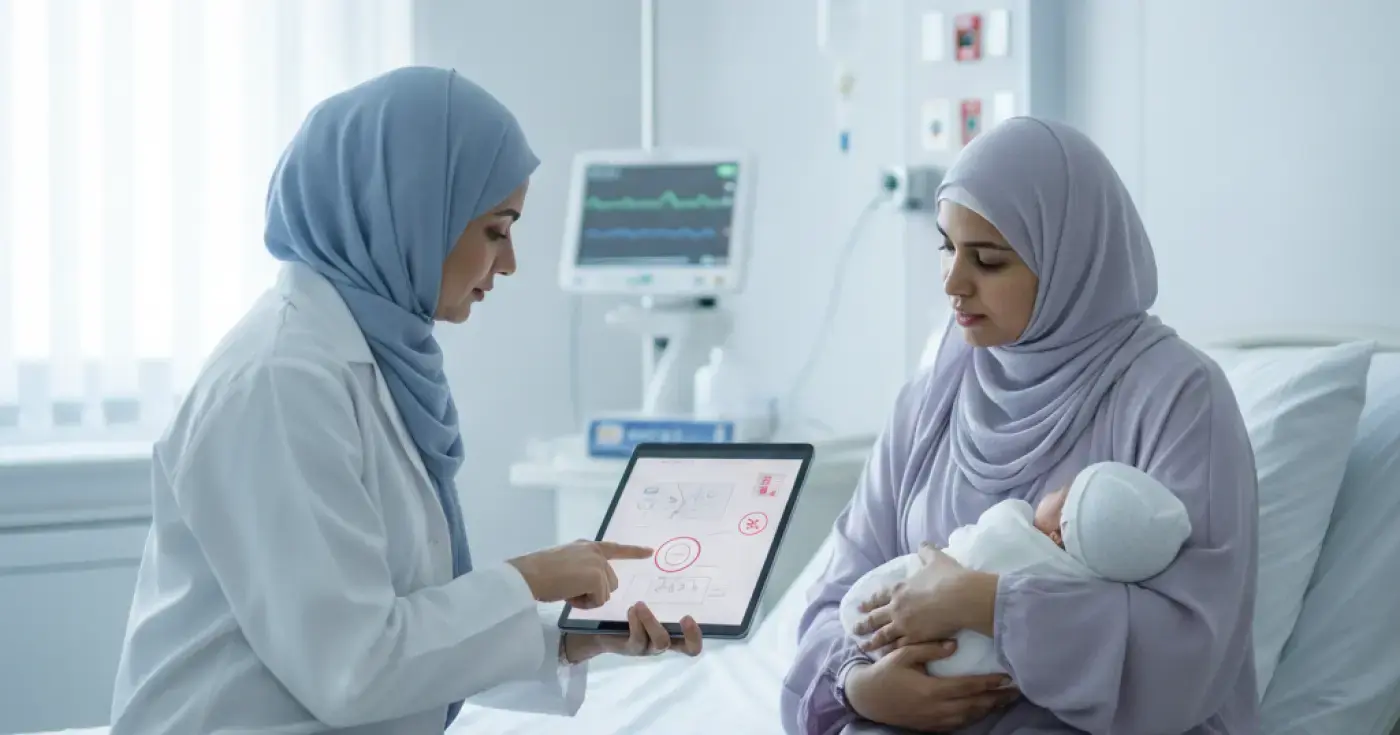
Leaving the hospital does not mean follow-up is finished. The mother needs postpartum follow-up for the mother to review bleeding, pain, wounds, breastfeeding, blood pressure, emotional wellbeing, and postnatal visit timing for mother and baby.
The first days after birth
The first days can be physically and emotionally intense: bleeding, afterpains, soreness around the perineum or incision, fatigue, limited sleep, and the start of breastfeeding. A mother often needs practical help, rest when possible, and clear instructions from the care team before discharge.
Keep discharge papers, medicine instructions if any, follow-up dates, wound care instructions, warning signs, and the hospital or clinic contact pathway organized. Having a family member understand these instructions can help, especially during the first week.
Bleeding and discharge after birth
Bleeding and discharge after birth happen as the uterus clears blood and tissue from pregnancy. The color may be red at first and then gradually change and decrease. The amount and direction of change matter more than color alone.
postpartum bleeding needs assessment if it is heavy, increases instead of improving, comes with dizziness, palpitations, severe pain, or repeated large clots. Do not use herbs or mixtures to stop bleeding without medical assessment.
Pain after birth and afterpains
Cramping after birth can happen as the uterus contracts and gradually returns toward its previous size. It may be more noticeable during breastfeeding. Pain may also come from stitches, cesarean birth, muscle strain, or the effort of labor.
Expected pain should gradually improve. Severe pain that does not settle, or pain with fever, heavy bleeding, foul-smelling discharge, chest pain, shortness of breath, or leg pain and swelling needs direct assessment.
Recovery after vaginal birth
After vaginal birth, the mother may feel soreness or pressure in the perineal area, temporary discomfort while sitting, mild burning during urination, or general fatigue. Hygiene instructions, rest, fluids, and reducing pressure on the area can support safer recovery.
If stitches or tears are present, care and follow-up matter. perineal tear care includes watching pain, swelling, smell, discharge, and gradual improvement. Increasing pain, marked redness, or unusual discharge should be reviewed.
Recovery after cesarean birth
Cesarean birth is surgery, so the body is recovering from both pregnancy and an operation. Pain with movement, coughing, standing, or caring for the baby may happen, and the mother may need help getting up and caring for the newborn during the first days.
cesarean wound care includes keeping the wound clean and dry according to hospital instructions, watching for redness, swelling, discharge, and avoiding heavy lifting or strenuous movement until medically allowed. Increasing pain, fever, or wound discharge needs assessment.
Movement and gradual return to activity
Gentle movement after birth may help circulation and reduce stiffness, but returning to activity should be gradual. Cesarean birth, bleeding, anemia, pain, or complications may slow the plan.
pelvic floor exercises after birth can be discussed with the clinician or pelvic floor physiotherapist, especially with urine leakage, pelvic heaviness, pain, or pelvic floor weakness. Strong abdominal exercises or weight lifting should not begin without suitable guidance.
Nutrition and fluids during postpartum recovery
The body needs balanced food and enough fluids to support healing, breastfeeding, and energy. There is no single diet for every mother, and strict dieting right after birth is usually not helpful, especially with breastfeeding, anemia, or cesarean recovery.
The clinician may discuss iron, vitamin D, or other supplements based on test results and the mother’s situation, without random high-dose use. If there is anemia, dizziness, or marked fatigue, blood count or iron stores may be part of follow-up.
Breastfeeding and recovery
Breastfeeding may start in the first hours after birth if the mother and baby are stable. Colostrum appears first, and milk usually increases gradually. Severe nipple pain or difficulty latching should not be silently endured.
With engorgement, cracks, fever, redness, red streaks, or painful lumps, the mother may need assessment. breast pain while breastfeeding may relate to engorgement, latch, blocked ducts, or mastitis, so early breastfeeding support can be useful.
Sleep and home support
Sleep after birth is often fragmented because of feeding and newborn care, and this affects pain, mood, and energy. This does not mean the mother should carry everything alone.
Tasks can be shared: meals, household duties, holding the baby between feeds, accompanying the mother to appointments, and caring for older children. Practical support during postpartum recovery is part of healing, not a luxury.
Emotional health after birth
Mood changes, crying, and anxiety may happen in the early days for some mothers, but severe sadness, loss of interest, strong anxiety, severe insomnia, guilt, difficulty bonding with the baby, or thoughts of harming oneself or the baby need urgent help.
postpartum depression is not a weakness of faith or character, and it does not mean the mother does not love her baby. It is a health condition that can be treated and should be taken seriously with family and medical support.
Postnatal visits in Saudi Arabia
In Saudi Arabia, timed postnatal visits in primary care help follow the mother and newborn after birth. These visits can review bleeding, wound healing, breastfeeding, blood pressure, emotional wellbeing, baby growth, and needed vaccines or screening.
The first postnatal visit is usually during the first week after birth, and the second postnatal visit is usually between weeks four and six. Do not wait for a scheduled visit if warning signs appear.
Sex, intimacy, and birth spacing after delivery
Returning to sex varies depending on healing, bleeding, pain, wounds, emotional readiness, and comfort. There should be no pressure on the mother, especially with pain, fear, or severe fatigue.
Birth spacing and contraception after delivery should be discussed with the clinician because ovulation may return before periods become regular, and breastfeeding alone is not always enough for every situation. The right method depends on breastfeeding, health, and family preferences.
Warning signs after birth
The mother and family should clearly know warning signs after birth because some complications appear after discharge. Important symptoms include heavy bleeding, chest pain, shortness of breath, severe headache with vision changes, fever, leg pain or swelling, seizures, foul-smelling discharge, or severe breast pain and lumps.
Help should also be sought immediately for thoughts of harming oneself or the baby, or a feeling that the mother cannot control her thoughts or actions. Emotional safety is a core part of postpartum safety.
How to prepare a practical recovery plan
A simple plan can be prepared before birth or at hospital discharge:
- Who will support the mother during the first week?
- When are the first and second postnatal visits?
- Which warning signs require urgent care?
- What are the wound or stitch care instructions?
- How will breastfeeding or feeding be supported?
- Who can help with food, home tasks, and newborn care?
- When should the clinician be contacted if pain or bleeding increases?
A practical summary
Postpartum recovery is not only waiting for the early postpartum period to pass. It is follow-up for the body, wound healing, bleeding, breastfeeding, sleep, and emotional wellbeing. The best recovery starts with clear instructions, postnatal visits, home support, and not delaying care when warning signs appear.
Recovery FAQs
How long does postpartum recovery take?
It differs from one mother to another, and the first weeks are especially important.Some symptoms improve within days or weeks, while wound healing, energy, breastfeeding, or emotional recovery may take longer. Birth method, home support, and health status all affect recovery.
How much bleeding is normal after birth?
Bleeding or discharge can happen and should gradually decrease.The overall direction should be improvement. Heavy bleeding, increasing bleeding, dizziness, severe pain, or repeated large clots should be medically assessed.
When should I worry about a cesarean wound?
Increasing pain, marked redness, swelling, discharge, or fever should be reviewed.A cesarean wound needs care according to hospital instructions. Any clear wound change, worsening pain, smell, or discharge should prompt medical review.
Is sadness after birth normal?
Mood changes may happen in the first days, but severe or persistent symptoms should not be ignored.Severe sadness, strong anxiety, inability to sleep despite exhaustion, loss of interest, or thoughts of harming oneself or the baby need urgent medical help.
When can I start moving or exercising after birth?
Movement should return gradually based on birth method and health status.Gentle walking may suit some mothers, but strong exercise or abdominal workouts should be gradual and medically guided, especially after cesarean birth, bleeding, or pain.
Is breast pain during breastfeeding normal?
Engorgement or tenderness can happen, but severe or persistent pain needs support.Cracks, redness, fever, painful lumps, or latching difficulty may need breastfeeding support or medical assessment to prevent worsening problems.
Why are postnatal visits important?
They help monitor the mother and baby after hospital discharge.They review bleeding, wounds, pain, breastfeeding, blood pressure, emotional wellbeing, and newborn growth, and help decide whether extra follow-up is needed.
When should I seek emergency care after birth?
Heavy bleeding, shortness of breath, chest pain, severe headache with vision changes, fever, leg pain, or harmful thoughts need urgent care.These symptoms should not wait for a routine postnatal visit. Go to the hospital or contact emergency care based on symptom severity and care instructions.
Pregnancy & Birth Library Stages
Explore library content by the stage most relevant to you.




Loading related articles
Loading related services
Follow LahaLak pregnancy and fertility content
Subscribe for reliable health content that helps you understand pregnancy planning, early pregnancy, and ongoing care.
Booking step
Ready to choose the right maternity package?
Compare hospitals and prices by city and birth type, then continue to booking with clear steps.