
Lahalak Medical PlatformDifferentiate Care
Learn about the postpartum visit schedule in Saudi Arabia, what checks are done after vaginal or C-section births, and warning signs requiring emergency care.

Advertisement
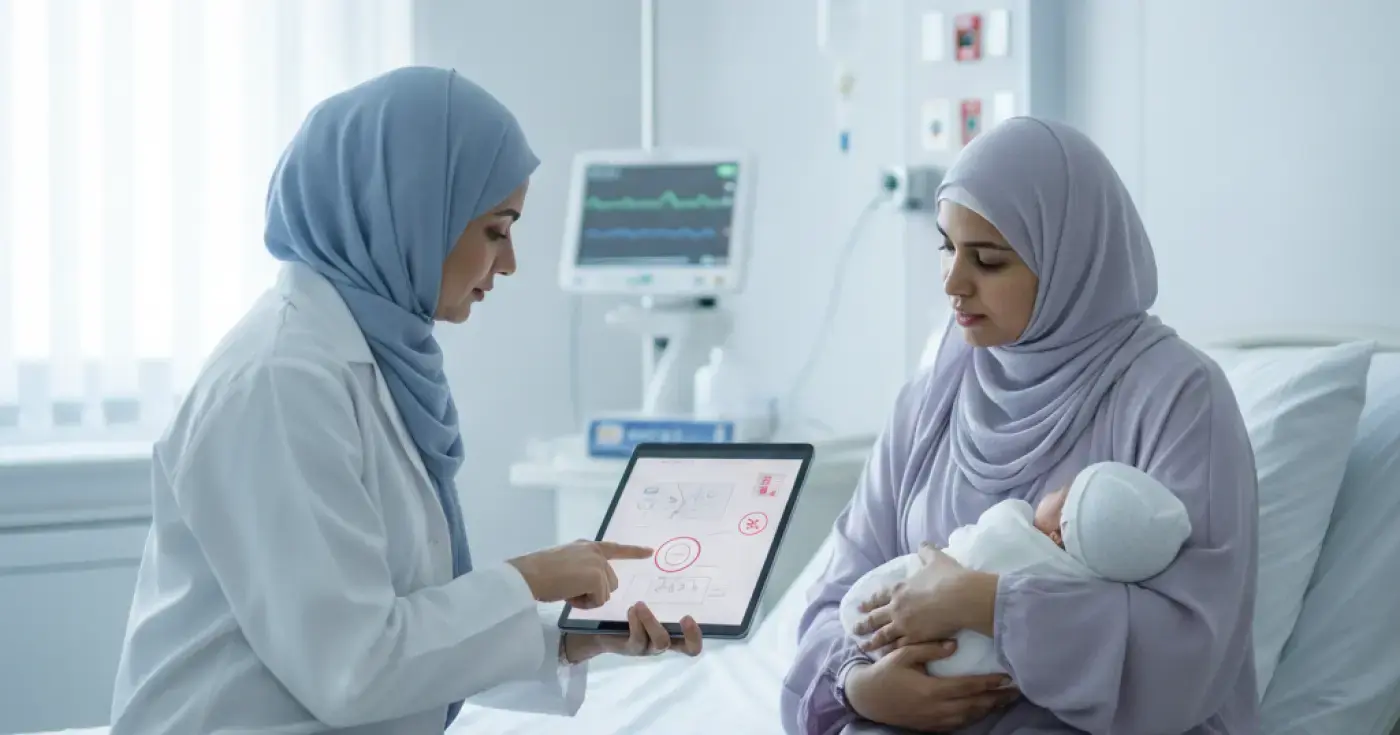
The Ministry of Health (MOH) in Saudi Arabia recommends at least two essential postpartum visits: the first within the first week after birth (between days 3 and 7), and the second between weeks 4 and 6. These visits assess the mother's physical and emotional recovery, monitor wound healing, and provide vital support for breastfeeding and family planning.
A postpartum visit is a comprehensive medical evaluation designed to monitor the physical and emotional well-being of the mother after childbirth. Historically, the standard practice was to wait until the 6th week postpartum for a single checkup. However, modern clinical guidelines in Saudi Arabia, aligned with World Health Organization (WHO) recommendations, emphasize early and continuous postpartum care.
The first days and weeks after delivery are the most critical, as rapid physiological changes occur and most complications—such as delayed postpartum preeclampsia, infections, breastfeeding challenges, and mood disorders—tend to manifest. Early evaluation ensures prompt preventive intervention and protects both maternal and neonatal health.
The following table outlines the key differences between the two recommended postpartum visits:
| Feature | First Visit (Early Checkup) | Second Visit (Comprehensive Checkup) |
|---|---|---|
| Recommended Timing | Within the first week (Days 3 to 7 postpartum) | Between the 4th and 6th weeks postpartum |
| Primary Focus | Vital signs, wound integrity, and breastfeeding initiation | Complete physical recovery, mental health, and family planning |
| Common Assessments | C-section or perineal wound check, blood pressure, lactation support | Uterine involution, pelvic exam (if indicated), contraception counseling |
| Mental Health Support | Screening for early "baby blues" and providing initial support | Screening for postpartum depression using validated scales |
During postpartum visits, your healthcare provider performs a multi-faceted assessment to ensure your recovery is progressing safely:
The provider evaluates the amount, color, and odor of your lochia. It is normal for postpartum bleeding to decrease gradually, changing from dark red to pink and eventually to pale yellow. A sudden increase in bleeding or a foul odor may indicate retained placental fragments or uterine infection.
If you had an episiotomy or perineal tear during vaginal birth, the provider checks the sutures to ensure proper healing and rule out signs of infection (such as severe redness, swelling, or discharge). For cesarean births, the abdominal incision is examined, and non-absorbable sutures or staples are removed if necessary.
Measuring blood pressure is crucial to rule out late-onset postpartum preeclampsia, a serious condition that can develop after discharge. Temperature is also checked to rule out infection. Mothers who experienced gestational diabetes will be advised on blood glucose monitoring to ensure levels return to normal.
The doctor will ask about any difficulties with urination, urinary incontinence, or severe constipation, which are common postpartum issues. Guidance on pelvic floor muscle training (Kegel exercises) or referrals to specialists will be provided if needed.
Maternal mental health is a core pillar of postpartum care. Your provider will assess your mood to screen for postpartum depression, which is more severe and persistent than the transient "baby blues" that typically resolve within two weeks.
Lactation support is provided to address proper latch techniques and prevent issues like breast engorgement or cracked nipples. Safe family planning options compatible with breastfeeding are discussed, and necessary maternal vaccinations (such as MMR if non-immune) are reviewed.
The nature of postpartum recovery and follow-up depends significantly on the mode of delivery:
Certain medical conditions or risk factors warrant scheduling a postpartum visit earlier than the standard timeline, including:
To get the most out of your postpartum appointment, consider the following preparation steps:
At the clinic, the nursing staff will measure your weight, blood pressure, and pulse. Your doctor or midwife will discuss your recovery journey in detail. It is important to know that a pelvic (internal) exam is not a routine requirement for every postpartum visit; it is performed only when clinically indicated (such as unexplained pain or suspected infection) and always with your informed consent.
While visits at primary healthcare centers may include a brief newborn check (such as weight and jaundice screening), the primary focus of this specific appointment remains entirely on your maternal health and recovery.
Some warning signs indicate serious postpartum complications. If you experience any of the following symptoms, go to the nearest emergency department immediately instead of waiting for your scheduled postpartum visit:
To support your comprehensive postpartum recovery, several clinical services are available:
Short answers that help clarify the key points related to this article.
Advertisement
Helpful services
Subscribe for new educational pregnancy and birth content from LahaLak.
Compare hospitals and prices by city and birth type, then continue to booking with clear steps.
From LahaLak guide
Medical article
Learn about postpartum fever, endometritis, C-section wound infections, and critical warning signs that require immediate medical attention.
Read article
Medical article
Learn how to distinguish between normal lochia and postpartum hemorrhage (PPH). Discover warning signs, risk factors, and when to seek emergency care.
Read article
Medical article
Understand the differences between baby blues and postpartum depression, key symptoms, and when to seek professional mental health support.
Read articleConnected next steps
 Comprehensive Postnatal Wellness and Recovery ProgramRestore your energy and hormonal balance post-delivery with our holistic program focusing on nutrition, mental well-being, and pelvic recovery, ensuring a smooth and healthy transition into motherhood.
 Post-delivery Anemia Follow-up (CBC & Ferritin)Restore your energy and vitality postpartum by checking iron levels and complete blood count. Ensure full recovery from delivery-related blood loss and maintain your health for your newborn.