Medical notice: this content is for health education only. It should not be used for self-diagnosis or self-treatment and does not replace qualified medical consultation.
Introduction to C-Section Recovery
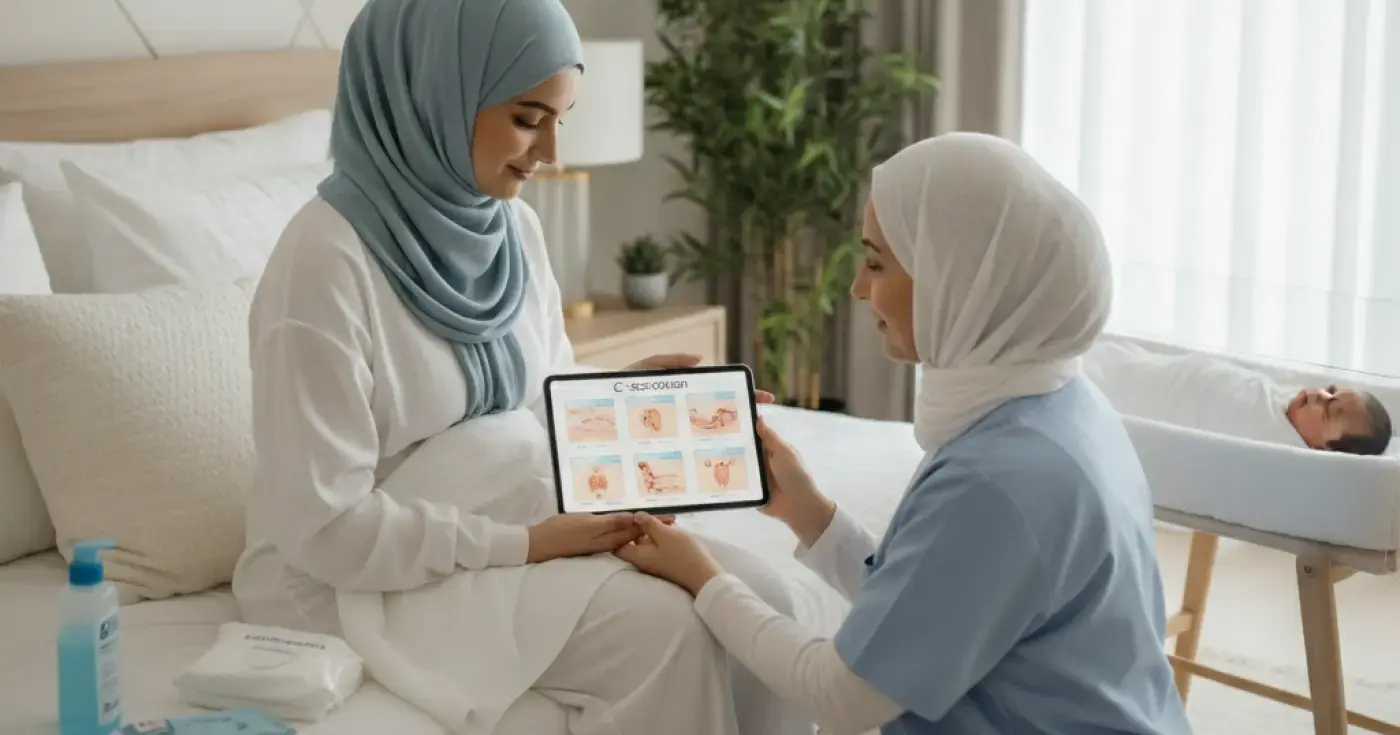
A Cesarean delivery (C-section) is a major surgical procedure that requires careful and structured postpartum care to ensure proper tissue healing and a safe return to daily activities. The journey of postpartum recovery after a C-section demands a balance between adequate rest and gentle movement, alongside meticulous wound care to prevent complications. In this comprehensive medical guide, we will explore the stages of wound healing, daily care routines, pain management, comfortable positions, and critical red flags that require immediate medical attention.
Stages of C-Section Wound Healing: External vs. Internal
A C-section incision heals in two primary phases:
- External Healing: This refers to the visible skin incision. Initial healing of the skin typically takes about 4 to 6 weeks. During this time, the scar will gradually transition from pink or red to a color closer to your natural skin tone.
- Internal Healing: This involves the deeper abdominal muscles and uterine wall incisions. Healing of these deep tissues takes significantly longer, often ranging from several months to a full year to regain their original strength and elasticity.
Step-by-Step Guide to C-Section Wound Care
Proper daily hygiene is the cornerstone of preventing infections and promoting optimal healing. Follow these essential medical guidelines:
- Keep it Clean: Wash the incision site gently every day with warm water and a mild, unscented soap. Avoid scrubbing the area directly or directing a strong stream of water onto the wound.
- Dry Thoroughly: After bathing, gently pat the area completely dry with a clean, soft towel. Alternatively, you can use a hair dryer on the cool setting to ensure no moisture remains, as dampness can encourage bacterial growth.
- Avoid Unapproved Products: Do not apply any creams, ointments, oils, or powders to the incision unless specifically prescribed by your healthcare provider.
- Wear Loose Clothing: Choose loose-fitting cotton clothing and high-waisted underwear that sits above the incision line to prevent friction and irritation.
Managing C-Section Pain, Numbness, and Itching
It is entirely normal to experience various sensations around the healing incision, including:
- Incision Pain: Pain is usually most intense during the first few days postpartum. Following Saudi Ministry of Health guidelines, it is crucial to adhere to your prescribed pain medication schedule to manage pain and facilitate early mobility.
- Numbness and Tingling: You may feel numbness or a loss of sensation around the scar. This occurs because small superficial nerves are severed during the incision. It is a normal part of the process and typically improves gradually over several months.
- Itching: As the skin and tissues begin to knit back together, itching is common. Avoid scratching the area to prevent introducing bacteria or disrupting the wound; applying a clean, cool compress can help soothe the sensation.
Movement, Walking, and Physical Activity
Early and gradual movement is vital for preventing deep vein thrombosis (DVT) and stimulating bowel function after surgery:
- Gradual Walking: You are encouraged to start light walking around the house as soon as your urinary catheter is removed and your medical team approves. Start with short steps and gradually increase your activity without overexerting yourself.
- Avoid Heavy Lifting: To protect your healing abdominal muscles and internal tissues from strain or hernia, do not lift anything heavier than your newborn baby for the first 6 weeks.
- Returning to Exercise: Many mothers ask: when can I exercise after a C-section? The standard medical recommendation is to avoid strenuous workouts or core exercises for at least 6 to 8 weeks, and always obtain clearance from your doctor during your postpartum follow-up visit.
Comfortable Sleeping and Breastfeeding Positions
To minimize pressure on your abdomen and reduce discomfort, consider the following positions:
- Sleeping Positions: Sleeping on your back with a pillow under your knees helps reduce tension on your abdominal muscles. Alternatively, sleeping on your side with a pillow between your knees supports your back and pelvis.
- Breastfeeding Positions: To nurse comfortably without pressing on your incision, try the "football hold" (where the baby is tucked under your arm, supported by a nursing pillow) or the side-lying position, which allows you to nurse while resting comfortably on your side.
Comparison: Normal Healing vs. Warning Signs
To help you distinguish between normal recovery and symptoms that require medical evaluation, refer to the table below:
| Symptom | Normal Recovery (Healthy Healing) | Warning Signs (Infection or Complications) |
|---|
| Pain | Manageable pain that decreases gradually with prescribed medication. | Severe, sudden pain that does not respond to medication. |
| Discharge | Minimal clear or serous discharge during the first few days. | Thick yellow or green discharge with a foul odor. |
| Swelling & Redness | Mild redness and slight swelling around the edges initially. | Severe swelling, expanding redness, or skin that feels hot to the touch. |
| Body Temperature | Normal body temperature (below 38°C). | Fever of 38°C (100.4°F) or higher, often accompanied by chills. |
| Incision Integrity | Incision edges are clean, intact, and well-approximated. | Gaps, opening of the stitches, or separation of the wound edges. |
Signs of C-Section Infection: When to Seek Urgent Medical Care
Never ignore signs of potential infection or poor wound healing. Contact your doctor or visit the nearest emergency department immediately if you experience any of the following:
- A fever of 38°C (100.4°F) or higher.
- Pus-like or foul-smelling drainage from the incision.
- A sudden increase in pain or noticeable swelling around the wound.
- Separation or opening of the incision edges.
- Persistent or heavy bleeding from the wound site.
- Severe pain, warmth, or swelling in one leg, or sudden shortness of breath (signs of a potential blood clot).
Conclusion and Postpartum Care Tips
The postpartum period and recovery from a C-section require patience, self-care, and support. Remember that your physical and mental well-being is the foundation for caring for your newborn. Do not hesitate to ask for help from family and friends, eat a balanced diet rich in protein and fiber, and stay hydrated to prevent constipation, which can strain your abdominal muscles. Always consult your healthcare provider if you have any concerns; regular medical follow-ups are your safest path to a healthy and smooth recovery.