Getting Pregnant
Am I Pregnant?
A clear guide to possible early pregnancy signs, the right time to test, and the next steps to take in Saudi Arabia after a positive result or a continued late period.
Could You Be Pregnant?
The question may begin with a late period, subtle body changes, or a situation where pregnancy could occur. This page organizes the main paths clearly: early pregnancy symptoms, pregnancy testing, and common questions about the possibility of pregnancy.
The goal is not to rely on symptoms alone or worry about every change, but to know when a home pregnancy test is appropriate, when repeating the test makes sense, and when medical advice from a licensed healthcare facility is the safest next step.
Pregnancy Symptoms
Understand signs that may appear in the first weeks and how they can overlap with premenstrual changes, fatigue, stress, or other health factors.
Read the specialized guidePregnancy Symptoms
Early Pregnancy Discharge: What It Looks Like and When to See a Doctor
Learn about early pregnancy discharge, how to tell it apart from period discharge, what different colors mean, and when you should consult your doctor.
Pregnancy Symptoms
Implantation Bleeding vs. Period: Key Differences
A comprehensive medical guide to distinguishing between implantation bleeding and your period, highlighting differences in color, flow, duration, and when to seek medical care.
Pregnancy Symptoms
When to Take a Pregnancy Test: Home Tests vs. Blood Tests
A comprehensive medical guide on the best time to take a home pregnancy test or blood test, understanding faint lines, and how to avoid false results.
Pregnancy Symptoms
Pregnancy Symptoms vs. PMS: How to Tell the Difference
A comprehensive medical guide to distinguishing between early pregnancy signs and premenstrual syndrome (PMS), highlighting key differences and when to take a test.
Pregnancy Tests
Learn when to use a home pregnancy test, when a blood pregnancy test may be useful, and how to respond to positive, negative, faint, or unclear results.
Read the specialized guidePregnancy Possibility in Different Situations
Clear guidance for common questions about whether pregnancy can occur in different situations, while keeping testing and clinical assessment as the basis when there is uncertainty.
Read the specialized guidePregnancy Possibility in Different Situations
What to Do After Unprotected Sex? Emergency Options and Testing Timeline
A comprehensive medical guide on emergency contraception options after unprotected sex or contraceptive failure, including testing timelines and when to seek urgent care.
Pregnancy Possibility in Different Situations
Can You Get Pregnant While Breastfeeding? Fertility Return Explained
Learn about the possibility of pregnancy during breastfeeding, the strict rules of the Lactational Amenorrhea Method (LAM), and when postpartum fertility returns.
Pregnancy Possibility in Different Situations
Can You Get Pregnant with an IUD? Signs and Safe Steps
A comprehensive medical guide explaining the possibility of pregnancy with a copper or hormonal IUD, its signs, and the safe clinical steps to follow if you suspect pregnancy.
Pregnancy Possibility in Different Situations
Can You Get Pregnant Without Penetration? External Friction and Contact Cases
A medical guide explaining the likelihood of pregnancy without full penetration, such as external friction and contact, biological factors, and testing timelines.
Pregnancy Possibility in Different Situations
Can You Get Pregnant with an Irregular Period? Best Test Timing
Learn about the possibility of pregnancy with irregular periods, how ovulation works, and the most accurate timing for home and blood pregnancy tests.
Pregnancy Possibility in Different Situations
Missed Birth Control Pill and Had Sex: What to Do?
A comprehensive medical guide on what to do if you missed a birth control pill and had sex, explaining steps, pill types, and when to seek advice.
Pregnancy Possibility in Different Situations
Can You Get Pregnant from Pre-cum? Effectiveness of Withdrawal
A comprehensive medical guide explaining the possibility of pregnancy from pre-ejaculatory fluid (pre-cum) and the clinical effectiveness of the withdrawal method.
Pregnancy Possibility in Different Situations
Can You Get Pregnant Right After Your Period? Understanding Ovulation & Possibilities
A detailed medical guide explaining the possibility of getting pregnant immediately after your period, the role of the fertile window, and clinical advice.
Pregnancy Possibility in Different Situations
When Does Pregnancy Show After Intercourse? Home and Blood Test Timing
Discover the exact timeline for pregnancy detection after intercourse, the differences between urine and blood tests, and what to do if your period is late.
Can symptoms alone tell me that I am pregnant?
No single symptom confirms pregnancy. Some women notice early changes, while others have no clear symptoms at first. Pregnancy symptoms can also resemble premenstrual changes, fatigue, stress, or other hormonal and medical conditions.
With a usually regular cycle, a missed period is one of the more useful early signs, but a pregnancy test is still needed. With irregular cycles, choosing the right test date can be harder, so the timing of the last period or the last intercourse that could result in pregnancy becomes more relevant.
Possible early pregnancy signs
You may notice one or more of the following changes, or none at all:
- A missed period or bleeding that is lighter than usual.
- Breast tenderness, fullness, or increased sensitivity.
- Fatigue or needing more sleep than usual.
- Nausea with or without vomiting, at any time of day.
- More frequent urination, appetite changes, or sensitivity to smells.
- Mild bloating or cramps similar to premenstrual symptoms.
- Mood changes or a mild headache in some women.
Symptom intensity does not reliably show how strong or healthy a pregnancy is. Testing, followed by appropriate clinical care, is the correct way to confirm pregnancy and assess concerns.
When should I take a home pregnancy test?
Most home pregnancy tests can be used from the first day of a missed period. If you do not know when the next period is due, testing around 21 days after the last intercourse that could result in pregnancy is a practical approach.
Some products allow testing before the expected period, but early testing increases the chance of a negative result despite pregnancy because hCG may not yet be high enough to detect.
For a more reliable result
- Follow the product instructions carefully and check the expiry date.
- Read the result within the time window stated in the instructions.
- Avoid drinking a very large amount of fluid immediately before testing, as this can dilute the urine.
- If the result is negative and the period has not started, repeat the test after a few days.
- Arrange medical advice if results remain unclear or the period continues to be late.
How should I interpret the result?
Positive result
A positive result usually indicates pregnancy when the test has been used and read correctly. Begin arranging an early pregnancy consultation, and do not delay assessment if you have pain, bleeding, or a previous ectopic pregnancy.
Negative result
This may mean there is no pregnancy, or that testing was too early. Repeat the test after a few days if the period has not started, and seek medical advice if the delay continues or irregular cycles are recurring.
Faint line or unclear result
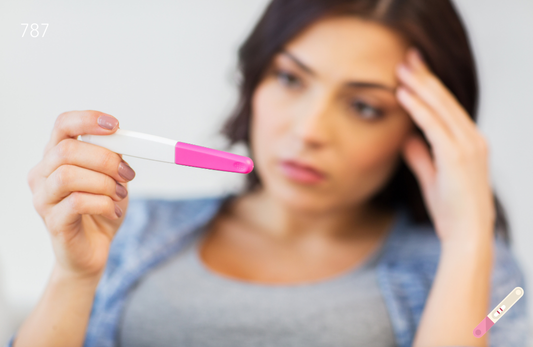
A faint line can indicate hCG if it appears within the stated reading time. Evaporation lines or reading the test too late can cause confusion. Repeat the test with a new kit or arrange clinical assessment if the result remains unclear.
When might a clinician request a blood pregnancy test?
A clinician may request a quantitative Beta-hCG blood test when a home result is unclear, pain or bleeding is present, fertility treatment has been used, or monitoring the hormone is useful as part of a medical assessment. A single number cannot by itself confirm that a pregnancy is healthy or located inside the uterus; repeat testing or ultrasound may be needed depending on the situation.
What should I do after a positive result?
After a positive result, take calm and practical steps. Not every pregnancy requires an emergency visit, but early care allows medicines, medical history, and appropriate screening to be reviewed.
- Arrange the first appointment: You can begin with an obstetrics clinic, a primary care centre, or another licensed healthcare facility in Saudi Arabia. The first visit is generally best arranged after pregnancy is known and before 12 completed weeks, or earlier when symptoms or risk factors are present.
- Review medicines and supplements: Do not stop a prescribed medicine on your own, and do not begin medicines, herbal mixtures, or traditional remedies before checking with a clinician or pharmacist. Some treatments need safe adjustment rather than abrupt discontinuation.
- Begin prenatal care: Discuss folic acid in early pregnancy with your healthcare provider. The usual dose for many women is 400 micrograms daily through 12 weeks, while some medical circumstances require a different prescribed dose.
- Prepare your health information: Record the first day of the last menstrual period, test result, medicines and supplements, chronic conditions, previous pregnancies, and any past complications. A pregnancy due date calculator can later help estimate the expected due date based on the last menstrual period.
- Choose safe habits: Avoid smoking and second-hand smoke, maintain balanced meals and adequate sleep, and avoid unverified weight-loss products or supplements while pregnancy is possible.
When should I arrange an early appointment even without an emergency?
Book early care if you:
- Use regular medicines or have a chronic condition such as diabetes, high blood pressure, or thyroid disease.
- Conceived after ovulation treatment, insemination, or IVF.
- Have a history of ectopic pregnancy, recurrent pregnancy loss, or a major complication in a previous pregnancy.
- Have recurring light bleeding or persistent pain, even when it is not severe.
- Do not know the date of the last period or have markedly irregular cycles.
My period is late but the test is negative. What next?
Repeat the test after a few days if the period has not started. Ovulation may have occurred later than expected, or hCG may not yet have risen enough. If the delay continues, cycles are repeatedly irregular, or other symptoms appear—such as pelvic pain, unusual discharge, or a clear weight change—medical assessment can identify the cause more effectively than repeated testing without a plan.
When irregular cycles recur, an ovulation calendar may help record the cycle pattern as an initial step, but it does not replace medical assessment when delay continues or concerning symptoms appear.
Warning signs that require urgent care
Do not wait for a routine clinic appointment if you develop severe lower abdominal pain, especially on one side, heavy bleeding, marked dizziness or fainting, shoulder-tip pain, or sudden weakness. Assessment of early pregnancy pain or bleeding may be needed to exclude bleeding, ectopic pregnancy, or another serious cause.
A calm, clear next step
Waiting for or receiving a result can bring happiness, anxiety, uncertainty, or a mixture of emotions. Take your time, share the result with your spouse or a trusted person when that feels right, and focus first on confirming the situation and beginning safe care that respects your privacy and needs.
Am I Pregnant? FAQs
What may be the first sign of pregnancy?
A missed period is the most common early sign when cycles are regular.Breast tenderness, fatigue, or nausea may also occur, but symptoms do not confirm pregnancy. A pregnancy test is the appropriate next step.
When is a home pregnancy test most reliable?
From the first day of a missed period or later.If the result is negative and the period has not started, repeat it after a few days. If you do not know when the period is due, test around 21 days after the last intercourse that could result in pregnancy.
Can I be pregnant without symptoms?
Yes. Clear symptoms may be absent in the earliest weeks.The presence or absence of symptoms cannot confirm pregnancy or show whether it is progressing normally; testing and appropriate care are what matter.
What does a faint line on a pregnancy test mean?
It may be a positive result when it appears within the stated reading time.Check the product instructions and do not rely on a result read after the time window. Repeat the test or seek medical advice if it remains unclear.
My test is negative but my period is late. What should I do?
Testing may have been early, or the delay may have another cause.Repeat the test after a few days and arrange medical advice if the delay continues, irregular cycles recur, or concerning symptoms appear.
When should I begin pregnancy care in Saudi Arabia?
Arrange the first visit after pregnancy is known, preferably before 12 completed weeks.Earlier care may be needed with chronic illness, regular medicines, fertility treatment, a previous ectopic pregnancy, pain, or bleeding.
When is bleeding with a possible pregnancy an emergency?
Heavy bleeding or bleeding with severe pain requires urgent assessment.This is especially important with one-sided pain, dizziness, fainting, or shoulder-tip pain, even before a positive test has been obtained.
Pregnancy & Birth Library Stages
Explore library content by the stage most relevant to you.




Loading related articles
Loading related services
Follow LahaLak pregnancy and fertility content
Subscribe for reliable health content that helps you understand pregnancy planning, early pregnancy, and ongoing care.
Booking step
Ready to choose the right maternity package?
Compare hospitals and prices by city and birth type, then continue to booking with clear steps.