Lahalak Medical PlatformDifferentiate Care
Learn the best time to take a home pregnancy test or blood test, how hCG works, and what a faint line means in this clinical guide.

Advertisement
Waiting to find out if you are pregnant can be a time filled with excitement and anticipation. During this period, it is natural to look for early signs and wonder when you can get an accurate answer. In the context of planning pregnancy, understanding the biological mechanisms of pregnancy detection is essential to avoid unnecessary anxiety and incorrect interpretations of test results.
While some women may notice subtle physical changes early on, it is crucial to remember that symptoms alone cannot confirm pregnancy. Definitive confirmation always requires validated home or laboratory testing to detect the pregnancy hormone, or a clinical evaluation by a healthcare provider.
All pregnancy tests, whether using urine at home or blood in a clinical lab, work by detecting a specific hormone called Human Chorionic Gonadotropin (hCG). This hormone is produced by the developing placenta shortly after the fertilized egg implants into the uterine lining, which typically occurs 6 to 12 days after ovulation.
In early pregnancy, hCG levels rise rapidly, doubling approximately every 48 to 72 hours. Because hCG enters the bloodstream first before being excreted in urine, blood tests can detect pregnancy slightly earlier than home urine tests.
One of the most common questions is: how soon can you take a home pregnancy test? The timing depends largely on your menstrual cycle and the sensitivity of the test kit:
Blood tests are performed in a laboratory setting and offer the highest level of sensitivity and clinical accuracy. There are two main types of hCG blood tests:
This test simply determines whether the hCG hormone is present in your blood (yielding a positive or negative result). It can detect pregnancy about 10 days after ovulation, slightly before a missed period.
Also known as the beta-hCG test, the quantitative hCG blood test measures the exact concentration of hCG in your blood in milli-international units per milliliter (mIU/mL). It is highly sensitive and can detect tiny amounts of hCG (as low as 5 mIU/mL) within 7 to 10 days after ovulation. Doctors also use this test to monitor the progression of early pregnancy.
The following table outlines the key differences between the available pregnancy testing options to help you choose the right test at the right time:
| Test Type | Testing Site | Earliest Detection (Approx.) | Accuracy & Detail Level |
|---|---|---|---|
| Standard Home Test | Home (Urine) | Day of missed period | Yes/No (Highly accurate when timed correctly) |
| Early Detection Home Test | Home (Urine) | 4-5 days before missed period | Yes/No (Higher chance of false negatives) |
| Qualitative Blood Test | Lab (Blood) | 10 days after ovulation | Yes/No (Excellent accuracy, early confirmation) |
| Quantitative Blood Test | Lab (Blood) | 7-10 days after ovulation | Provides exact numerical value (helps track fetal development) |
In early pregnancy, hormonal surges (particularly progesterone and estrogen) can cause noticeable physical changes. Common early signs include:
Important Clinical Note: Many of these symptoms overlap significantly with premenstrual syndrome (PMS) or other hormonal imbalances. Therefore, pregnancy symptoms alone are never sufficient to confirm pregnancy. A reliable chemical test or clinical confirmation is always required.
Seeing a faint line on a home pregnancy test is a common source of confusion. Clinically, a faint line usually points to one of the following scenarios:
Recommendation: If you see a faint line, wait 48 hours and retest using your first morning urine, or consult a healthcare professional for a blood test.
If your period is late but your pregnancy test is negative, it can be confusing. Potential reasons include:
If your period is delayed by more than a week and your tests remain negative, consult your doctor to evaluate the underlying cause of the delay.
If you receive a positive pregnancy test result, it is time to schedule an appointment with an obstetrician-gynecologist to begin your pregnancy care journey. Early prenatal visits are essential to confirm the pregnancy is progressing safely inside the uterus.
However, you should seek immediate medical attention or visit the emergency department if you experience any of the following red flags:
Early clinical evaluation is the best way to ensure a safe, healthy pregnancy for both you and your baby.
Short answers that help clarify the key points related to this article.
Advertisement
Helpful services
Subscribe for new educational pregnancy and birth content from LahaLak.
Compare hospitals and prices by city and birth type, then continue to booking with clear steps.
Connected next steps
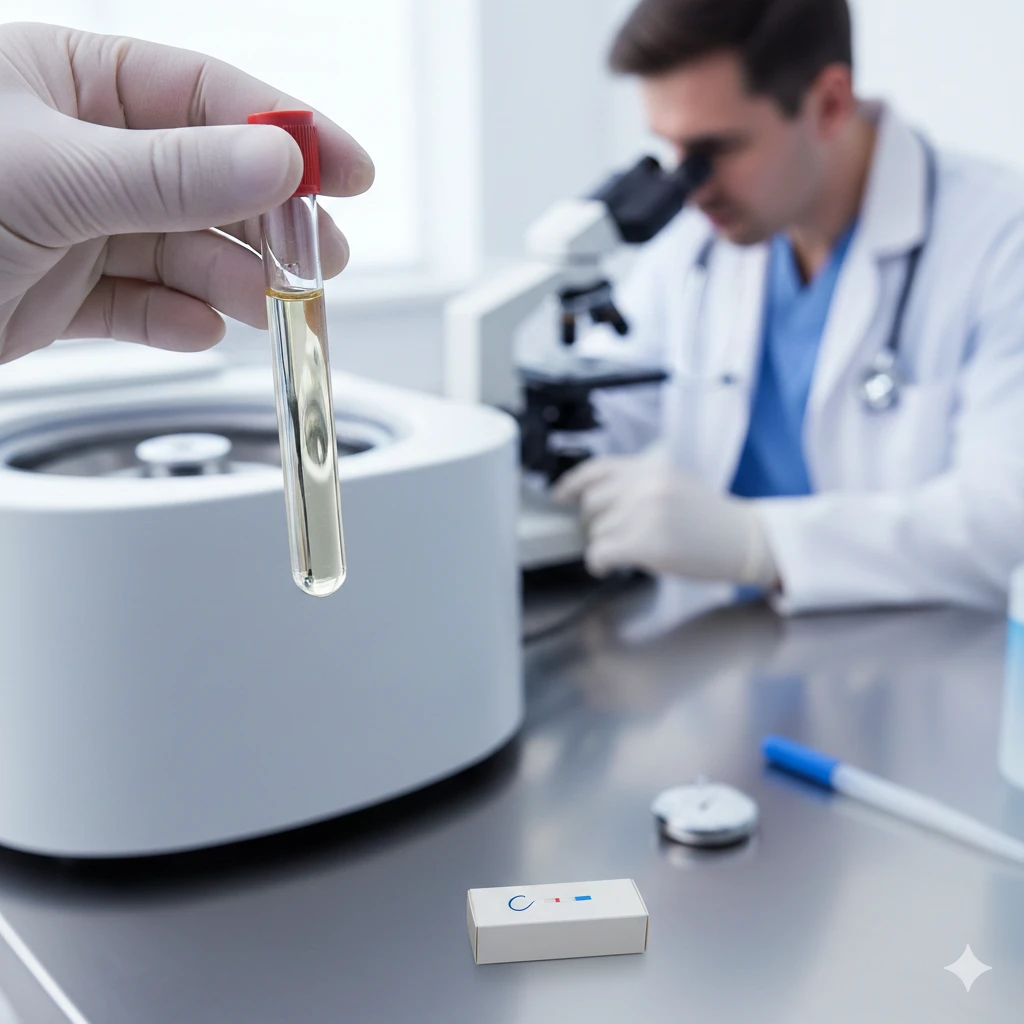 Serum Pregnancy Test (hCG)Confirms early pregnancy with high accuracy by measuring hCG levels in blood, allowing you to monitor your pregnancy and health from the very start with confidence.
 HIV-2 RNA Quantitative PCR TestMonitor HIV-2 activity with numerical precision to evaluate treatment effectiveness and adjust doses, ensuring optimal infection control and maintaining your overall health and well-being.
 Quantitative Beta-HCG Pregnancy TestGo beyond a simple positive result. This digital test provides precise hormone levels to monitor fetal development and early pregnancy health, offering the reassurance and scientific data you need.
Explore the topic