Lahalak Medical PlatformDifferentiate Care
Pregnancy dating begins from the first day of the last menstrual period. Ovulation, fertilization and implantation usually occur later in this month, and symptoms may still be absent.
Approximately weeks 1-4
Advertisement
Medical note: Pregnancy months are approximate, while clinical follow-up relies on gestational weeks. This content is educational and does not provide diagnosis or an individualized treatment plan. Concerning symptoms or high-risk pregnancy require clinical review.
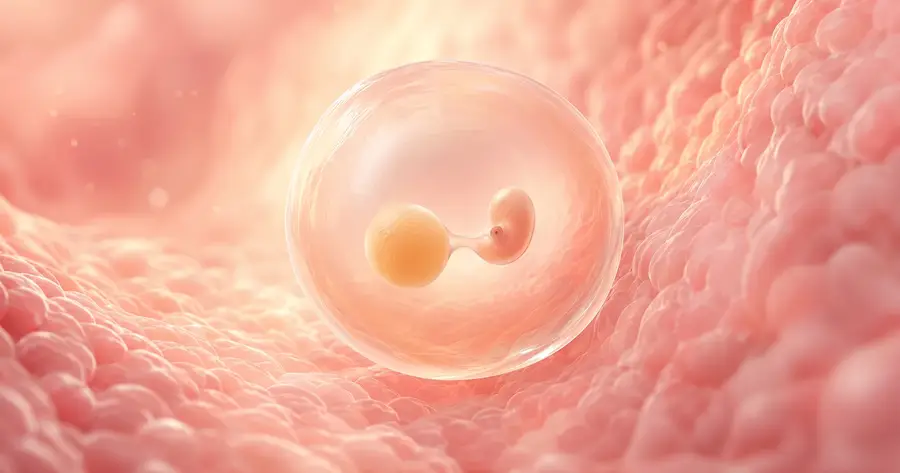
The first month of pregnancy is the beginning of the journey, but pregnancy dating works differently from what many people expect. Gestational age is counted from the first day of the last menstrual period, so part of this month usually occurs before fertilization itself.
Month 1 covers approximately weeks 1 through 4. Your body first prepares for ovulation, fertilization may then occur, and the fertilized egg begins dividing and travelling toward the uterus before implantation.
By the end of the month, a missed period or positive pregnancy test may be the first sign that you are pregnant. Some women notice early symptoms, while others still feel completely normal.
This content is for general education and does not provide diagnosis or an individual treatment plan. Seek medical assessment for significant bleeding, severe or one-sided pelvic pain, dizziness, fainting, or symptoms of concern, particularly with a history of ectopic pregnancy.
In the Saudi Ministry of Health month-to-week table, the first month covers gestational weeks 1 to 4. Clinical pregnancy care still relies primarily on gestational weeks because they provide more precise timing for assessment, ultrasound and tests.
You can explore weeks 1 and 2, week 3 and week 4 for more precise detail.
If you know the first day of your last period, use the pregnancy calculator for an initial estimate of gestational age and due date.
Several different events may take place during this month. The menstrual period used for pregnancy dating comes first, followed by preparation for ovulation and a possible conception.
If you are still trying to conceive, the ovulation calendar may help estimate your fertile window, although the result is approximate, particularly when cycles are irregular.
There is not yet an embryo in the usual sense at the beginning of the first month because gestational dating begins before fertilization.
After fertilization, the first cell divides repeatedly while travelling toward the uterus. Implantation is followed by very early developmental processes that will contribute to formation of the embryo, placenta and supporting pregnancy structures.
By the end of month 1, pregnancy remains extremely early and many structures are only beginning to form.
Symptoms vary considerably. A missed period may be the only sign, and having few or no symptoms does not by itself indicate a problem.
Pregnancy tests detect hCG, which begins rising after implantation. A home pregnancy test may become positive around the expected period or after a missed period.
Testing too early can produce a negative result even when pregnancy has occurred. If your period remains late, follow the test instructions about repeating it or ask a clinician for advice.
A clinician may use a blood pregnancy test or quantitative Beta-hCG in selected situations. Routine serial hCG testing is not required for every uncomplicated pregnancy.
Month 1 may be too early to see a clearly developed embryo on ultrasound. What can be seen depends on true gestational age, ovulation timing, the type of ultrasound and the reason the scan is being performed.
Not seeing clear detail very early does not by itself mean something is wrong. A clinician determines whether and when another scan is appropriate, particularly when there is pain, bleeding or increased risk.
Folic acid is particularly important around conception and early pregnancy, when the neural tube that develops into the brain and spinal cord is forming.
Saudi Ministry of Health guidance recommends 400 micrograms of folic acid daily while trying to conceive and through week 12 for women with standard requirements.
Some women need a different or higher dose because of medical history, medications or other risk factors. Higher doses should be discussed with a clinician rather than started independently.
Early prenatal care looks at more than pregnancy confirmation. Your clinician may review the date of your last period, previous pregnancies, medical conditions, medications, allergies, current symptoms and relevant risks.
Tests should be selected according to your individual history and gestational age rather than ordering a large set of investigations without clinical context.
Seek prompt medical assessment for:
Return to the pregnancy week-by-week guide whenever you need more precise timing.
During the second month, early pregnancy symptoms may become more noticeable and embryonic development continues rapidly.
Continue to month 2 of pregnancy or move directly to week 5.
Choose a week for more precise information about this stage of pregnancy.
Explore library content by the stage most relevant to you.
Advertisement
Subscribe for new educational content from LahaLak.
Compare hospitals and prices by city and birth type, then continue to booking with clear steps.