Lahalak Medical PlatformDifferentiate Care
At 5 weeks pregnant, pregnancy may be confirmed and symptoms such as nausea, fatigue, and breast tenderness may become more noticeable while early fetal development continues.
Advertisement
Medical note: This content is educational and does not provide diagnosis or treatment. Severe pain, bleeding, urgent symptoms, high-risk pregnancy, or health concerns should be reviewed by a licensed clinician.
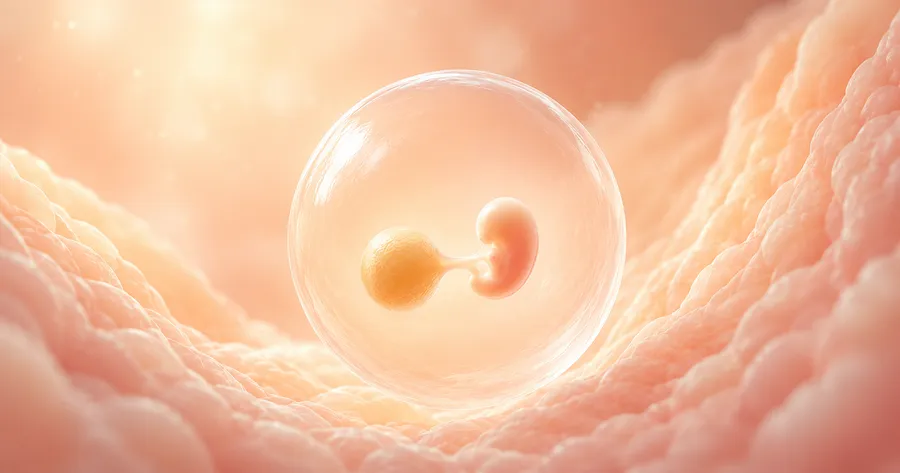
At 5 weeks pregnant, you may already know you are pregnant, especially if your period is late and a pregnancy test is positive. Pregnancy is still very early, but hormonal changes may become more noticeable for many women.
There may still be no visible changes to people around you. Inside the body, however, hCG continues to rise, and the embryo is growing quickly during an important early stage of organ formation.
This content is educational only and does not provide a diagnosis or treatment plan. If you have bleeding, severe pain, dizziness, fainting, vomiting that prevents fluids, or a history of ectopic pregnancy, consult a licensed clinician in Saudi Arabia.
Week 5 is counted from the first day of your last menstrual period, not from the exact day of fertilization. This means your medical pregnancy age may be five weeks, while the embryo's actual developmental age is shorter.
If your cycle is regular, week 5 may be several days after a missed period. For many women, pregnancy tests are clearer now than they were in week 4.
You can use the pregnancy due date calculator to estimate your due date, then confirm the timing later with your clinician based on early ultrasound and cycle history.
Early pregnancy symptoms may begin or become stronger. Having mild symptoms or no symptoms does not automatically mean there is a problem.
If nausea is very severe or you cannot keep fluids down, you may need a severe vomiting in pregnancy evaluation. In some cases, your clinician may request electrolytes and kidney function tests to check for dehydration or electrolyte imbalance.
At week 5, the embryo is still very small but is going through an important stage of growth. Early structures that later contribute to the brain, spinal cord, heart, and other body systems are developing.
The heart may begin beating around this stage or soon after, but seeing or confirming it on ultrasound depends on pregnancy timing, hCG level, ultrasound type, and clinical assessment.
Early structures that will become the eyes, ears, and skeleton also begin forming gradually, although the embryo is still very small and does not yet look like a recognizable baby.
At week 5, the embryo is extremely small and may measure only a few millimeters. A measurement called CRL may be used early on, meaning crown-rump length, but accuracy depends on image clarity and timing.
It is usually not helpful to panic if a heartbeat or clear details are not visible very early. Your clinician may schedule an early pregnancy ultrasound or fetal heartbeat follow-up based on your case.
In a straightforward pregnancy, not every woman needs repeated blood tests if the pregnancy test is clear and there are no concerning symptoms. However, a quantitative Beta-hCG test or blood pregnancy test may help monitor early pregnancy in selected cases.
Your clinician may also discuss a progesterone test in some cases, but it should not be ordered or interpreted without clinical context.
Once pregnancy is confirmed, this is a good time to organize your care. Not every woman needs a same-day visit, but it is important to know when to book and when to seek urgent advice.
The pregnant mother may begin feeling tired, nauseated, or anxious about the new stage. Practical support, such as helping with appointments, reducing strong smells, and preparing light meals, can make a real difference.
It is also useful for the partner to share key medical questions, especially if symptoms are present or there is a previous pregnancy history that needs follow-up.
After week 5, symptoms may become clearer for some women, and the timing of the first ultrasound may be closer depending on the case. You can continue to week 6 of pregnancy or return to the pregnancy week-by-week guide.
In the month-by-month guide
See the wider monthly context, then return to the more precise weekly detail when needed.
Explore library content by the stage most relevant to you.
Advertisement
Subscribe to our week-by-week pregnancy newsletter
Compare hospitals and prices by city and birth type, then continue to booking with clear steps.