Lahalak Medical PlatformDifferentiate Care
At 6 weeks pregnant, symptoms may become clearer, an early heartbeat may be seen on ultrasound, and the neural tube and early organ structures continue developing.
Advertisement
Medical note: This content is educational and does not provide diagnosis or treatment. Severe pain, bleeding, urgent symptoms, high-risk pregnancy, or health concerns should be reviewed by a licensed clinician.
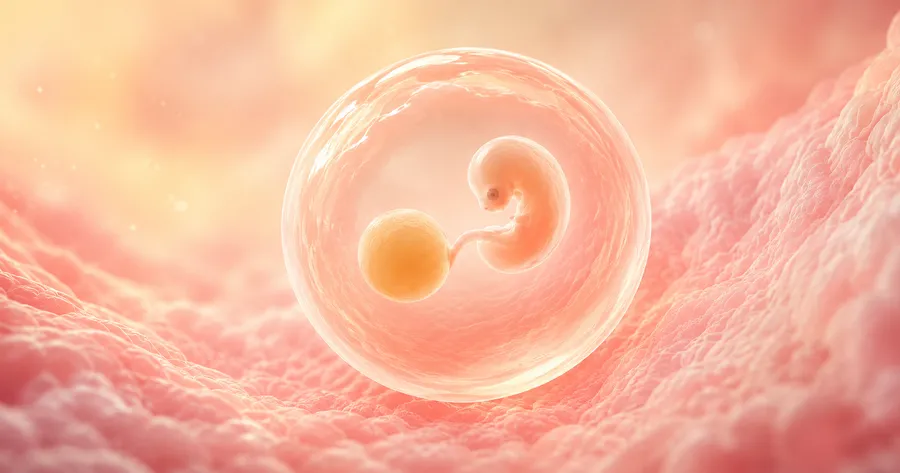
At 6 weeks pregnant, many women feel that pregnancy is becoming more real, either because of a missed period, a positive pregnancy test, or stronger symptoms such as nausea, fatigue, and breast tenderness.
At the same time, the embryo is moving through an important stage of development. The early nervous system, heart, and basic organ structures continue forming, and a heartbeat may begin to be seen in some cases when ultrasound is done at the right time.
This content is educational only and does not provide a diagnosis or treatment plan. If you have bleeding, severe pain, dizziness, fainting, vomiting that prevents fluids, fever, or a history of ectopic pregnancy, consult a licensed clinician in Saudi Arabia.
Week 6 is counted from the first day of your last menstrual period. This means your medical pregnancy age may be six weeks, while the embryo's actual age after fertilization is about two weeks shorter.
If your cycle is regular, you may now be far enough past a missed period for pregnancy testing to be clearer. If your cycles are irregular, dating may be less certain and your clinician may rely on ultrasound or serial blood tests.
You can use the pregnancy due date calculator as an initial estimate, then confirm dating later based on ultrasound and cycle history.
Pregnancy symptoms may become more noticeable this week because pregnancy hormones are rising. Symptoms vary widely, and having few or no symptoms does not automatically mean there is a problem.
If vomiting is severe or you cannot keep fluids down, you may need a severe vomiting in pregnancy evaluation. Your clinician may request electrolytes and kidney function tests if dehydration is suspected.
At week 6, the embryo continues growing quickly. Early structures of the nervous system continue developing, and the neural tube closes and differentiates, an important step in the early formation of the brain and spinal cord.
The heart is still at a very early stage, and the heartbeat may begin to appear during this period or shortly after. Not seeing a heartbeat very early does not always mean there is a problem, because the pregnancy may be earlier than expected.
Early eye, ear, and limb structures also begin appearing in a very early form, while the embryo remains tiny and does not yet look like a recognizable baby.
A heartbeat may be seen at 6 weeks in some pregnancies, especially when dating is accurate and ultrasound is performed at the right time. Visibility depends on actual pregnancy age, ultrasound type, image quality, and hCG level.
Your clinician may recommend an early pregnancy ultrasound or fetal heartbeat follow-up based on your case. If no heartbeat is seen very early, a repeat ultrasound after a short interval may be more appropriate than making a quick conclusion.
At 6 weeks, the embryo is still very small and may measure only a few millimeters. A CRL measurement, or crown-rump length, may be used if the ultrasound image is clear.
Ultrasound at this stage may help confirm the pregnancy sac, location, and dating, but results should be interpreted together with symptoms, cycle history, and blood test results when needed.
Not every pregnant woman needs repeated tests at 6 weeks, but some situations require monitoring based on symptoms and medical history.
If you have not started follow-up yet, week 6 is a good time to organize early pregnancy follow-up, especially if you have symptoms, a chronic condition, regular medications, or a history that needs closer care.
This week can be tiring because of nausea, fatigue, and anxiety around the first ultrasound. Practical support matters: helping arrange appointments, reducing strong smells, and preparing small frequent meals.
It is also helpful for the partner to write down questions for the clinician, especially about ultrasound, heartbeat, medication safety, and nausea.
After week 6, the embryo continues growing quickly and heartbeat or ultrasound follow-up may become clearer depending on the case. You can continue to week 7 of pregnancy or return to the pregnancy week-by-week guide.
In the month-by-month guide
See the wider monthly context, then return to the more precise weekly detail when needed.
Explore library content by the stage most relevant to you.
Advertisement
Subscribe to our week-by-week pregnancy newsletter
Compare hospitals and prices by city and birth type, then continue to booking with clear steps.