Three stages, one journey
Choose your pregnancy trimester
Weeks and months are shown together so you can locate your stage quickly. When month and trimester boundaries differ, the gestational week remains the more precise clinical reference.
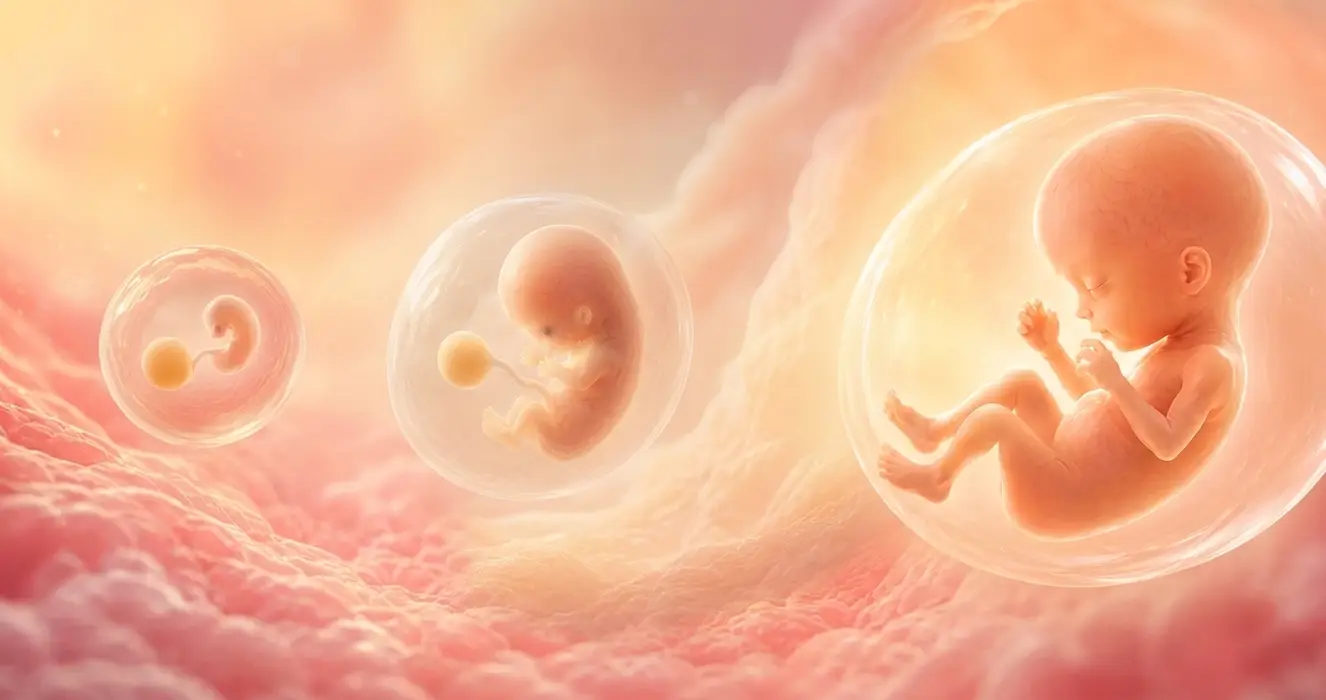 Weeks 1–13Months 1–3
First Trimester of Pregnancy
From the beginning of pregnancy through approximately week 13: early fetal formation, first pregnancy symptoms, and initial prenatal care.
Explore this trimester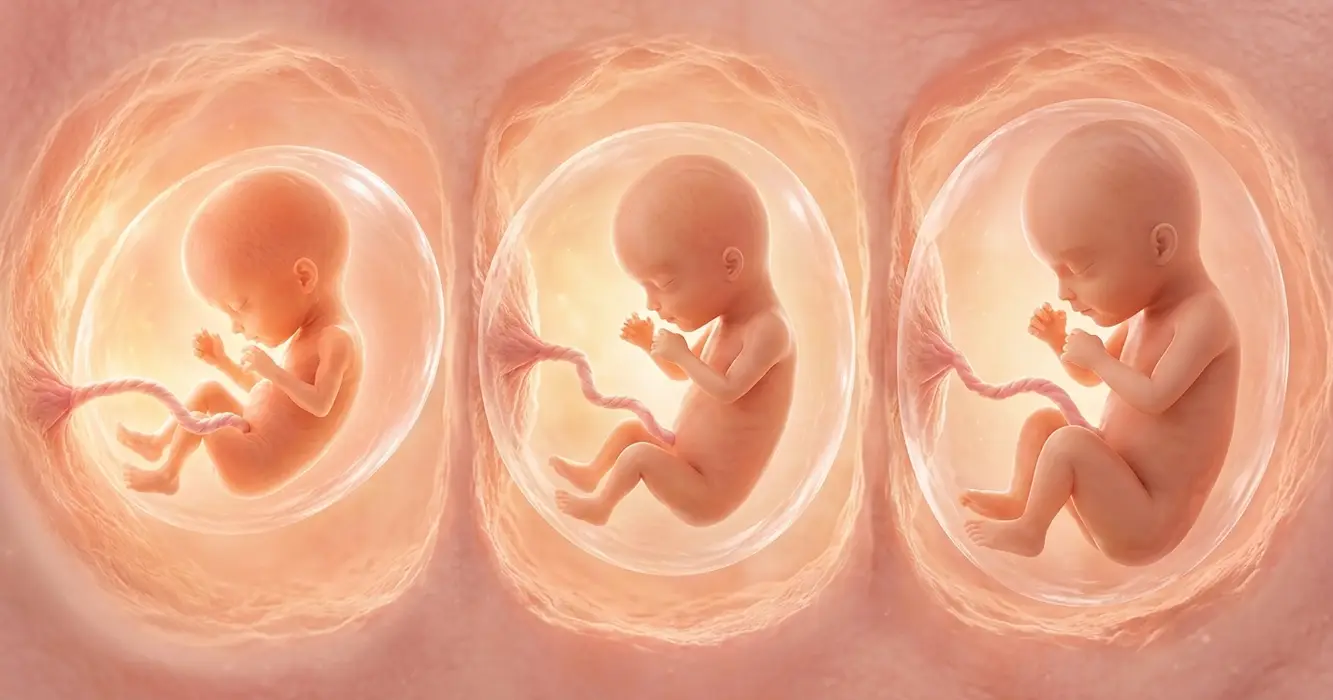 Weeks 14–27Months 4–6 + start of month 7
Second Trimester of Pregnancy
A stage of rapid growth, a more visible pregnancy, fetal movement, the anatomy scan, and mid-pregnancy screening.
Explore this trimester Weeks 28–40Rest of month 7 + months 8–9
Third Trimester of Pregnancy
A stage of fetal weight gain and maturation, closer prenatal follow-up, and practical preparation for labor and birth.
Explore this trimesterImportant: trimesters are defined clinically by gestational weeks, while months are a simpler way to understand pregnancy. One month can therefore overlap two trimesters. When they differ, use the gestational week confirmed by your maternity team.
How are pregnancy trimesters divided by weeks and months?
This guide uses the clinical trimester framework: the first trimester through the end of week 13, the second trimester from week 14 through week 27, and the third trimester beginning at week 28 and continuing to the end of pregnancy.
The LahaLak month guide maps month 1 to weeks 1–4, month 2 to 5–8, month 3 to 9–13, month 4 to 14–17, month 5 to 18–21, month 6 to 22–26, month 7 to 27–30, month 8 to 31–35 and month 9 to 36–40. This is why the systems overlap during month 7.
Gestational weeks are the clinical reference, while months are included to make the journey easier to understand.
What makes each trimester different?
The first trimester is dominated by early fetal formation, early pregnancy symptoms and initial prenatal care. The second trimester brings rapid growth, a more visible pregnancy, fetal movement, the anatomy scan and gestational-diabetes screening.
During the third trimester, brain and lung maturation continues, fetal weight increases, and movement, presentation, closer prenatal follow-up and birth preparation become increasingly important.
A trimester page gives you the big picture. From there, you can move directly to a pregnancy month or week when you need more precise detail.
When is a trimester guide most useful?
Use a trimester guide when you want to understand the whole stage: how symptoms change, how the fetus develops, which tests and care milestones matter, and what deserves attention before the next stage.
If your question relates to a specific test, appointment or developmental change, the week page is more precise. If you naturally think about pregnancy by month, the month guide may be easier to use.
Warning signs that should not wait for the next stage
Some symptoms should not wait until the next routine visit, regardless of trimester. Examples include significant bleeding, fluid leakage, severe or persistent pain, severe headache with vision changes, fever or clear deterioration.
Once fetal movement is established, a clear reduction or concerning change in movement should also prompt contact with your maternity care team.
Pregnancy trimester FAQs
What are the three pregnancy trimesters?
Do pregnancy months align exactly with trimesters?
Which months are in the first trimester?
Which months are in the second trimester?
Which months are in the third trimester?
Should I follow pregnancy by week, month or trimester?
When should I contact a clinician during pregnancy?
Pregnancy & Birth Library Stages
Explore library content by the stage most relevant to you.