
Lahalak Medical PlatformDifferentiate Care
Find out when hair loss is pathological and requires a dermatologist. Learn about warning signs, diagnostic tests, and medically approved treatments.
Advertisement
Hair is a vital component of personal identity and appearance, which is why noticing any changes in its density or shedding rate can cause significant concern. To understand hair loss correctly, one must first understand that hair goes through a continuous growth cycle consisting of three main phases: the growth phase (Anagen), which lasts for several years; the transitional phase (Catagen); and the resting phase (Telogen), which culminates in shedding to allow new hair to grow. Based on this natural cycle, losing some hair daily is a completely normal physiological process.
According to the American Academy of Dermatology, it is normal to shed between 50 and 100 hairs per day. This shedding typically occurs during showering, brushing, or sleeping. However, hair loss becomes pathological and requires attention when it noticeably and consistently exceeds this rate, or when it is accompanied by visible changes in the scalp or a significant reduction in overall hair volume. Distinguishing between temporary physiological shedding and chronic pathological hair loss requires a precise evaluation by a qualified dermatologist to prevent the condition from worsening.
Several clinical warning signs indicate that hair loss is not just a passing phase but rather a symptom of an underlying medical or dermatological issue that requires specialist intervention. These signs include:
If you suddenly notice clumps of hair falling out when brushing or washing, or find unusual amounts of hair on your pillow or clothes, this acute shedding warrants immediate medical consultation. It could indicate acute telogen effluvium, often triggered by physical or psychological stress, or sudden hormonal fluctuations.
The appearance of smooth, round, or oval bald patches on the scalp, beard, or eyebrows is a classic sign of Alopecia Areata. This is an autoimmune condition where the body mistakenly attacks its own hair follicles, requiring early diagnosis to initiate appropriate topical or intralesional immunomodulatory therapies.
When hair loss is accompanied by severe itching, pain or tenderness upon touching the scalp, redness, thick scaling, or pustules, it indicates active scalp inflammation. These symptoms may stem from fungal infections (like tinea capitis), severe seborrheic dermatitis, or scarring alopecias, which can cause permanent hair loss if not treated promptly.
If you notice a gradual recession of the hairline, widening of the central part, or thinning at the crown over months or years, this is typically indicative of androgenetic alopecia (pattern baldness). Early intervention helps slow down the progression and preserve active follicles.
Hair loss is not always confined to the scalp. Losing hair from the eyebrows, eyelashes, underarms, or other body areas can point to systemic autoimmune disorders or severe thyroid dysfunction, requiring a comprehensive medical evaluation.
The following table outlines the key differences between the most common types of hair loss encountered in clinical practice:
| Type of Hair Loss | Primary Causes | Key Symptoms & Signs | Is It Reversible? |
|---|---|---|---|
| Androgenetic Alopecia | Genetics and androgen hormones | Gradual thinning at the crown and hairline, widening part | Can be managed and slowed with medical treatment |
| Telogen Effluvium | Severe stress, nutritional deficiencies, postpartum, surgery | Sudden, diffuse shedding across the entire scalp | Yes, usually resolves once the underlying trigger is addressed |
| Alopecia Areata | Autoimmune response | Smooth, round, well-defined bald patches | Yes, with appropriate topical or immunomodulatory therapies |
| Traction Alopecia | Continuous pulling/tight hairstyles | Receding hairline and damaged follicles in high-tension areas | Yes in early stages; can become permanent if scarring occurs |
When booking an appointment for a scalp examination, the dermatologist follows a systematic scientific approach to reach an accurate diagnosis, which includes:
The doctor begins by visually examining the scalp to assess the pattern of hair loss and the condition of the skin. They may perform a simple "pull test," gently tugging a small group of hairs to estimate how many shed easily, helping determine if active shedding is present.
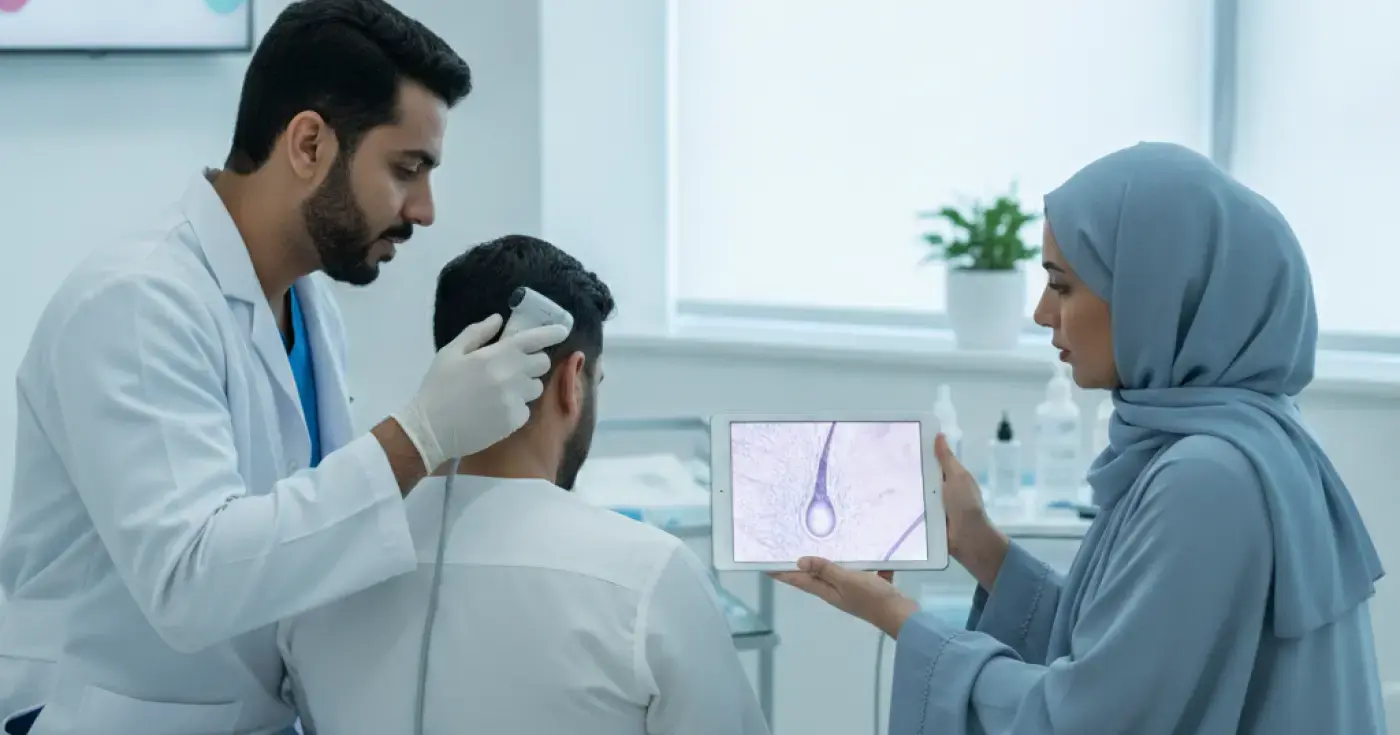
Dermatologists use a specialized magnifying tool called a trichoscope to examine the follicles, hair shafts, and scalp skin. This non-invasive test reveals subtle signs invisible to the naked eye, such as variations in hair shaft diameter or inflammation around the follicles, making it easier to differentiate between types of hair loss.
In many cases, hair loss is a reflection of internal health issues. Therefore, the doctor may order comprehensive blood tests, typically including: iron and ferritin levels, thyroid function tests, vitamin D, vitamin B12, zinc, and hormonal panels for women if symptoms like PCOS or irregular periods are present.
Based on the diagnosis, the dermatologist designs a customized treatment plan. It is crucial to understand that hair loss treatment requires patience and consistency, as visible results typically take 3 to 6 months of continuous therapy. Medical options include:
Alongside medical treatment, proper daily care plays a significant role in supporting hair health and reducing shedding:
Hair loss can be a minor cosmetic concern or an early indicator of an underlying medical condition requiring treatment. Relying on unverified home remedies or random products can waste valuable time and allow the condition to progress to a point where it is harder to treat. Remember that consulting a dermatologist at the first signs of abnormal hair loss ensures an accurate diagnosis and the most effective treatment plan, preserving both your hair health and your confidence.
Clear, direct answers
Advertisement
Continue exploring
What lab tests and exams do doctors order for hair loss? Learn about blood tests, scalp biopsies, and clinical examinations in detail.
Read article
Learn the clinical differences between alopecia areata and general hair loss, including causes, symptoms, diagnosis, and medical treatments.
Read article
Discover the early signs of androgenetic alopecia in men and women, and explore the best clinically proven treatments and management options.
Read articleExplore the topic