
Lahalak Medical PlatformDifferentiate Care
What lab tests and exams do doctors order for hair loss? Learn about blood tests, scalp biopsies, and clinical examinations in detail.
Advertisement
Hair loss is a common concern that affects millions of people worldwide, both men and women. While shedding a certain number of hairs daily is a normal part of the hair growth cycle, excessive or sudden shedding can indicate an underlying health issue. This is where consulting a board-certified dermatologist becomes essential. Identifying the exact cause of hair loss is the first and most critical step in developing a successful, targeted treatment plan.
The causes of hair loss are diverse and often overlap. They can range from genetic predisposition and hormonal imbalances to nutritional deficiencies and autoimmune conditions. Consequently, relying on random over-the-counter remedies without a proper medical evaluation is rarely effective. A comprehensive clinical assessment, backed by specific laboratory tests, is necessary to uncover the root cause and address it from within.
It is highly recommended to seek professional medical advice as soon as you notice any of the following warning signs:
Before ordering laboratory blood tests, a dermatologist will perform a thorough physical examination of your scalp and hair to assess the pattern of hair loss and the health of your hair follicles. This initial evaluation typically includes:
This is a simple, non-invasive diagnostic test performed during your consultation. The doctor gently grasps a small section of hair (approximately 40 to 60 strands) from different areas of the scalp and pulls lightly. If more than 10% of the hairs (6 or more strands) are easily pulled out, it indicates active hair shedding, which is commonly seen in conditions like telogen effluvium.
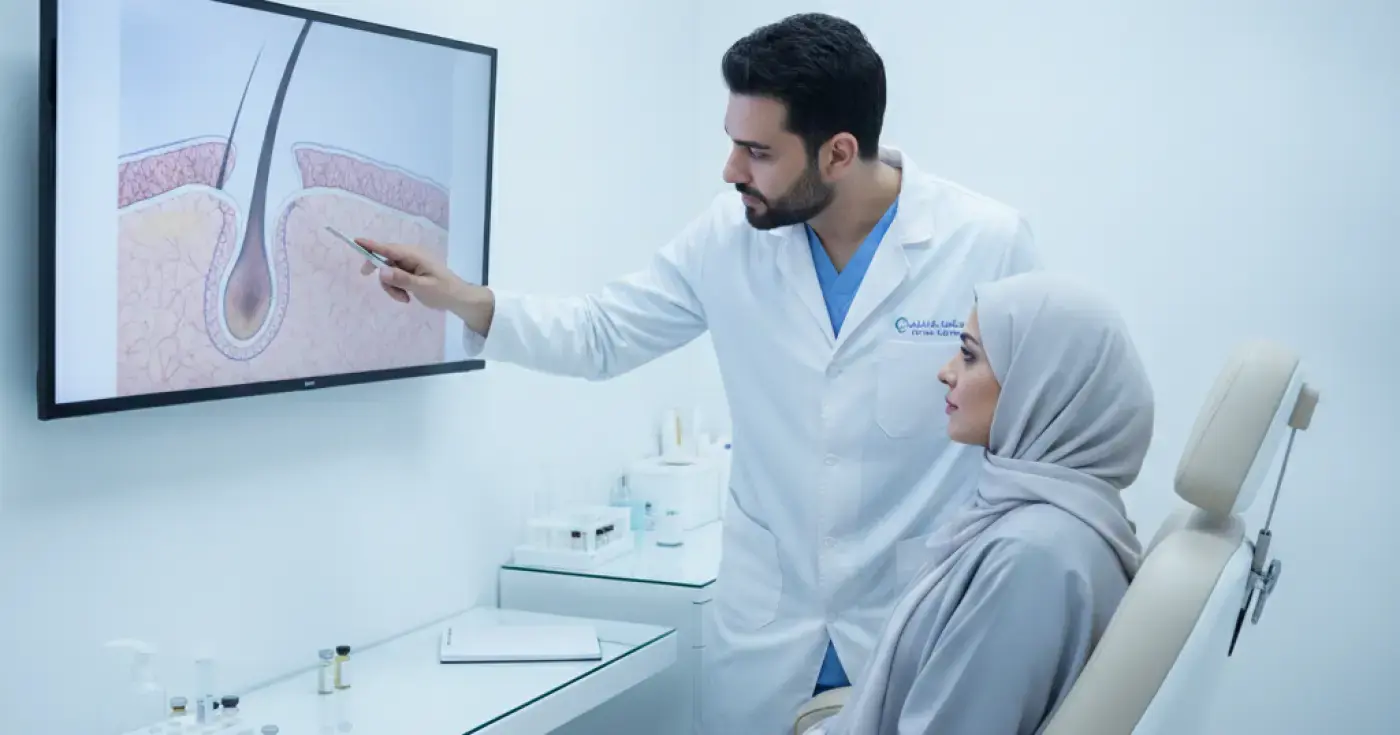
Using a specialized handheld magnifying tool called a trichoscope, the dermatologist examines your scalp and hair follicles under high magnification. This painless procedure allows the physician to evaluate the skin surrounding the follicles, measure hair shaft diameter variability, and detect signs of inflammation or scarring. This helps differentiate between androgenetic alopecia, alopecia areata, and scarring alopecias.
Laboratory blood tests are vital tools for identifying internal physiological imbalances that disrupt the hair growth cycle. The most commonly ordered blood tests include:
Iron deficiency, even in the absence of clinical anemia, is a leading cause of hair loss, particularly in women. A ferritin test measures the amount of stored iron in your body. Hair follicle cells require adequate levels of ferritin to divide and produce healthy hair shafts. Low ferritin levels can trigger premature shedding by forcing hair follicles out of the growth phase.
The thyroid gland produces hormones that regulate metabolism and cell growth, including the cells responsible for hair production. Both an underactive thyroid (hypothyroidism) and an overactive thyroid (hyperthyroidism) can disrupt the normal hair cycle, leading to dry, brittle, and diffuse hair thinning.
Healthy hair growth requires a steady supply of essential micronutrients. Key nutritional tests include:
Hormones exert a powerful influence on hair follicle size and growth duration. A dermatologist may order hormonal testing if you exhibit other symptoms such as irregular menstrual cycles, persistent acne, or hirsutism (excessive body hair). Common hormone tests include:
A complete blood count (CBC) helps evaluate your overall health, rule out systemic anemia, and detect signs of infection. Additionally, inflammatory markers such as Erythrocyte Sedimentation Rate (ESR) or C-Reactive Protein (CRP) may be checked if an underlying autoimmune or systemic inflammatory condition is suspected.
In complex cases where clinical exams and blood tests do not yield a clear diagnosis, or when scarring alopecia is suspected, more advanced diagnostic procedures may be required:
A scalp biopsy is considered the gold standard for diagnosing challenging hair loss conditions. Under local anesthesia, the doctor removes a small, circular sample of scalp tissue (usually 2 to 4 mm in diameter) containing hair follicles. This sample is sent to a dermatopathologist for microscopic evaluation to determine if there is active inflammation, scarring, or follicle miniaturization, providing a definitive diagnosis.
The following table summarizes the most common diagnostic tests and their primary medical purposes:
| Test Name | Primary Diagnostic Purpose | Procedure Type |
|---|---|---|
| Serum Ferritin | Evaluates iron stores to rule out deficiency-induced shedding | Laboratory Blood Test |
| TSH (Thyroid Stimulating Hormone) | Screens for thyroid dysfunction affecting the hair cycle | Laboratory Blood Test |
| Vitamin D Test | Detects deficiencies linked to poor follicle cycling and alopecia | Laboratory Blood Test |
| Trichoscopy | Visualizes scalp skin and hair shafts under high magnification | In-Clinic Clinical Exam |
| Scalp Biopsy | Provides definitive diagnosis for scarring and complex alopecias | Minor In-Clinic Procedure |
To ensure accurate and reliable test results, consider the following preparatory steps:
A common misconception is that a single, basic blood test can identify all causes of hair loss, or that self-treating with random supplements is safe. In reality, taking excessive doses of certain nutrients (such as Vitamin A or Selenium) can actually worsen hair loss. Accurate diagnosis and treatment must always be guided by a qualified medical professional based on clinical evidence.
Hair loss is often more than just an aesthetic concern; it can be a reflection of your internal health. Undergoing the appropriate medical evaluations saves time, prevents frustration, and protects you from using ineffective treatments that could harm your health. Remember, early and accurate diagnosis by a qualified dermatologist consultation is the key to restoring and maintaining healthy hair.
Clear, direct answers
Advertisement
Continue exploring
Learn the clinical differences between alopecia areata and general hair loss, including causes, symptoms, diagnosis, and medical treatments.
Read article
Discover the early signs of androgenetic alopecia in men and women, and explore the best clinically proven treatments and management options.
Read article
Learn why postpartum hair loss happens, when it starts and ends, and the best medical and home care tips to restore your hair health safely.
Read article