
Lahalak Medical PlatformDifferentiate Care
Learn why postpartum hair loss happens, when it starts and ends, and the best medical and home care tips to restore your hair health safely.
Advertisement
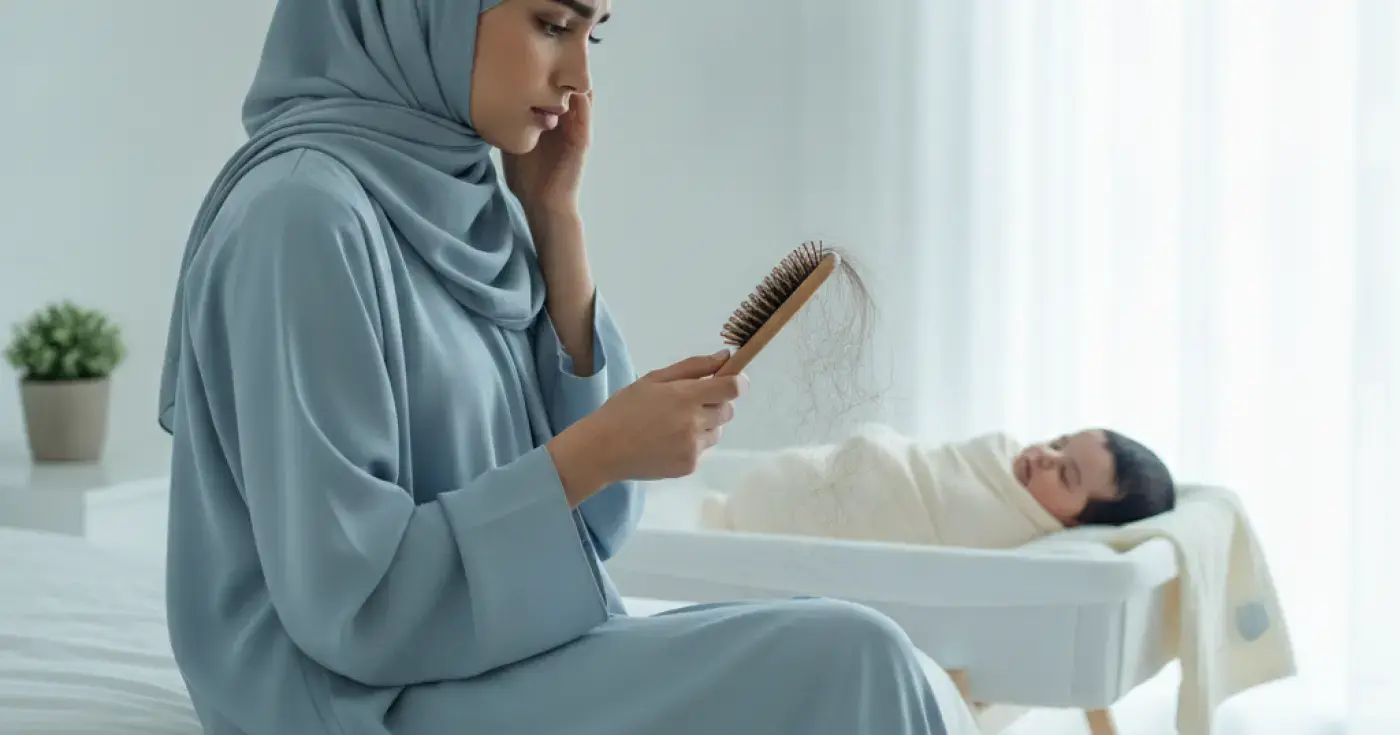
Postpartum hair loss is a very common and often distressing experience for many new mothers. Clinically known as telogen effluvium, this condition is temporary and is not a sign of permanent hair loss. It is a natural physiological response to the rapid hormonal shifts that occur after childbirth.
During pregnancy, high levels of estrogen prolong the growth phase (anagen phase) of the hair cycle. This prevents the normal daily shedding of hair, resulting in thicker, more lustrous locks. However, immediately after childbirth, estrogen and progesterone levels drop sharply back to normal.
This sudden hormonal plunge triggers a large percentage of hair follicles to prematurely enter the resting phase (telogen phase). Approximately two to four months later, these hairs begin to shed simultaneously. Essentially, you are shedding the hair that would have normally fallen out during the nine months of pregnancy.
Postpartum hair shedding typically begins between two and four months after giving birth, peaking around the fourth month. For most women, hair growth patterns return to normal within six to twelve months postpartum as the body's hormones stabilize.
| Phase | Estrogen Level | Hair Follicle Status | General Hair Appearance |
|---|---|---|---|
| During Pregnancy | Very High | Prolonged growth phase (Anagen) | Thicker, fuller, and shinier |
| Postpartum (2-4 Months) | Low (Normal) | Mass transition to resting phase (Telogen) | Noticeable shedding during brushing |
| Postpartum (6-12 Months) | Stable | Gradual return to normal growth cycle | New hair growth (baby hairs) visible |
While this process is biological and must run its course, you can take several steps to support scalp health and manage the shedding:
Sometimes, excessive hair loss can be exacerbated by other postpartum conditions, such as iron deficiency anemia or postpartum thyroiditis. It is highly recommended to seek a dermatology consultation or request a vitamin and mineral blood test if you experience:
Remember that postpartum hair loss is a temporary phase and a sign of your body adjusting back to its non-pregnant state. Practicing proper postpartum hair care and maintaining a nutrient-rich diet are the best ways to support your hair's natural recovery journey.
Clear, direct answers
Advertisement
Continue exploring
Learn how vitamin and mineral deficiencies cause hair loss, the key nutrients for hair follicle health, and when to consult a dermatologist.
Read article
A medical guide on male pattern hair loss: learn when it starts, how it is diagnosed, and clinically proven treatments including medications and transplants.
Read article
A comprehensive medical guide on the causes of hair loss in women, diagnostic methods, and the latest clinical and aesthetic treatment options.
Read articleExplore the topic