
Lahalak Medical PlatformDifferentiate Care
A medical guide on male pattern hair loss: learn when it starts, how it is diagnosed, and clinically proven treatments including medications and transplants.
Advertisement
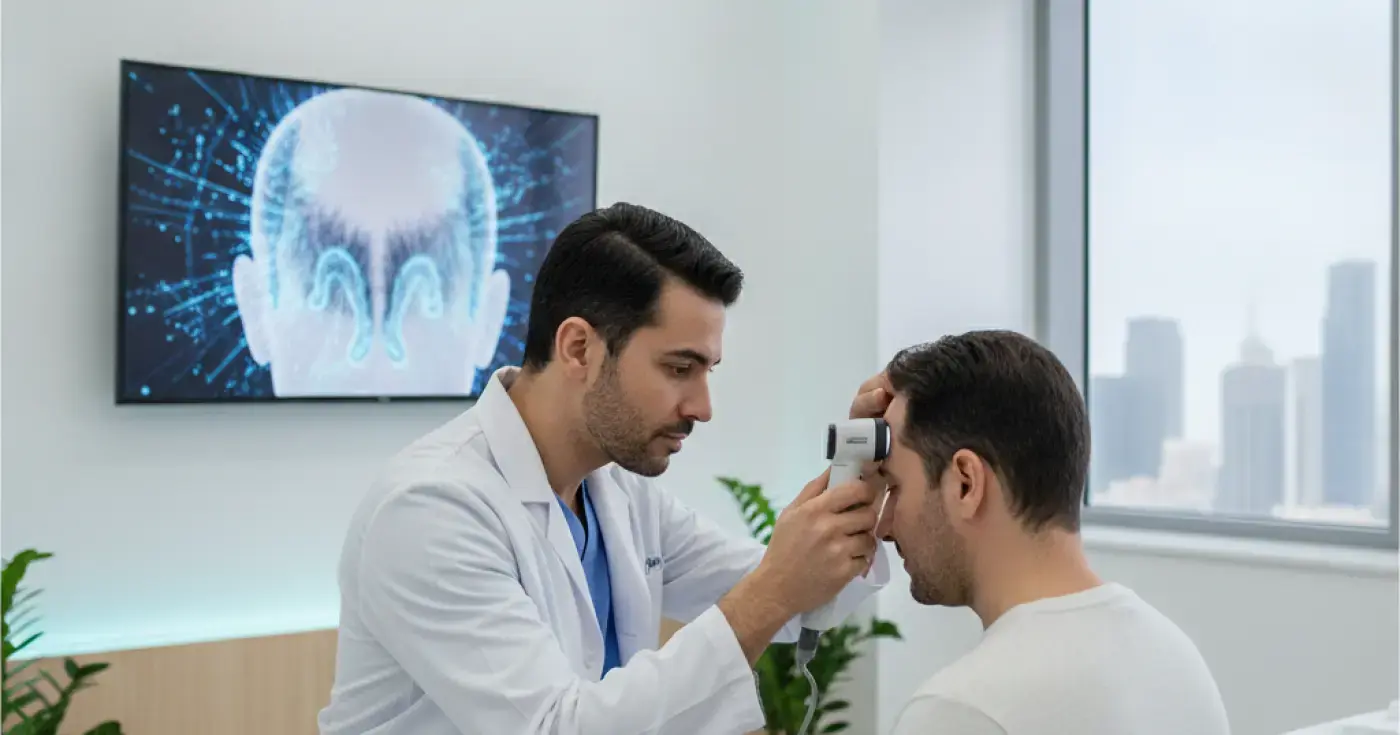
Male pattern hair loss, clinically known as androgenetic alopecia, is one of the most common conditions affecting men worldwide. While often viewed as a cosmetic concern, understanding its biological and medical aspects is crucial for choosing effective, science-based treatments and avoiding unproven remedies.
In this comprehensive clinical guide, we will explore when male hair loss typically begins, its primary causes, how dermatologists diagnose the condition, and the medically approved treatment options available in Saudi Arabia.
There is no single age at which hair loss begins for every man. However, clinical evidence shows that androgenetic alopecia can start anytime after puberty, with the likelihood and severity increasing with age:
To evaluate the progression of hair loss, dermatologists utilize the Norwood Scale, a clinical classification system ranging from Stage 1 (minimal or no recession) to Stage 7 (severe hair loss with only a band of hair remaining on the sides and back).
Male pattern hair loss is driven by a combination of hormonal, genetic, and environmental factors:
DHT, an androgen hormone derived from testosterone, is the primary biological driver of male pattern baldness. In genetically susceptible individuals, DHT binds to receptors in hair follicles, causing them to shrink (miniaturize) over time. Consequently, the hair produced becomes progressively thinner, shorter, and lighter until the follicle stops producing hair entirely.
Genes inherited from both parents determine the sensitivity of hair follicles to DHT. Contrary to the popular myth that baldness is only inherited from the mother's side, research shows that multiple genes from both maternal and paternal lineages contribute to the condition.
While androgenetic alopecia is the most common cause, other factors can trigger temporary or permanent hair loss in men, including:
Obtaining an accurate diagnosis is essential before starting any treatment. A thorough evaluation by a dermatologist typically includes:
Treatments are designed to slow hair loss, stimulate dormant follicles, or restore hair in areas of complete baldness. Early intervention yields the best clinical outcomes.
For areas with permanent baldness where follicles have completely atrophied, hair transplantation offers a long-term solution. Healthy, DHT-resistant follicles are harvested from a donor area (usually the back of the head) and transplanted into the thinning areas using advanced techniques like Follicular Unit Extraction (FUE) or Direct Hair Implantation (DHI).
The following table compares the most widely used treatments to help patients understand their options:
| Treatment | Primary Mechanism | Administration | Expected Outcome | Important Considerations |
|---|---|---|---|---|
| Topical Minoxidil 5% | Enhances scalp blood flow | Topical (twice daily) | Slows loss & promotes mild regrowth | Results reverse if treatment is stopped | Reduces DHT levels | Daily oral tablet | Preserves existing hair & improves density | Requires prescription & medical monitoring |
| PRP Therapy | Delivers growth factors to follicles | Periodic in-office injections | Strengthens weak hair & supports density | Best used as a supportive, adjunctive therapy |
| Hair Transplant | Relocates healthy follicles | Minor surgical procedure | Permanent, natural-looking hair restoration | Requires adequate donor hair & good health |
Adopting healthy daily habits can complement medical treatments and support overall hair health:
While male pattern baldness is a gradual process, certain signs warrant prompt medical evaluation to rule out other health conditions:
Addressing male hair loss begins with awareness and early clinical intervention. Consulting a dermatologist for a personalized treatment plan is the most reliable way to preserve your hair and explore safe, effective restoration options. Avoid unverified commercial products and rely on clinically proven medical guidance.
Clear, direct answers
Advertisement
Continue exploring
A comprehensive medical guide on the causes of hair loss in women, diagnostic methods, and the latest clinical and aesthetic treatment options.
Read article
Learn how to distinguish between normal daily hair shedding and pathological hair loss, including common causes, diagnostic tests, and medical treatments.
Read article
A comprehensive medical guide on the causes of hair loss, diagnostic tests, and clinical treatment options approved by dermatologists.
Read articleExplore the topic