
Lahalak Medical PlatformDifferentiate Care
Learn how to distinguish between normal daily hair shedding and pathological hair loss, including common causes, diagnostic tests, and medical treatments.
Advertisement
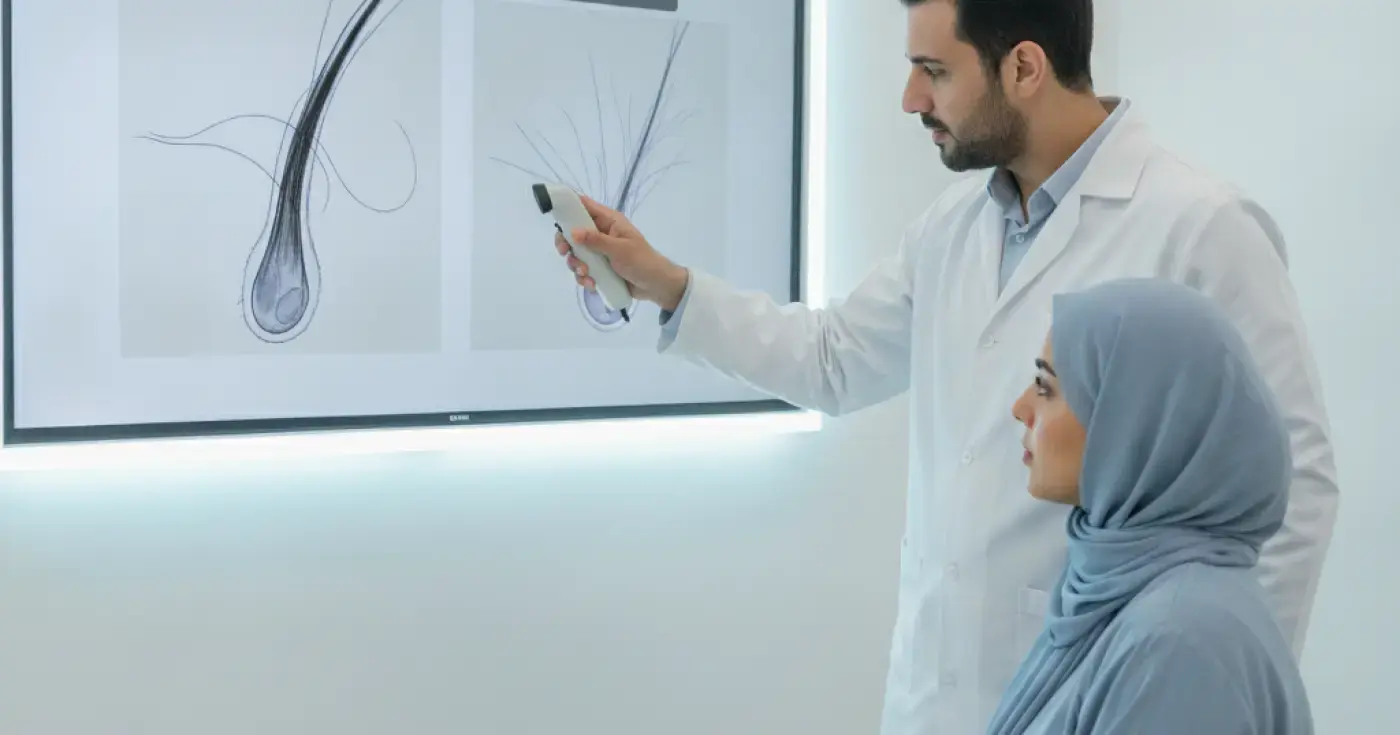
Hair is often considered a symbol of health and vitality, making any noticeable hair loss a source of anxiety for many. However, losing hair is not always a sign of an underlying medical issue. Every hair on our scalp goes through a continuous natural life cycle. Understanding this cycle is the first step in distinguishing between normal shedding and pathological hair loss that requires professional evaluation at a dermatology clinic.
Each hair follicle goes through three main phases: the growth phase (Anagen), which lasts for several years; the transitional phase (Catagen), lasting a few weeks; and the resting and shedding phase (Telogen), which ends with the hair falling out to make room for a new one. Clinical studies show that losing between 50 to 100 hairs per day is completely normal and is simply a part of this natural renewal process. This rate may slightly increase during washing or brushing, which is no cause for concern as long as the overall hair density remains stable and no visible bald patches appear.
Hair loss becomes pathological when it exceeds the normal daily rate or is accompanied by noticeable changes in the scalp or hair growth patterns. Key warning signs include:
The factors causing abnormal hair loss are diverse and clinically classified into internal and external causes:
Androgenetic alopecia (pattern baldness) is the most common cause of hair loss in both men and women, linked to the hair follicles' sensitivity to dihydrotestosterone (DHT). Hormonal imbalances, such as polycystic ovary syndrome (PCOS) or thyroid disorders, also play a major role in weakening hair follicles.
Major physical trauma, such as major surgery, severe illness, high fever, or acute psychological stress, can prematurely push a large number of follicles into the resting phase. This results in heavy shedding 2 to 3 months after the triggering event, a condition known as Telogen Effluvium.
Healthy hair growth requires a steady supply of essential vitamins and minerals. Crash dieting or malabsorption issues can lead to depleted iron, zinc, and vitamin D levels, which directly impacts follicle strength and hair production.
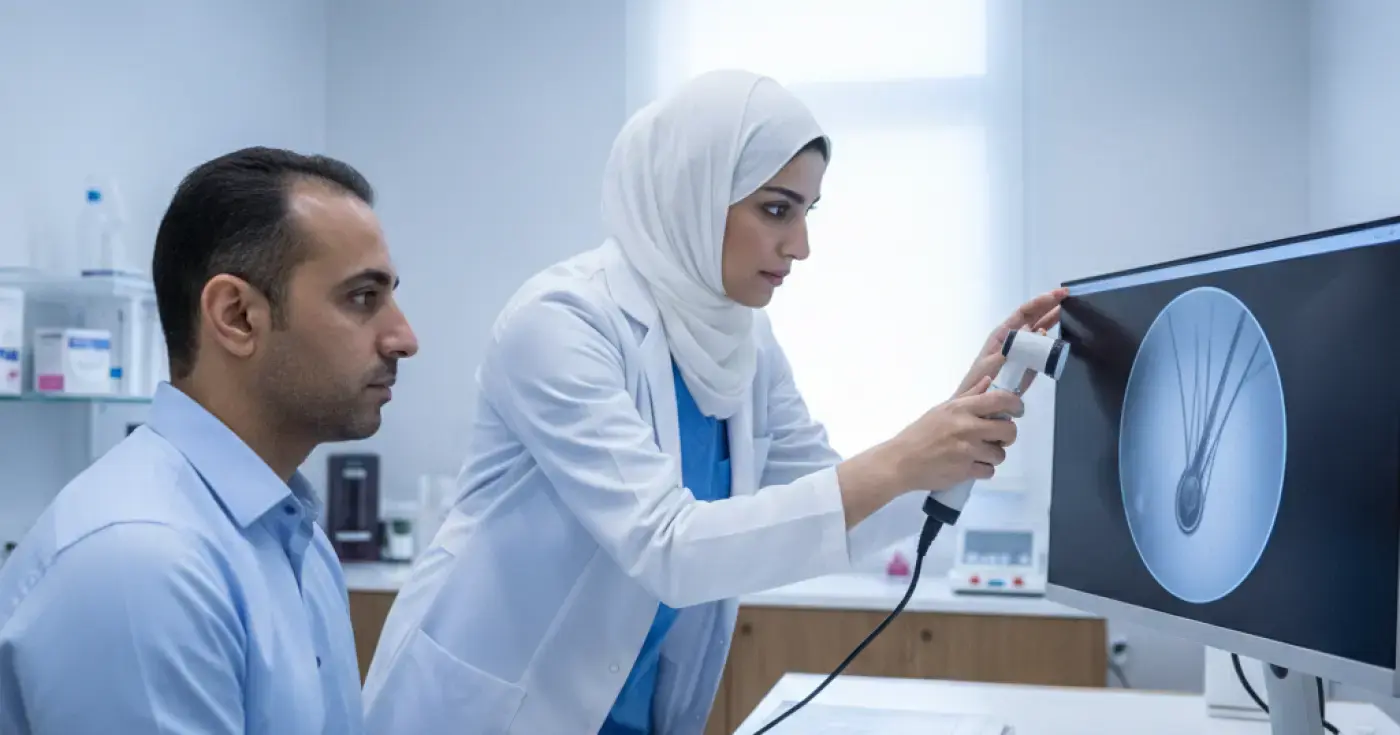
Dermatologists use several clinical tools and techniques to accurately diagnose the cause of hair loss:
| Feature | Normal Shedding (Physiological) | Pathological Hair Loss (Clinical) |
|---|---|---|
| Daily Rate | 50 - 100 hairs per day | More than 120 - 150 hairs per day consistently |
| General Appearance | Stable density, no visible bald patches | Visible thinning, receding hairline, or widening part |
| Shed Hair Root Appearance | Features a small, dry white bulb at the end | May shed without a bulb or appear fractured/broken |
| Scalp Symptoms | No itching, redness, or abnormal scaling | May be accompanied by itching, dandruff, redness, or pain |
| Common Causes | Natural renewal of hair follicles | Genetics, hormonal imbalance, deficiencies, acute stress |
| Required Action | Routine hair care and balanced nutrition | Medical consultation and a tailored treatment plan |
If you notice excessive hair shedding continuing for more than two consecutive months without improvement, if you develop sudden patchy hair loss, or if the shedding is accompanied by irregular menstrual cycles or excess facial hair in women, scheduling a medical consultation is crucial to prevent irreversible follicle damage.
To pinpoint the exact cause of hair loss, doctors typically recommend a panel of essential blood tests, including:
Medical treatments for hair loss vary depending on the diagnosis and may include:
Topical Minoxidil (2% or 5%) is an FDA-approved treatment that stimulates hair growth by increasing blood flow to the follicles. Nutritional supplements may also be prescribed to correct diagnosed deficiencies.
Advanced clinical options include Platelet-Rich Plasma (PRP) therapy, which uses the patient's own growth factors to stimulate weak follicles, scalp mesotherapy, and Low-Level Laser Therapy (LLLT).
For advanced cases of androgenetic alopecia that do not respond to medical therapies, hair transplantation using techniques like Follicular Unit Extraction (FUE) offers a highly effective, permanent solution.
To maintain hair strength and protect it from abnormal shedding, it is highly recommended to follow a structured hair loss treatment guide and adopt these healthy habits:
Clear, direct answers
Advertisement
Continue exploring
A comprehensive medical guide on the causes of hair loss, diagnostic tests, and clinical treatment options approved by dermatologists.
Read article
Learn the warning signs of skin infections, when to see a dermatologist, and how to prevent serious complications like cellulitis.
Read article
Learn how to protect your family from bacterial, fungal, and viral skin infections at home with practical hygiene steps and disinfection tips.
Read articleExplore the topic