
Lahalak Medical PlatformDifferentiate Care
A comprehensive medical guide on the causes of hair loss, diagnostic tests, and clinical treatment options approved by dermatologists.
Advertisement
Hair loss, clinically referred to as alopecia, is a highly prevalent dermatological concern that can significantly impact an individual's psychological well-being and quality of life. To understand hair loss scientifically, it is essential to first comprehend the physiological hair growth cycle. Every hair follicle on the human scalp undergoes a continuous, asynchronous cycle consisting of three primary phases:
Under normal physiological conditions, shedding 50 to 100 hairs per day is considered standard. However, when this delicate balance is disrupted—either due to a shortened anagen phase or a premature shift of follicles into the telogen phase—pathological hair loss becomes clinically apparent.
The etiology of hair loss is multifactorial, involving genetic predispositions, hormonal fluctuations, environmental influences, and systemic health conditions. The most common causes include:
Androgenetic alopecia is the most frequent cause of progressive hair thinning in both men and women. It is genetically determined and characterized by an increased sensitivity of hair follicles to dihydrotestosterone (DHT), a potent androgen derivative. DHT binds to follicular receptors, leading to progressive follicular miniaturization. Over successive cycles, the hair becomes finer, shorter, and less pigmented until the follicle eventually stops producing hair entirely.
This condition is characterized by diffuse, non-scarring hair shedding that occurs abruptly across the scalp. It is triggered when a significant physical or psychological stressor forces a large percentage of active anagen follicles prematurely into the telogen phase. The shedding typically manifests two to three months after the triggering event. Common triggers include:
Alopecia areata is an autoimmune disorder where the body's immune system mistakenly targets hair follicles during their active growth phase. This results in sudden, well-demarcated circular or oval patches of hair loss on the scalp or body. In severe cases, it can progress to complete loss of scalp hair (alopecia totalis) or total body hair (alopecia universalis).
Endocrine disorders, particularly thyroid dysfunction (hypothyroidism and hyperthyroidism) and Polycystic Ovary Syndrome (PCOS), are major contributors to hair thinning. Nutritional status also plays a critical role; deficiencies in iron (measured via serum ferritin), vitamin D, zinc, and essential amino acids impair follicular cellular metabolism and compromise hair shaft structural integrity.
An accurate diagnosis is paramount to establishing an effective therapeutic regimen. Patients experiencing persistent hair loss should seek a formal dermatologist consultation. The clinical evaluation begins with a comprehensive medical history, focusing on familial hair loss patterns, dietary habits, medication use, and recent systemic stressors.
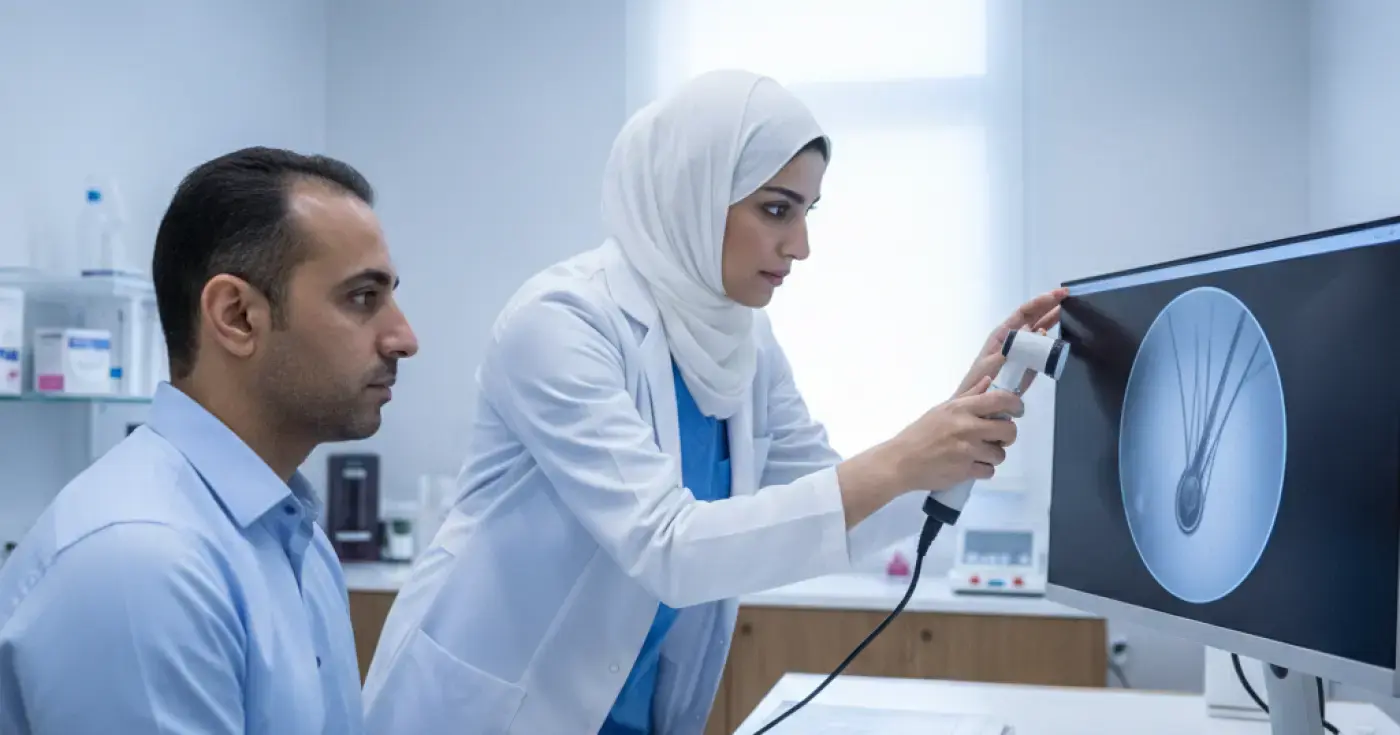
During the physical examination, the dermatologist utilizes a specialized dermatoscope (trichoscopy) to evaluate the scalp, follicular density, and hair shaft caliber. A clinical "pull test" is often performed to assess the severity of active shedding. In atypical or inflammatory cases, a punch biopsy of the scalp may be indicated to rule out scarring (cicatricial) alopecias.
Standard diagnostic laboratory investigations typically include:
Therapeutic interventions are tailored to the specific underlying cause of hair loss. Combining pharmacological therapies with clinical procedures often yields the most favorable clinical outcomes.
Clinically proven and regulatory-approved medical therapies include:
Modern aesthetic medicine offers several minimally invasive clinical options to stimulate follicular activity:
For advanced stages of androgenetic alopecia where medical therapies are insufficient, hair transplantation offers a permanent surgical solution. The procedure involves harvesting androgen-resistant hair follicles from the donor site (typically the occipital scalp) and transplanting them into recipient balding areas using advanced techniques such as Follicular Unit Extraction (FUE) or Direct Hair Implantation (DHI).
The following table outlines the key clinical distinctions between the three most prevalent forms of hair loss:
| Type of Hair Loss | Primary Etiology | Clinical Presentation | Reversibility & Treatment Outlook |
|---|---|---|---|
| Androgenetic Alopecia | Genetic predisposition & DHT sensitivity | Receding hairline and vertex thinning (men); diffuse crown thinning (women) | Progressive; requires long-term medical therapy or surgical transplantation |
| Telogen Effluvium | Acute physiological or psychological stress | Sudden, diffuse shedding across the entire scalp | Highly reversible; resolves spontaneously once the trigger is addressed |
| Alopecia Areata | Autoimmune destruction of hair follicles | Smooth, well-defined circular patches of complete hair loss | Variable; often responds well to local corticosteroid therapy |
In addition to medical interventions, adopting proper hair care practices is vital to preserving hair density and preventing mechanical damage. Dermatologists recommend maintaining a nutritional guidance for hair health rich in proteins, iron, zinc, and essential fatty acids (omega-3) to support the follicular matrix.
Furthermore, patients should avoid damaging styling habits, such as:
While some hair shedding is temporary, certain clinical signs warrant prompt medical evaluation to prevent irreversible follicular damage:
Early clinical intervention remains the most effective strategy to arrest hair loss progression and preserve viable hair follicles safely.
Clear, direct answers
Advertisement
Continue exploring
Learn the warning signs of skin infections, when to see a dermatologist, and how to prevent serious complications like cellulitis.
Read article
Learn how to protect your family from bacterial, fungal, and viral skin infections at home with practical hygiene steps and disinfection tips.
Read article
Learn about molluscum contagiosum symptoms, how the virus spreads, clinical diagnosis, and effective medical treatments for children and adults.
Read articleExplore the topic