
Lahalak Medical PlatformDifferentiate Care
Learn how to protect your family from bacterial, fungal, and viral skin infections at home with practical hygiene steps and disinfection tips.

Advertisement
The home is a sanctuary for the family, but without proper hygiene practices, it can also become a breeding ground for pathogens such as bacteria, fungi, and viruses. Many skin infections spread easily between family members through direct contact or shared personal items. Understanding how these infections are transmitted and implementing simple, consistent preventive measures is key to maintaining healthy skin and family safety.
Skin infections range from mild, easily manageable conditions to severe inflammatory issues requiring medical intervention. In this comprehensive guide, we will explore the most common skin infections transmitted in the household and how to protect your family using scientifically backed hygiene protocols.
Skin infections are classified based on their causative pathogen. The following table compares these types, providing examples, transmission routes, and primary symptoms:
| Infection Type | Common Examples | Primary Transmission Route | Key Early Symptoms |
|---|---|---|---|
| Fungal | Athlete's foot, Ringworm (Tinea) | Sharing towels, walking barefoot on damp floors | Intense itching, redness, scaling, ring-shaped rash |
| Bacterial | Impetigo, Folliculitis, Boils | Direct skin-to-skin contact, sharing razors | Pus-filled blisters, honey-colored crusts, swelling |
| Viral | Warts, Molluscum Contagiosum | Direct contact, touching contaminated personal items | Small skin bumps, rough-textured warts |
| Parasitic | Scabies, Head lice | Prolonged close physical contact, sharing bedding | Severe itching (worse at night), thin gray lines on skin |
Several factors facilitate the transfer of skin microbes from one person to another within the household:
To safeguard your household, adopt a daily routine focused on personal and environmental hygiene. Key recommendations from experts in skin care routine and public health include:
Washing hands with soap and water for at least 20 seconds is the single most effective way to prevent the spread of infectious diseases. Encourage children to wash their hands immediately after returning home, playing outside, before eating, and after using the restroom.
Ensure every family member has their own designated towel for the face and body, as well as individual grooming tools like hairbrushes and nail clippers. Wash towels regularly and dry them on high heat.
If a family member sustains a cut or scrape, clean the area immediately with running water and mild soap, apply an appropriate antiseptic, and cover it with a sterile bandage to prevent bacterial contamination until it heals completely.
Bedding and clothing can harbor skin pathogens, especially fungi and scabies mites. To minimize risk, follow these guidelines:
High-touch surfaces require regular disinfection to prevent indirect transmission. These include doorknobs, faucets, light switches, and remote controls. Use approved household disinfectants regularly.
Pay special attention to sanitizing bathroom floors and bathtubs. Avoid walking barefoot in damp, shared areas, especially if a family member has athlete's foot.
Children and the elderly have more sensitive skin and immune systems that may be less equipped to fight off infections. To protect them, keep their skin well-hydrated to prevent dryness and cracking, which can act as entry points for microbes. Regularly inspect children's skin for unusual rashes or bumps, and seek a dermatologist consultation early if any issues arise to prevent the infection from spreading to others.
While many minor skin issues resolve on their own, certain warning signs require immediate medical evaluation to protect the patient and prevent household transmission:
In such cases, the doctor may perform a skin culture test to identify the exact pathogen and prescribe the appropriate targeted treatment.
Protecting your family from skin infections at home does not require complex procedures; rather, it relies on awareness and consistent daily hygiene habits. By teaching children the importance of personal hygiene and maintaining clean shared spaces, we can create a safe, healthy home environment that protects everyone from infectious skin diseases.
Clear, direct answers
Advertisement
Continue exploring
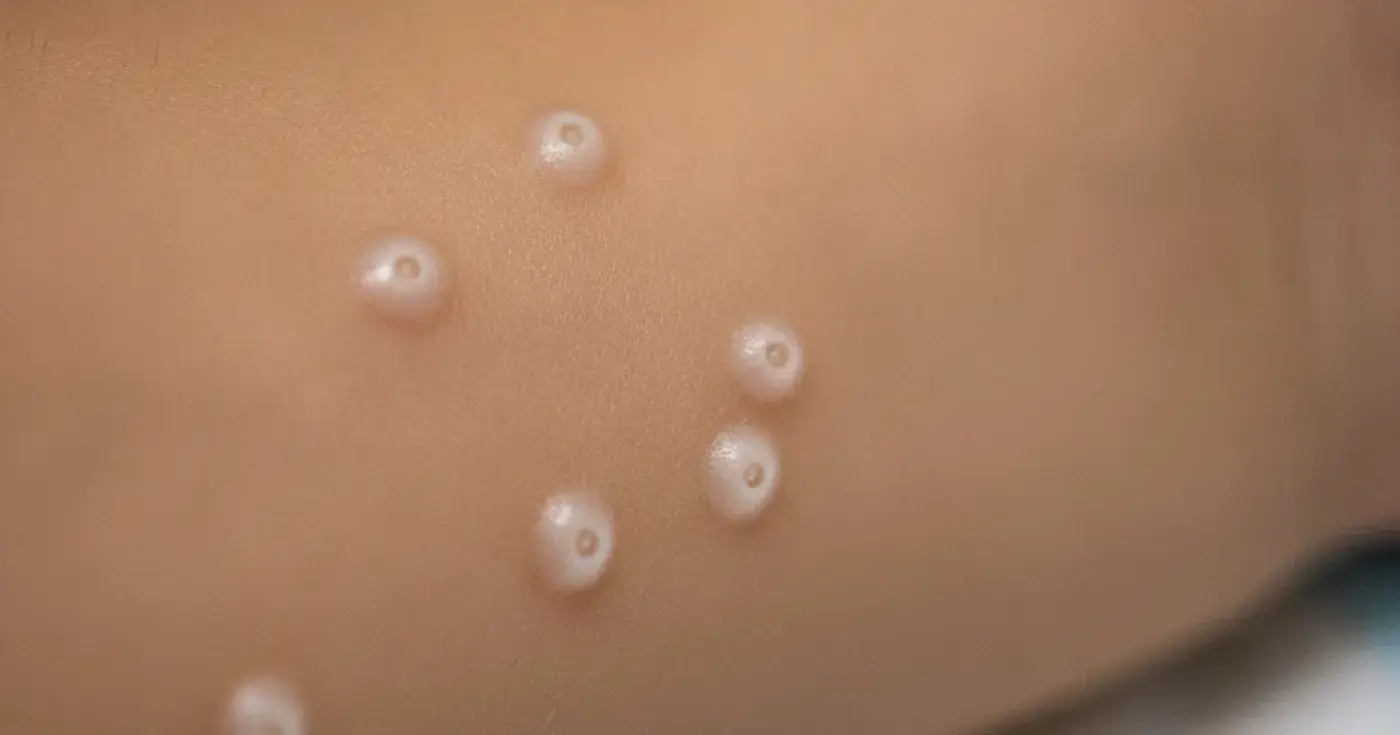
Learn about molluscum contagiosum symptoms, how the virus spreads, clinical diagnosis, and effective medical treatments for children and adults.
Read article
Learn about the causes of skin warts, how they spread, and effective medical treatments like cryotherapy and laser removal.
Read article
A comprehensive guide on impetigo in children, covering symptoms, causes, antibiotic treatments, and practical prevention tips to stop the spread.
Read article