
Lahalak Medical PlatformDifferentiate Care
Discover when mole or skin tag removal is clinically recommended, the safest medical procedures, and what to expect during recovery.

Advertisement
Moles and skin tags are incredibly common skin growths that most people develop at some point in their lives. While the vast majority of these growths are entirely benign and pose no threat to health, certain situations warrant medical evaluation or removal. This comprehensive clinical guide explains the key differences between moles and skin tags, identifies when removal is medically or cosmetically recommended, and outlines the safest, most effective dermatological procedures available.
It is essential to distinguish between a mole and a skin tag, as they differ entirely in their cellular origin and structure. Moles (nevi) are clusters of melanocytes (pigment-producing cells) that appear as round or oval spots, ranging from brown to black. Skin tags (acrochordons), on the other hand, are harmless, soft growths composed of collagen fibers and blood vessels wrapped in a thin layer of skin, typically forming in areas of friction.
| Feature | Moles (Nevi) | Skin Tags (Acrochordons) |
|---|---|---|
| Cellular Origin | Clusters of melanocytes (pigment cells) | Collagen fibers and blood vessels |
| Appearance | Flat or raised, symmetrical, brown/black | Small, dangling, flesh-colored or slightly darker |
| Common Locations | Anywhere on the body (face, back, limbs) | Neck, armpits, eyelids, groin folds |
| Malignancy Risk | Very rare but possible (requires monitoring) | Strictly benign (no cancer risk) |
| Primary Reasons for Removal | Medical suspicion, constant friction, cosmetics | Irritation from friction, cosmetic preference |
Regular skin monitoring is a vital step in skin cancer screening and prevention. Dermatologists strongly recommend removing a mole immediately if it exhibits signs of atypical changes that could indicate melanoma (a serious form of skin cancer). These changes are evaluated using the well-known clinical ABCDE criteria:
In addition to preventive medical reasons, mole removal may be advised if a mole is located in an area subject to constant friction from clothing, jewelry, or shaving, leading to chronic irritation and bleeding.
Unlike moles, skin tags carry zero risk of becoming cancerous. However, removing them is a very common decision for practical and aesthetic reasons:
Because skin tags frequently grow in high-friction areas like the neck and underarms, they can easily snag on clothing or necklaces. This can cause sudden pain, inflammation, or minor bleeding. In such cases, undergoing skin tag removal is a simple way to eliminate daily discomfort.
When skin tags appear in large numbers or prominent sizes on highly visible areas like the face, eyelids, or neck, they can affect self-confidence. Cosmetic removal is an excellent option to restore a smooth skin texture and improve appearance.
All removal procedures must be performed in a specialized clinical setting under the supervision of a qualified dermatologist. The most common and safe medical methods include:
The dermatologist uses a scalpel to cut out the entire mole along with a small margin of healthy skin to ensure all pigment cells are removed, then closes the wound with fine sutures. This method is primarily used for deep moles or those suspected of being atypical, allowing the tissue to be sent to a pathology lab for analysis.
This technique is ideal for raised moles and superficial skin tags. The doctor numbs the area with a local anesthetic and uses a small blade to shave the growth flush with the surrounding skin, requiring no stitches.
This method involves applying liquid nitrogen to freeze the skin tag or superficial mole, causing the cells to die and the growth to fall off naturally within a few days. It is highly effective and quick for small skin tags.
Using laser mole removal is an ideal cosmetic option for small, flat, non-suspicious moles and skin tags in sensitive areas like the face, as the laser targets the cells with high precision, minimizing the risk of scarring.
Dermatologists strongly warn against attempting to remove moles or skin tags at home using threads, scissors, or unapproved chemical solutions sold online. These attempts carry severe health risks, including:
The process always begins with a clinical consultation where the dermatologist examines the skin lesion. The procedure itself is quick, virtually painless due to local anesthesia, and requires minimal downtime. Post-procedure care involves keeping the wound clean, applying prescribed antibiotic ointment, and strictly avoiding sun exposure to prevent scarring.
You should schedule an urgent consultation if you notice a mole that bleeds spontaneously, oozes, feels painful, grows rapidly, or looks completely different from all other moles on your body (the "ugly duckling" sign).
Clear, direct answers
Advertisement
Continue exploring

Discover safe medical methods for removing moles and skin tags, the risks of DIY removal, and when to consult a dermatologist.
Read article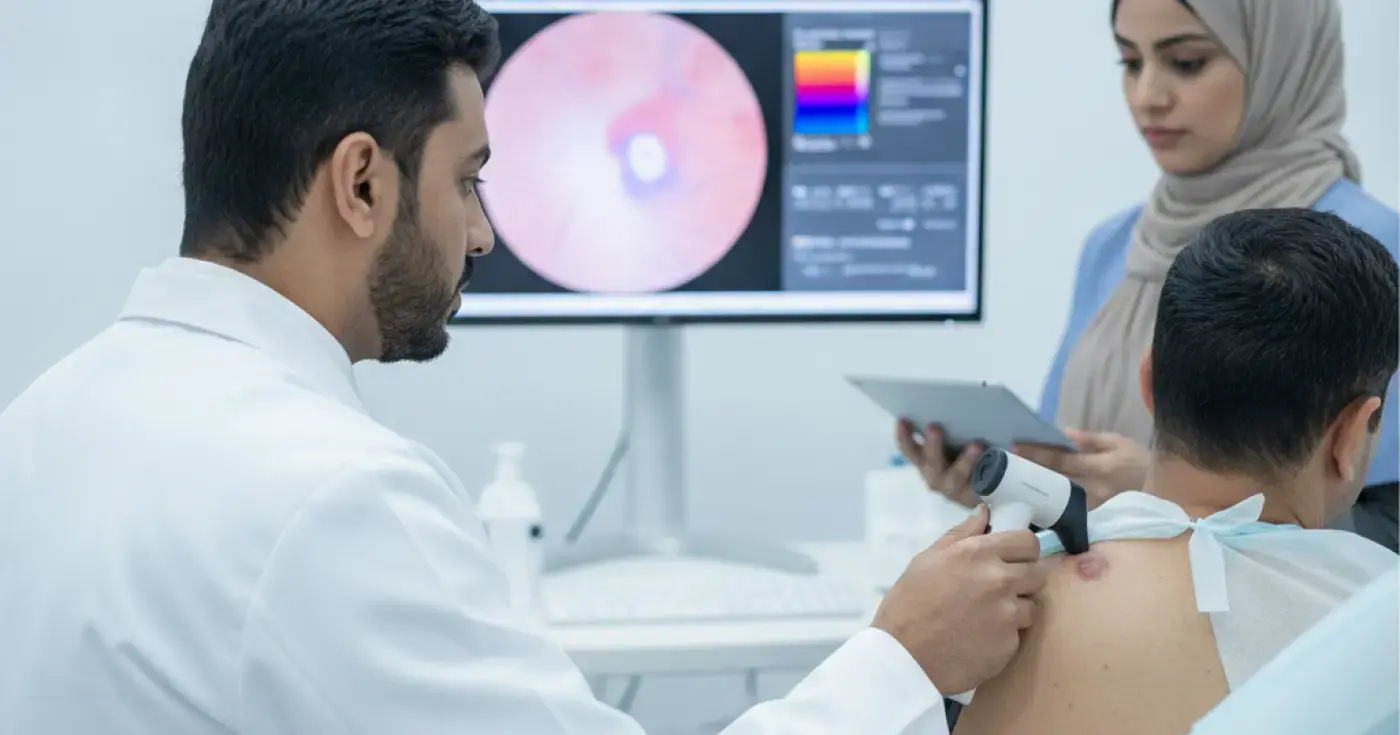
A complete medical guide on the clinical steps, biopsy types, pathology results, and treatment options after detecting an abnormal mole.
Read article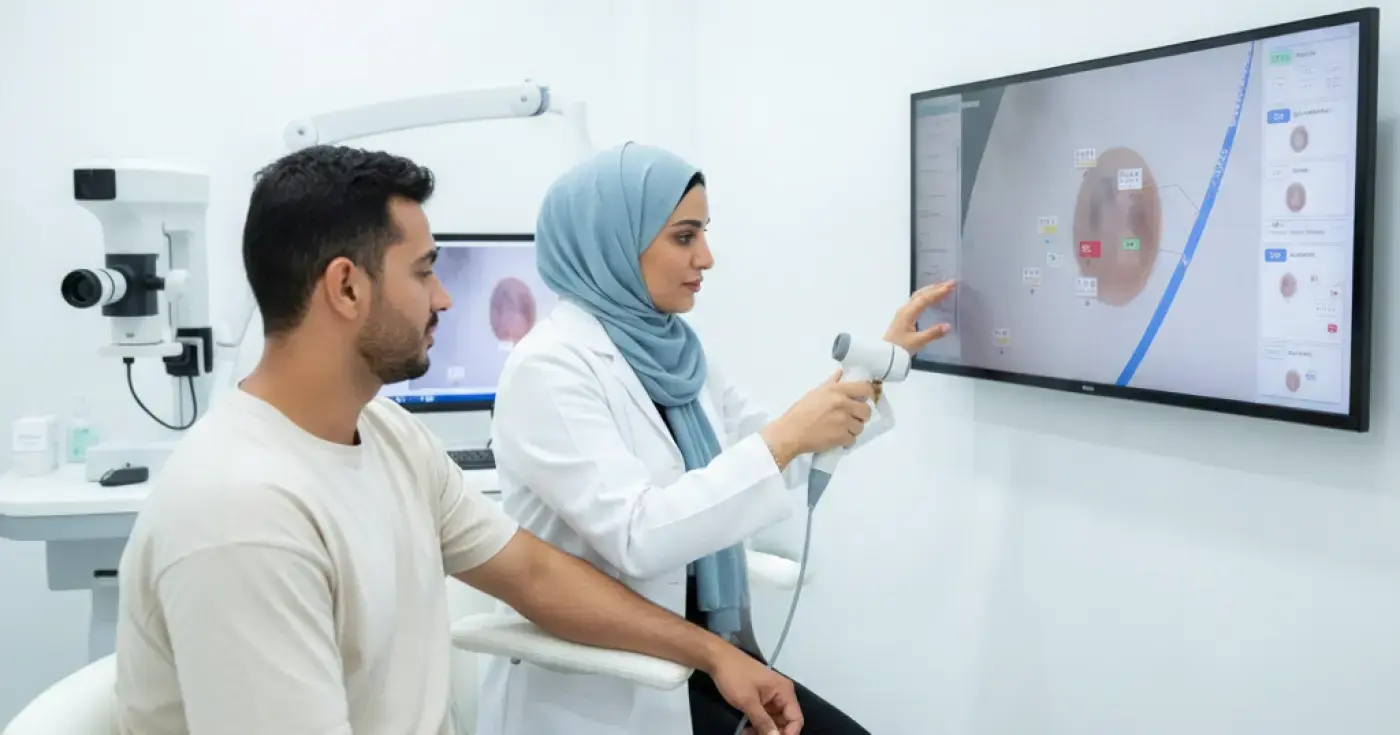
Discover the clinical importance of mole screening for individuals with multiple moles. Learn about the ABCDE rule, dermoscopy, and digital mole mapping.
Read article