
Lahalak Medical PlatformDifferentiate Care
Discover the clinical importance of mole screening for individuals with multiple moles. Learn about the ABCDE rule, dermoscopy, and digital mole mapping.
Advertisement
Moles (nevi) are common skin growths that develop in almost everyone, representing benign clusters of pigmented cells called melanocytes. However, individuals who possess a high number of moles require specialized clinical attention. Clinical evidence indicates a strong correlation between a high mole count and an increased risk of developing skin malignancies, particularly melanoma. Consequently, regular فحص وتقييم الشامات (mole examination and evaluation) serves as a cornerstone for prevention and early detection of any atypical skin changes.
From a clinical perspective, an individual is considered to have a high mole count if they have more than 50 to 100 moles across their body. In some cases, dermatologists may diagnose this as "Atypical Mole Syndrome" (or Dysplastic Nevus Syndrome). This condition is characterized by moles that are larger than average, have irregular borders, and display multiple colors. While these moles are not cancerous themselves, they act as significant risk markers, requiring consistent monitoring to detect any malignant transformation or the emergence of new lesions.
Several factors combine to make a high mole count a clinical indicator that warrants careful monitoring:
Dermatologists utilize the standardized "ABCDE" mnemonic to help patients perform self-examinations and identify warning signs that necessitate an immediate استشارة طبيب الجلدية (dermatologist consultation):
During a clinical visit, dermatologists employ advanced diagnostic tools that go beyond simple visual inspection to ensure precise evaluation and avoid unnecessary biopsies:
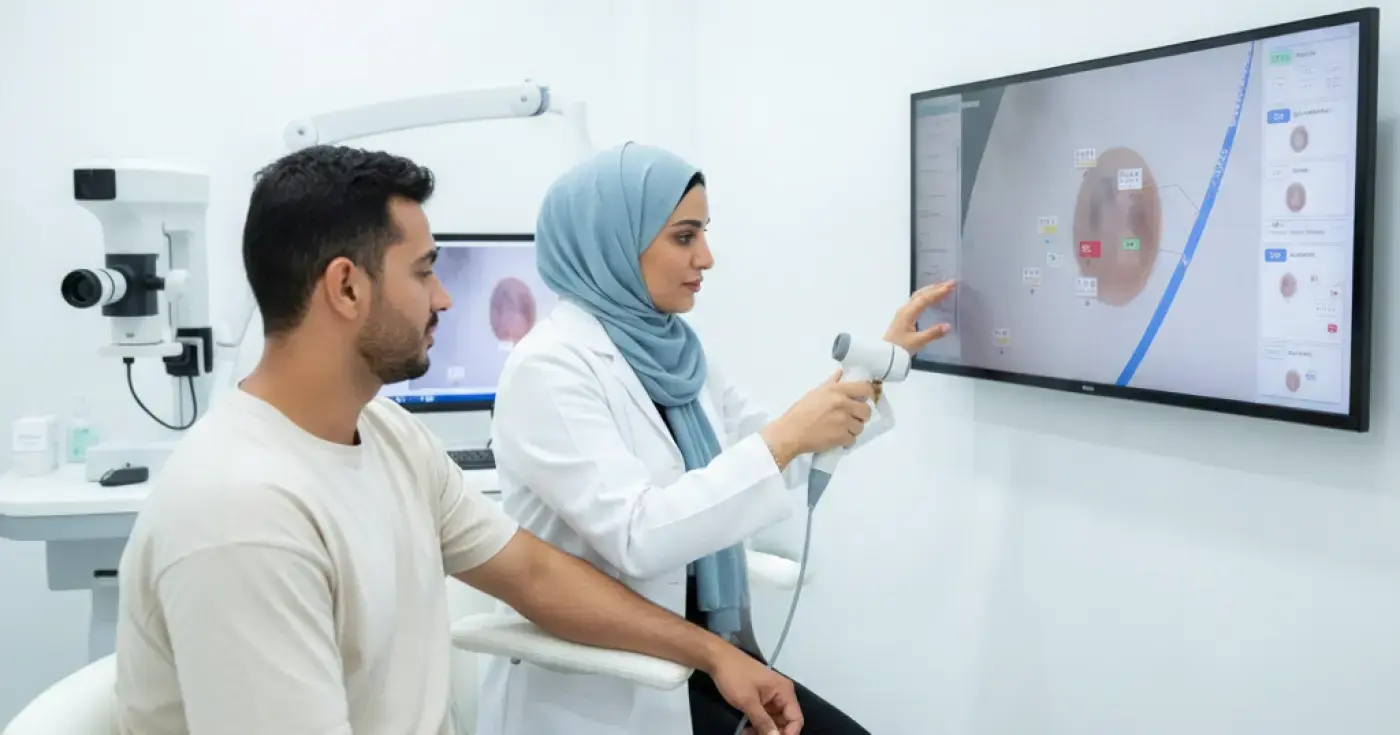
The dermatologist uses a handheld instrument called a dermatoscope, which combines high-magnification lenses with polarized lighting. This allows the clinician to visualize the deeper structures of the skin and analyze pigment patterns that are invisible to the naked eye.
For patients with numerous moles, رسم خرائط الشامات الرقمية (digital mole mapping) is the gold standard. This technique involves taking high-resolution, standardized photographs of the patient's entire body. Specialized software stores these images and compares them during follow-up visits to detect any subtle changes in existing moles or the appearance of new lesions.
| Feature | Home Self-Examination | Professional Clinical Screening |
|---|---|---|
| Tools Used | Full-length mirror, hand mirror, bright lighting | Dermatoscope, high-resolution digital mapping software |
| Recommended Frequency | Once a month | Every 6 to 12 months (or as clinically indicated) |
| Detection Accuracy | Limited to noticeable macroscopic changes | Very high; detects microscopic structural changes |
| Primary Objective | Early detection of obvious changes to prompt a clinical visit | Definitive diagnosis, digital tracking, and biopsy determination |
Individuals with many moles should perform a monthly self-exam using these structured steps to ensure complete body coverage:
While routine screenings are vital, certain red flags require urgent clinical evaluation. These include a new mole that grows rapidly, persistent itching or pain in a specific lesion, spontaneous bleeding or oozing without trauma, or a sudden darkening or color variation in an existing mole. If a dermatologist suspects atypical cellular activity, they may perform a خزعة الجلد (skin biopsy) to rule out malignancy.
Given the intense solar radiation in the Gulf region, individuals with a high mole count must adopt strict sun protection strategies:
Having a high number of moles is a manageable risk factor rather than an active illness. Combining monthly self-examinations with regular professional dermatological evaluations provides a robust shield against skin malignancies. Early detection remains the most effective tool in dermatology, and consulting a specialist is the safest path to maintaining healthy skin.
Clear, direct answers
Advertisement
Continue exploring

Learn how often to get your moles checked, the ABCDE rule for self-exams, and when to see a dermatologist to prevent skin cancer.
Read article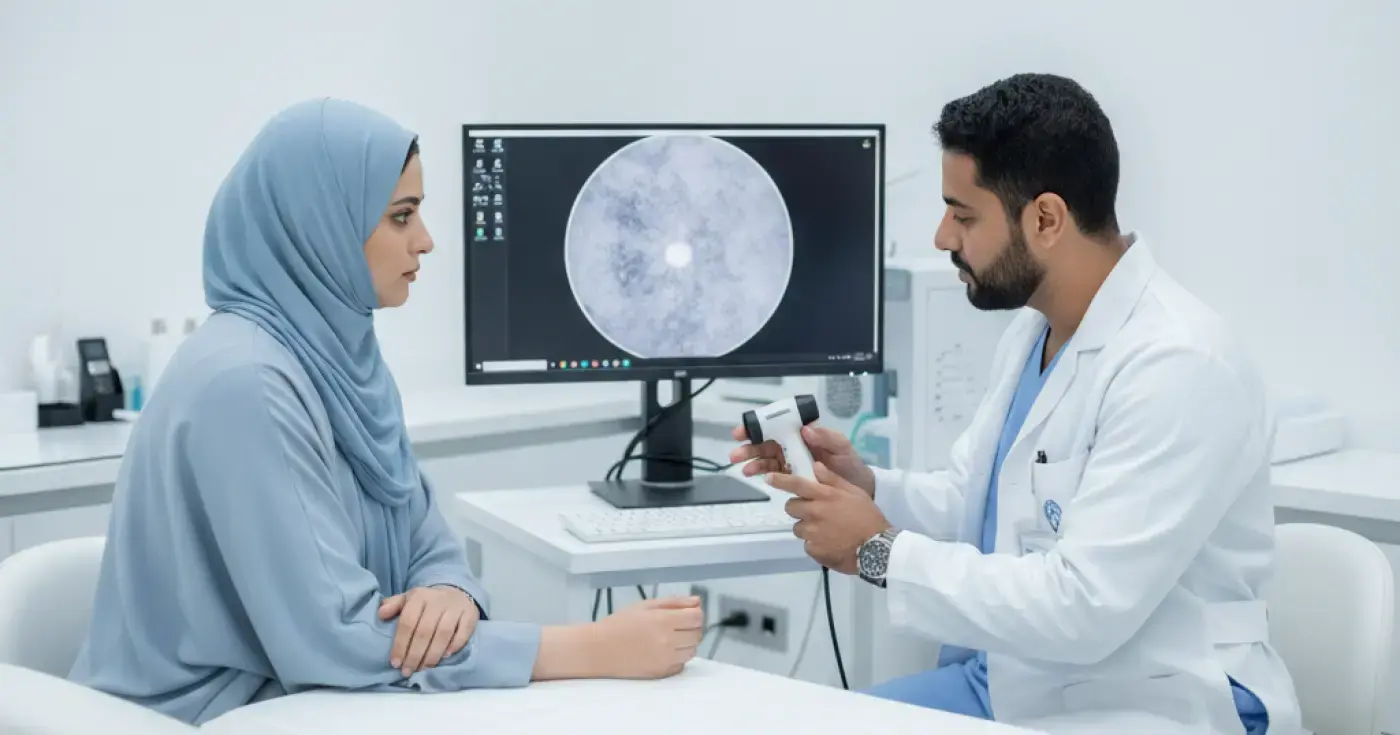
Learn about dermoscopy for mole examination, how it works, what to expect during your clinic visit, and its role in early skin cancer detection.
Read article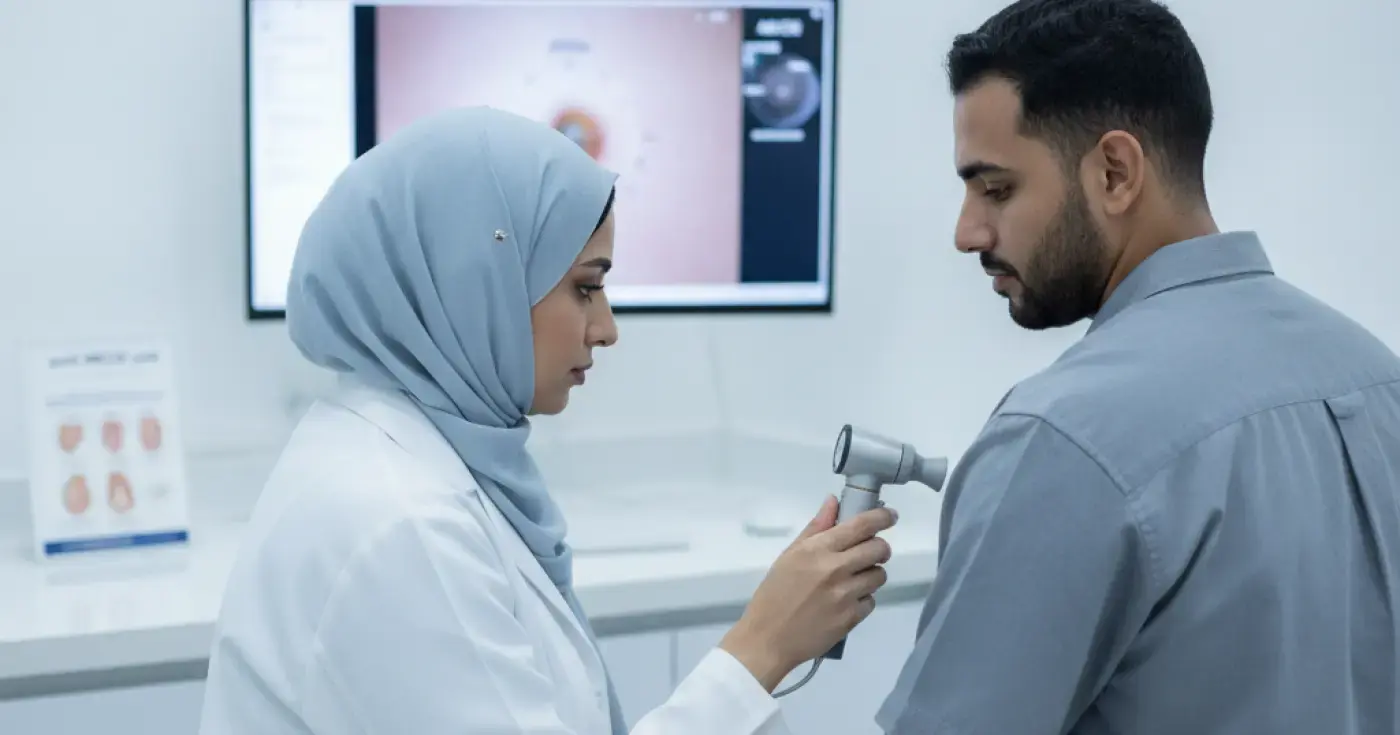
Learn the warning signs of changing moles. Discover the ABCDE criteria, normal vs. abnormal changes, and when to see a dermatologist.
Read articleExplore the topic