
Lahalak Medical PlatformDifferentiate Care
Learn how often to get your moles checked, the ABCDE rule for self-exams, and when to see a dermatologist to prevent skin cancer.

Advertisement
Moles, medically known as nevi, are common skin growths that develop during childhood and young adulthood. While the vast majority of moles are benign and harmless, some can change over time and develop into skin cancer, most notably melanoma. This highlights the critical importance of a regular mole examination as a preventive measure. Early detection of atypical changes in skin cells significantly increases the success rate of treatment and prevents serious complications.
Medical recommendations for mole check frequency depend on your personal health history and risk factors. However, standard guidelines recommend two main levels of monitoring:
Everyone is advised to perform a thorough self-skin exam once a month. Regular self-monitoring of moles helps you become familiar with the pattern of your moles, making it much easier to notice any new growths or changes in the size, shape, or color of existing ones. It is best to perform this exam in a well-lit room using a full-length mirror and a hand mirror for hard-to-see areas like your back and scalp.
For individuals with normal skin and no elevated risk factors, a professional clinical skin exam by a dermatologist is recommended once a year. However, individuals with a personal or family history of skin cancer, or those with a high number of moles (more than 50), may be advised to visit their dermatologist every 3 to 6 months.
Certain groups of people should follow a stricter examination schedule and consult their dermatologist regularly. These risk factors include:
The American Academy of Dermatology developed the ABCDE rule to help individuals identify warning signs of melanoma during self-exams. This simple acronym stands for:
During your routine visit to a dermatology clinic, the doctor will perform specific steps to evaluate your skin health:
The dermatologist uses a specialized tool called a dermatoscope. This is a handheld magnifier with a polarized light source that allows the doctor to see deep structures within the mole that are invisible to the naked eye. This painless evaluation helps distinguish between benign moles and those requiring intervention.
If the dermatologist suspects any abnormal activity in a mole, they will not rely solely on visual inspection. They will recommend a skin biopsy. This simple procedure involves numbing the area with a local anesthetic and removing the mole (or a portion of it) to send to a laboratory for microscopic analysis to confirm whether it is benign or malignant.
| Feature | Home Self-Exam | Professional Clinical Exam |
|---|---|---|
| Frequency | Once a month | Once a year (or as advised by a doctor) |
| Tools Used | Full-length mirror, hand mirror, good lighting | Dermatoscope, advanced imaging devices |
| Primary Goal | To notice new moles or changes in existing ones | Accurate diagnosis of suspicious moles and biopsy determination |
| Accuracy & Depth | Superficial, relying on visual inspection with the naked eye | Deep and highly accurate, revealing sub-surface structures |
Given the intense sunlight and high UV index in regions like Saudi Arabia, prevention is key to reducing the risk of mole changes and skin cancer. Follow these essential guidelines:
Do not wait for your annual check-up if you notice any of the following warning signs in a mole:
Remember that early detection is the most critical factor in successful prevention and treatment. If you have any doubts about a specific mole, consulting a qualified dermatologist is the safest step to protect your health.
Clear, direct answers
Advertisement
Continue exploring
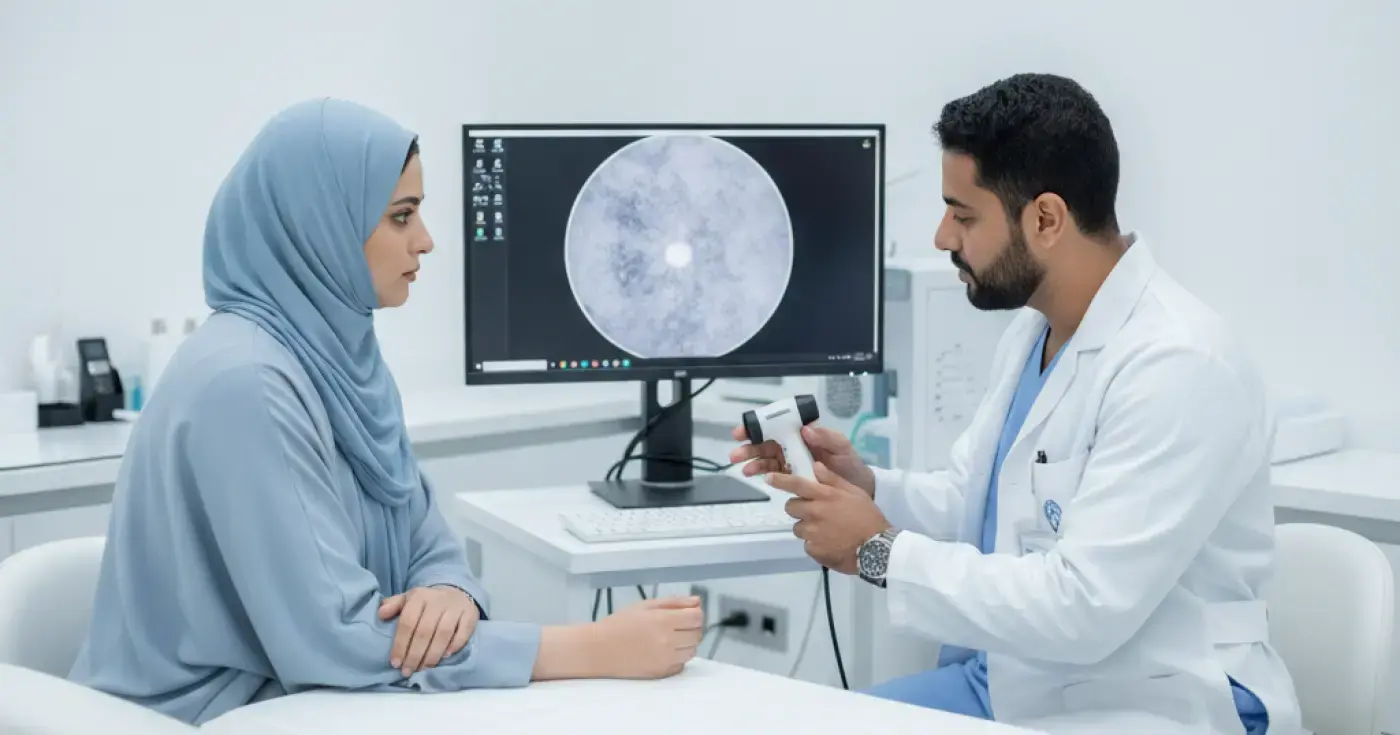
Learn about dermoscopy for mole examination, how it works, what to expect during your clinic visit, and its role in early skin cancer detection.
Read article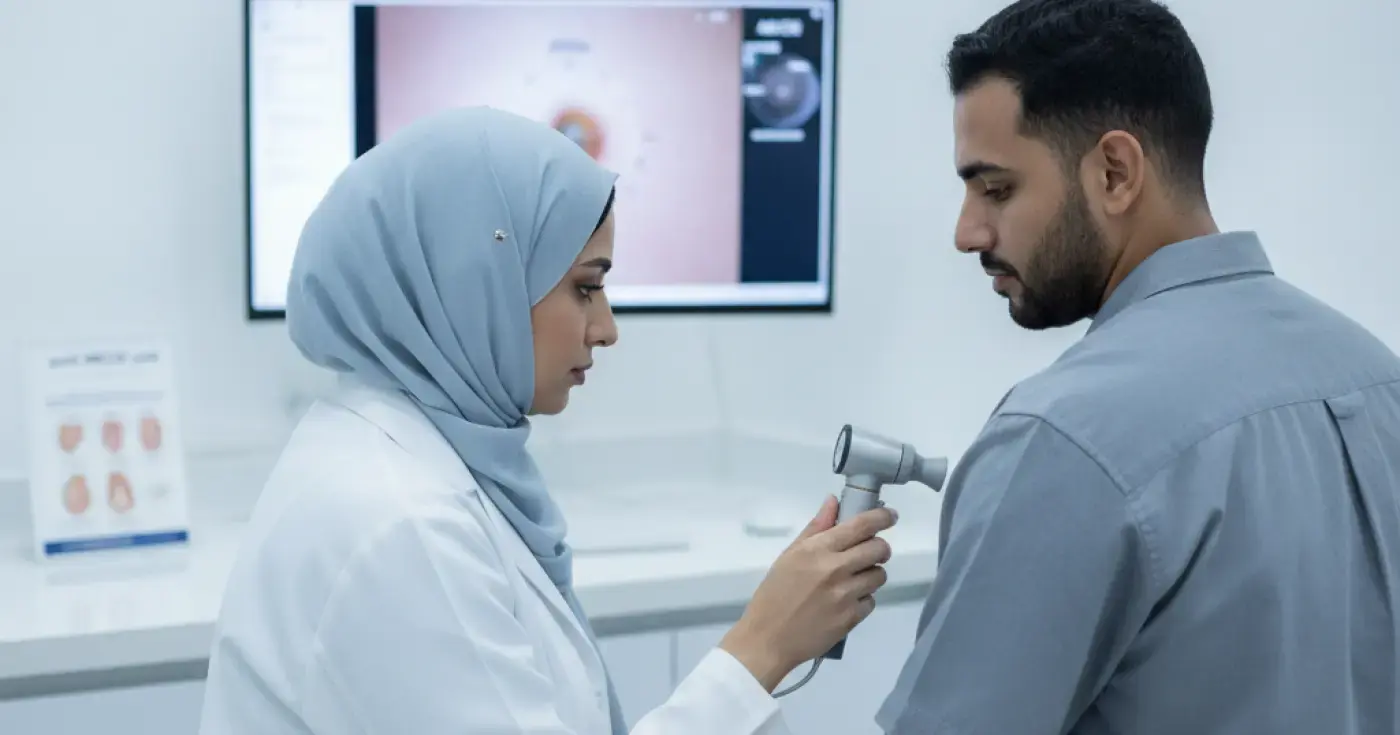
Learn the warning signs of changing moles. Discover the ABCDE criteria, normal vs. abnormal changes, and when to see a dermatologist.
Read article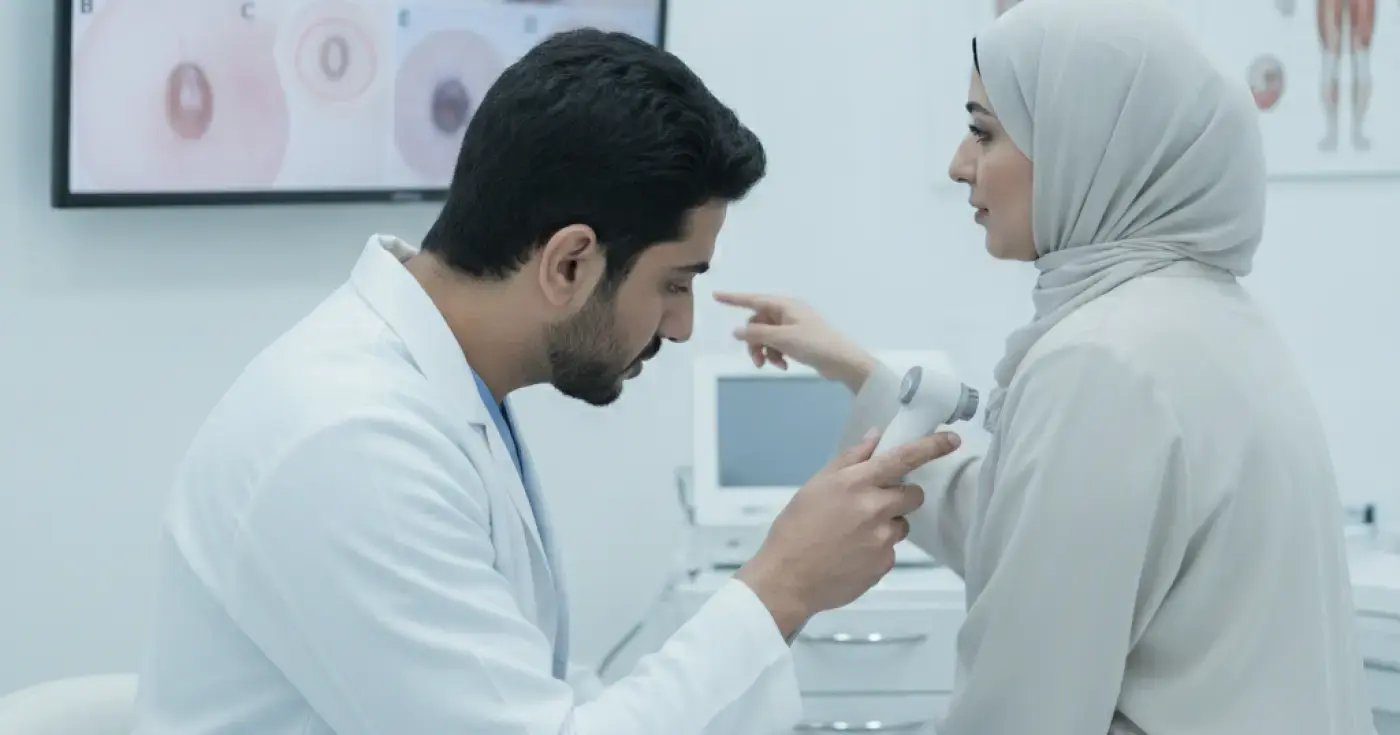
Learn how to tell the difference between benign and suspicious moles using the ABCDE rule. Discover warning signs, prevention tips, and when to see a doctor.
Read articleExplore the topic