
Lahalak Medical PlatformDifferentiate Care
Learn how to tell the difference between benign and suspicious moles using the ABCDE rule. Discover warning signs, prevention tips, and when to see a doctor.
Advertisement
Moles, scientifically known as melanocytic nevi, are common skin growths that develop when pigment-producing cells (melanocytes) grow in clusters rather than being spread throughout the skin. For the vast majority of people, moles are entirely benign and pose no health risks. However, some moles can change over time or present with atypical features, requiring close monitoring and professional evaluation.
Understanding the precise difference between a benign mole and a suspicious one is a crucial step in preventing skin cancers, particularly melanoma. In this comprehensive guide, we will explore the clinical characteristics of both types, how to perform regular self-examinations, and the advanced diagnostic methods used by dermatologists to evaluate moles.
Benign moles are non-cancerous skin lesions that grow symmetrically and remain stable over time. They typically appear during childhood and adolescence, and their number may increase until around the age of 30. A benign mole is characterized by its stability in shape, size, and color. Key features of benign moles include:
Suspicious moles, clinically referred to as dysplastic nevi, are atypical moles that exhibit unusual features and look different from other moles on the body. Having atypical moles does not mean you have skin cancer, but it indicates a higher risk of developing melanoma. These moles require careful monitoring and professional assessment.
Suspicious moles often show irregular growth, asymmetrical shapes, and poorly defined borders. Identifying these lesions early through regular mole screening is essential for timely intervention and preventive care.
Dermatologists have established the ABCDE criteria as an easy-to-remember guide for performing a thorough mole self-examination at home:
The following table outlines the key clinical differences between normal benign moles and those that require immediate medical evaluation:
| Clinical Feature | Benign Mole (Normal) | Suspicious Mole (Atypical) |
|---|---|---|
| Symmetry | Symmetrical (both halves match) | Asymmetrical (halves do not match) |
| Borders | Smooth, regular, and well-defined | Irregular, jagged, notched, or blurry |
| Color | Single uniform shade (brown or black) | Multiple colors or uneven shades |
| Diameter | Usually less than 6 mm and stable | Often larger than 6 mm and growing |
| Evolution | Remains unchanged over years | Changes in size, shape, color, or elevation |
| Symptoms | Asymptomatic (no pain or itching) | May itch, bleed, ooze, or feel painful |
In addition to the ABCDE rule, certain clinical signs warrant booking a dermatology consultation without delay. These warning signs include:
During your clinical visit, a dermatologist will perform a series of precise diagnostic steps to evaluate your moles:
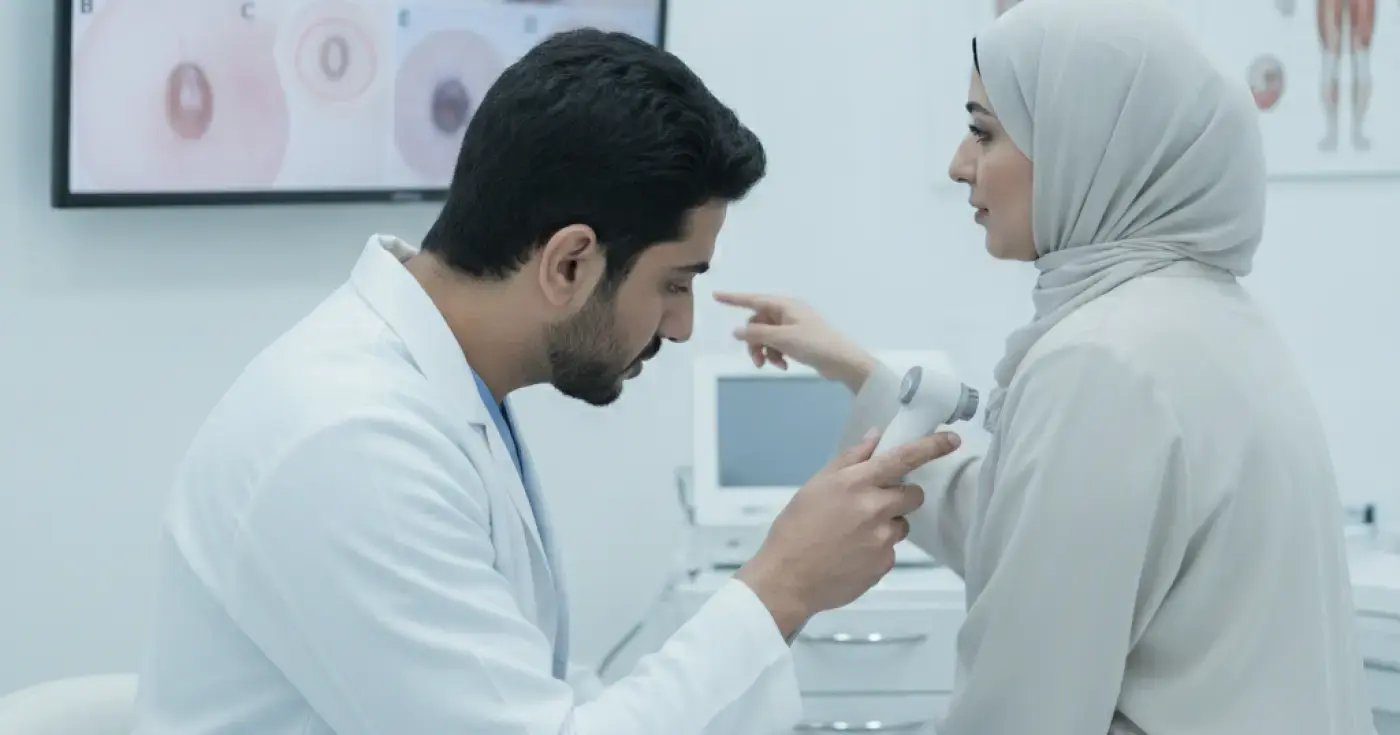
The dermatologist uses a specialized handheld magnifying tool called a dermatoscope. This device provides polarized light and high magnification, allowing the doctor to visualize pigment patterns and microvascular structures beneath the skin's surface that are invisible to the naked eye.
For individuals with a high number of moles (more than 50 to 100), digital mole mapping is highly recommended. High-resolution, full-body photography is used to track and compare moles over time, allowing computer software to detect even the most subtle changes between visits.
If a mole is deemed highly suspicious, the dermatologist will perform a skin biopsy under local anesthesia. The mole is partially or completely removed and sent to a pathology lab, where a pathologist examines the tissue under a microscope to confirm whether cancer cells are present.
Several factors can increase the likelihood of atypical moles developing into skin cancer, including:
Protecting your skin from harmful ultraviolet (UV) radiation is the most effective way to prevent moles from undergoing malignant changes. Follow these essential preventive measures:
In conclusion, having moles is a normal and very common occurrence. The key to maintaining healthy skin is vigilance and regular monitoring. By applying the ABCDE criteria, performing monthly self-examinations, and scheduling annual dermatological checkups, you can ensure early detection and highly effective prevention of any serious skin conditions.
Clear, direct answers
Advertisement
Continue exploring
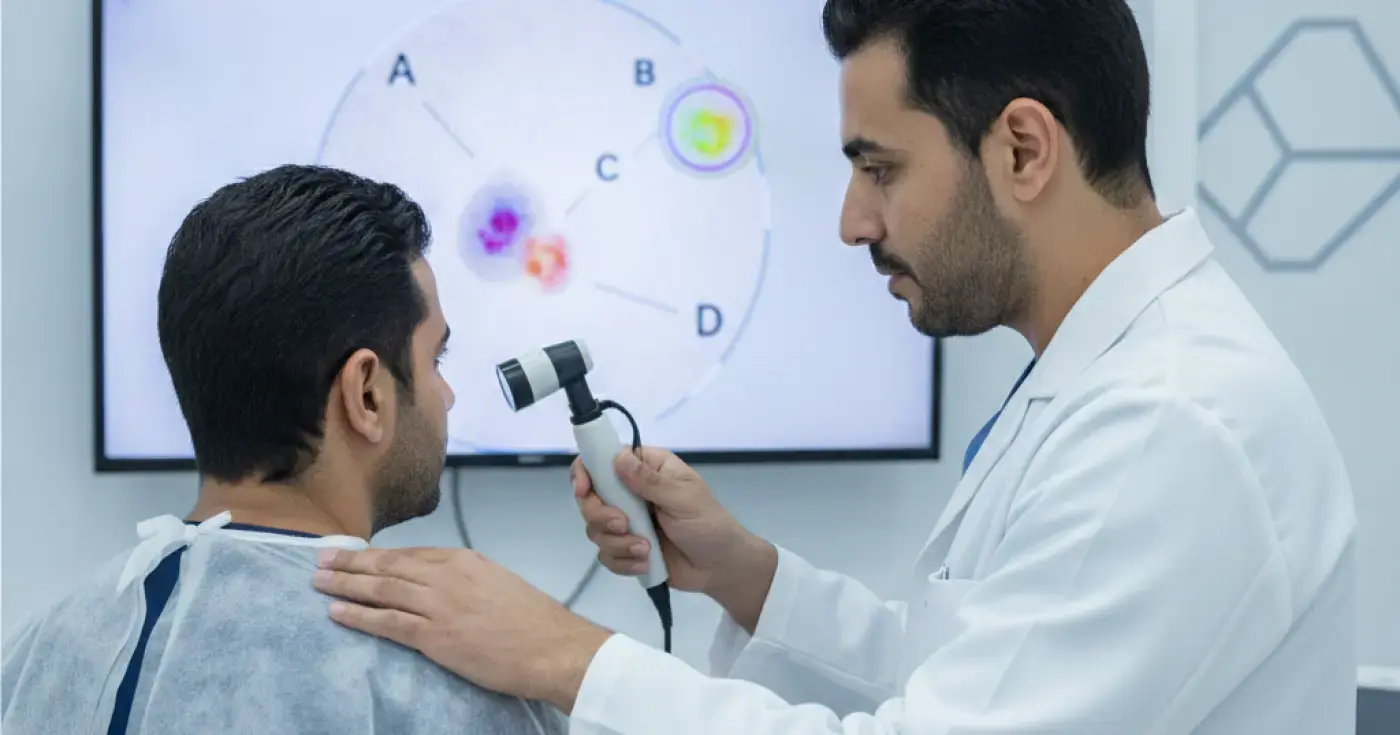
Learn the warning signs in moles using the ABCDE rule. Discover when to consult a dermatologist for skin cancer screening and evaluation.
Read article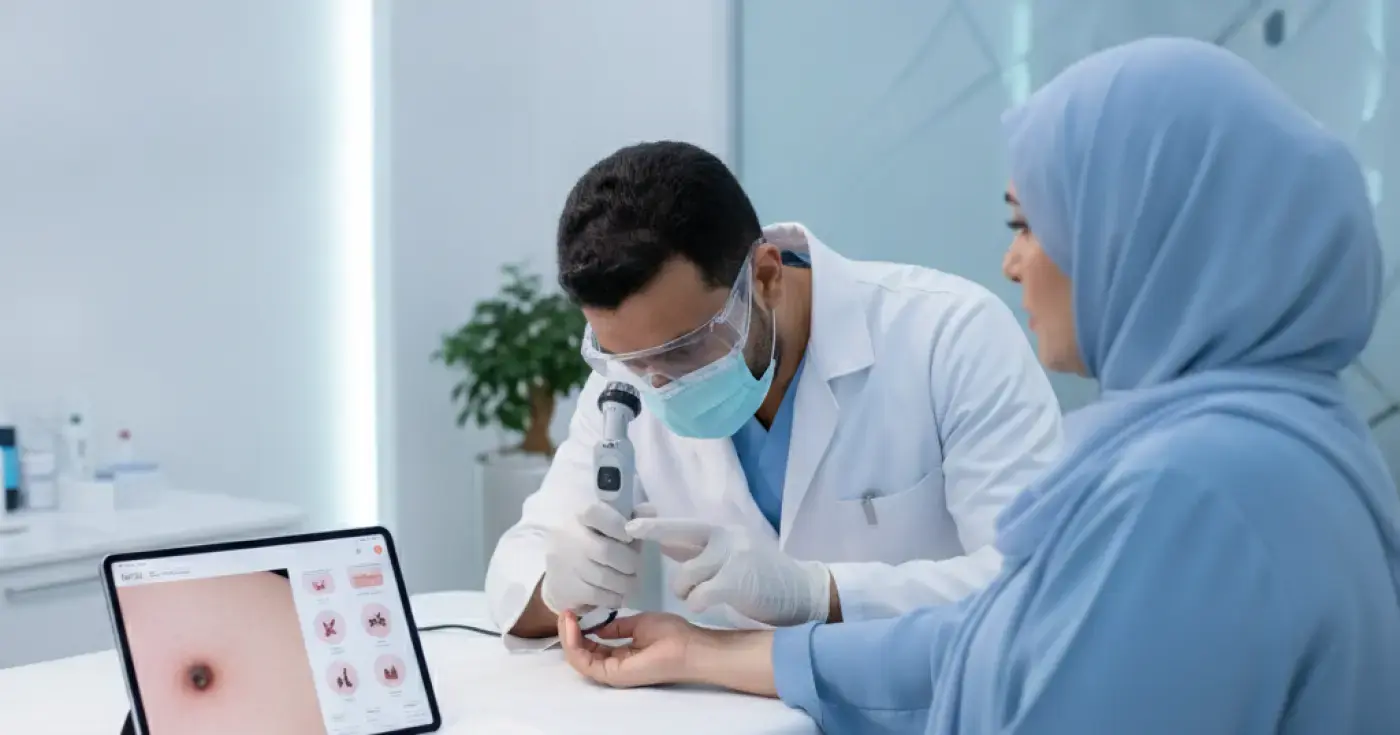
Learn how to identify normal moles, recognize atypical warning signs using the ABCDE rule, and know when to seek a professional skin examination.
Read article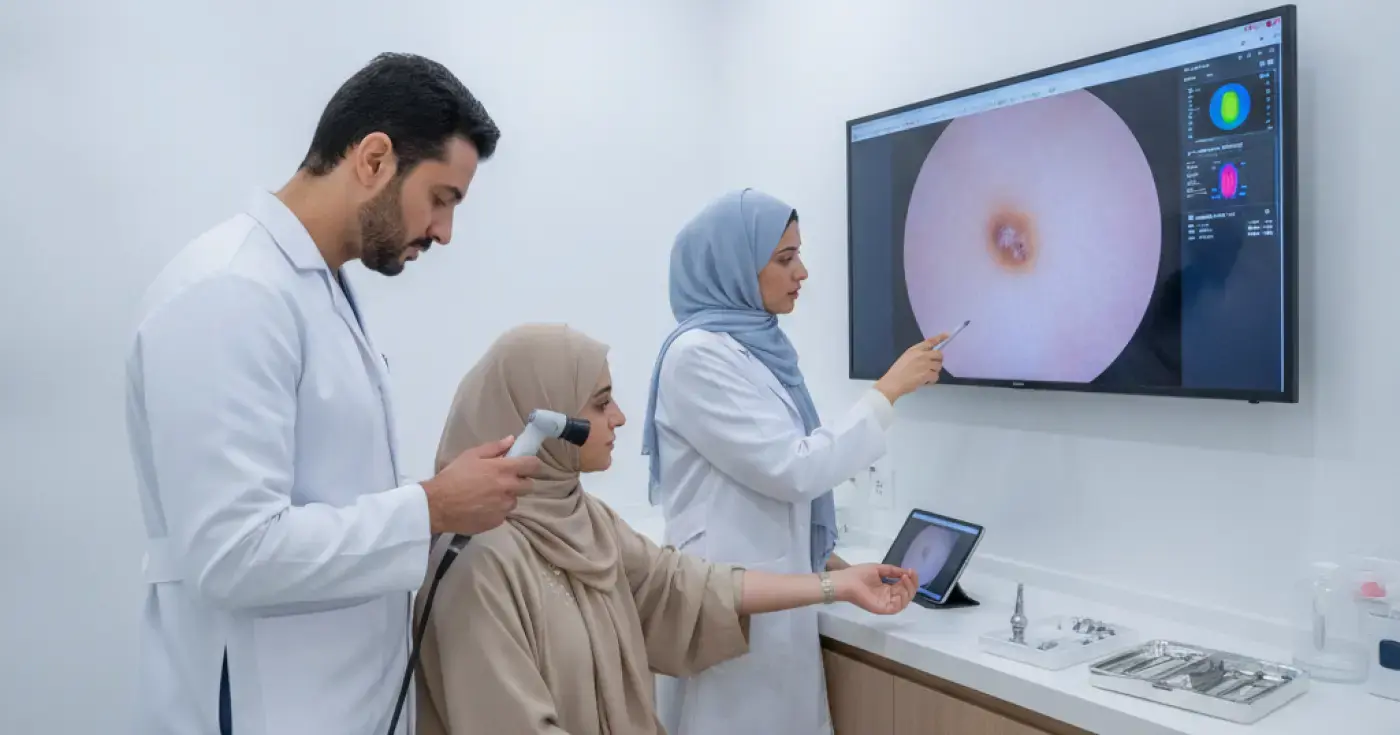
Learn how dermatologists evaluate moles using dermoscopy, visual exams, and skin biopsies to ensure early detection of atypical lesions.
Read article