
Lahalak Medical PlatformDifferentiate Care
Learn how to identify normal moles, recognize atypical warning signs using the ABCDE rule, and know when to seek a professional skin examination.
Advertisement
Moles (known medically as melanocytic nevi) are common skin growths that develop when pigment-producing cells, called melanocytes, grow in clusters rather than spreading evenly throughout the skin. These cells are responsible for producing melanin, the natural pigment that gives skin its color and protects it from ultraviolet (UV) radiation.
While the vast majority of moles are entirely benign and harmless, some can change over time or mimic the appearance of skin cancers, such as melanoma. Understanding the characteristics of normal moles and learning how to monitor them is a vital step in proactive skincare and early detection of potential dermatological issues.
A normal mole has specific clinical features indicating that the melanocytes are stable and non-active. Recognizing these features provides a reliable baseline when performing a regular skin self-exam. Key characteristics of a benign mole include:
Dermatologists have established a simple, universally recognized guide to help individuals identify atypical moles that require professional evaluation. This is known as the ABCDE rule:
One half of the mole does not match the other half in shape, color, or thickness.
The edges of the mole are irregular, scalloped, notched, poorly defined, or seem to blur into the surrounding skin.
The color is not uniform. It may include varying shades of brown or black, or patches of pink, red, white, or blue.
The mole is larger than 6 millimeters across, although melanomas can sometimes be diagnosed when they are smaller.
Any change in size, shape, color, or elevation over time, or any new symptom such as itching, bleeding, crusting, or pain, is a critical indicator that warrants an immediate dermatologist consultation.
In addition to the ABCDE criteria, clinicians rely heavily on the "Ugly Duckling" concept. This approach is based on the observation that benign moles on a person's body tend to resemble one another. If a single mole looks significantly different from all other surrounding moles—whether it is darker, lighter, larger, or isolated—it is considered an "ugly duckling" and should be professionally evaluated, even if it does not meet all ABCDE criteria.
Certain clinical symptoms require urgent medical attention rather than routine monitoring. You should seek prompt professional care if you experience:
The likelihood of developing atypical moles or skin malignancies varies based on genetic and environmental factors. Individuals with the following risk factors should be particularly vigilant:
When visiting a dermatology clinic for a mole check, the specialist will follow a structured diagnostic process:
The doctor will ask about when the mole appeared, any changes you have noticed, and your family history of skin conditions.
The dermatologist will examine the mole of concern and may perform a comprehensive full-body check to evaluate hard-to-see areas, such as the scalp, back, and between the toes.
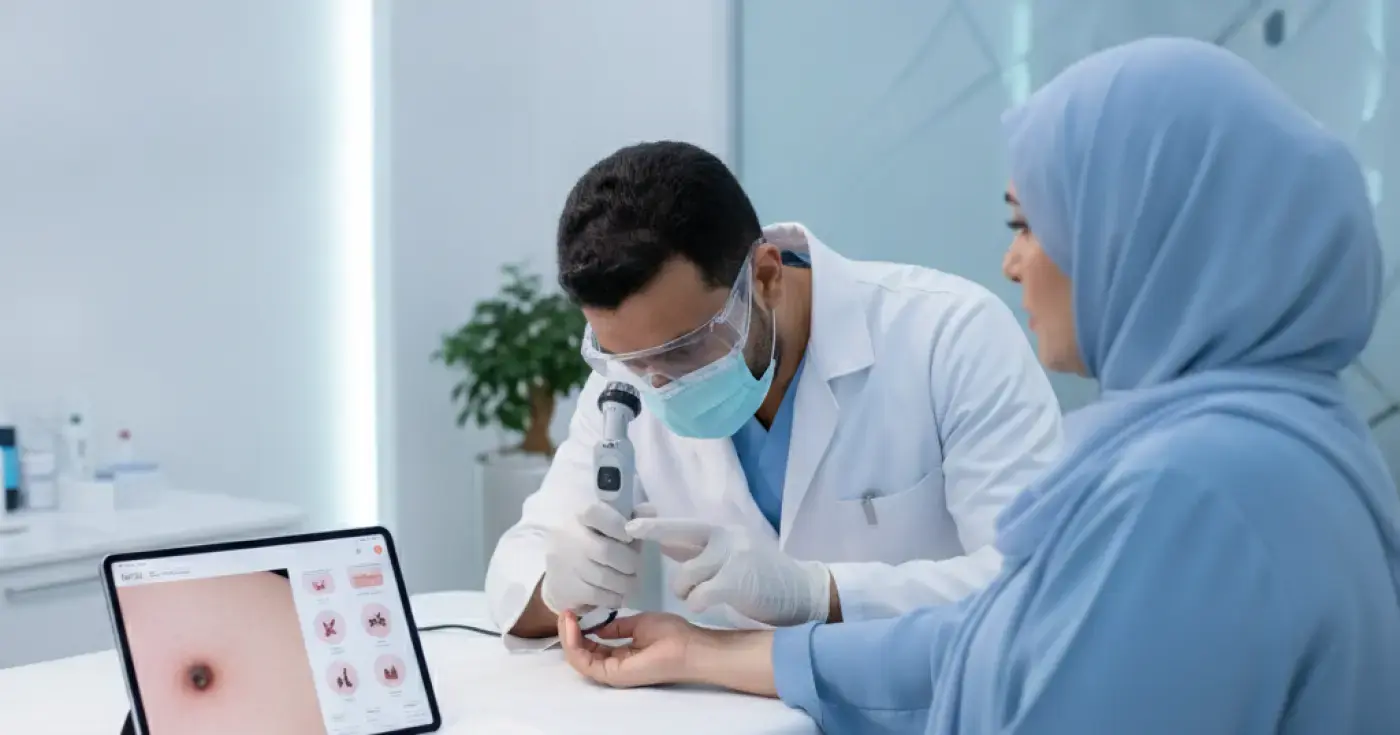
The physician will use a specialized handheld tool called a dermatoscope to perform a dermoscopy mole evaluation. This device magnifies and illuminates the skin's deeper structures, allowing the doctor to analyze pigment patterns that are invisible to the naked eye.
If a mole is deemed suspicious, the doctor will perform a minor skin biopsy under local anesthesia. The tissue is removed and sent to a pathology lab for microscopic analysis to obtain a definitive diagnosis.
The following table summarizes the key clinical differences between benign and suspicious moles:
| Feature | Normal Mole (Benign) | Atypical Mole (Suspicious) |
|---|---|---|
| Symmetry | Symmetrical (both halves match) | Asymmetrical (halves do not match) |
| Borders | Regular, smooth, and well-defined | Irregular, jagged, or poorly defined |
| Color | Single, uniform shade (e.g., tan or brown) | Multiple colors or uneven shades |
| Diameter | Usually less than 6 mm | Often larger than 6 mm (can be smaller) |
| Evolution | Remains stable and unchanged | Changes in size, shape, color, or height |
| Symptoms | Asymptomatic (no pain or itching) | May itch, hurt, bleed, or crust over |
Due to the high UV index prevalent throughout the year in Saudi Arabia, protecting your skin is essential to prevent atypical mole development. Key preventive measures include:
Perform a self-examination once a month in a well-lit room using a full-length mirror and a hand mirror for hard-to-reach areas. Early detection of changes in your skin drastically improves clinical outcomes, with localized skin issues showing near 100% cure rates when addressed early. Do not hesitate to seek professional medical advice if you notice any concerning changes.
Clear, direct answers
Advertisement
Continue exploring
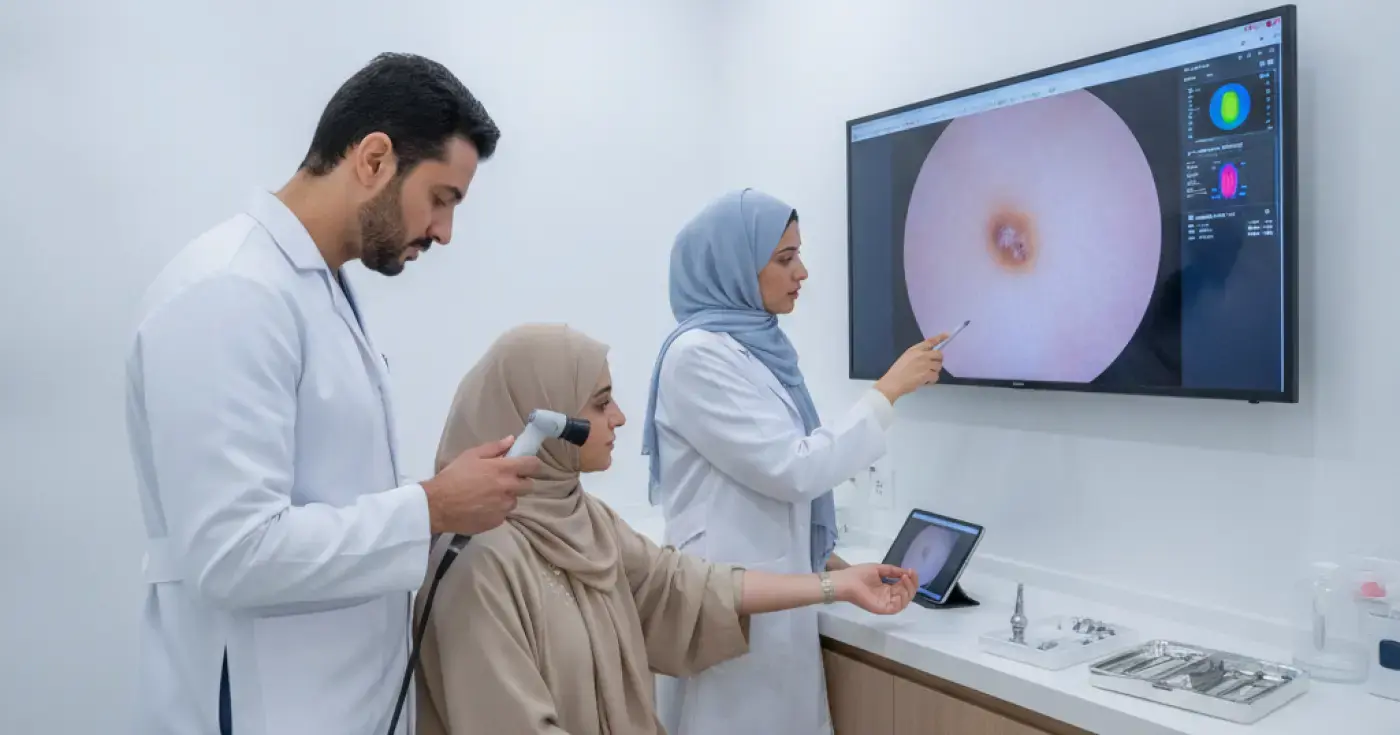
Learn how dermatologists evaluate moles using dermoscopy, visual exams, and skin biopsies to ensure early detection of atypical lesions.
Read article
Learn the importance of regular mole screening, the ABCDE rule for self-exams, and warning signs that require an immediate visit to a dermatologist.
Read article
Discover how many sessions are required for a thread lift, how long the results last, and the key factors influencing your treatment plan.
Read article