
Lahalak Medical PlatformDifferentiate Care
Learn the warning signs in moles using the ABCDE rule. Discover when to consult a dermatologist for skin cancer screening and evaluation.

Advertisement
Moles, medically known as nevi, are common skin growths that occur when pigment-producing cells (melanocytes) grow in clusters rather than spreading evenly throughout the skin. In the vast majority of cases, moles are completely benign and pose no health risks. However, some moles can change over time or exhibit atypical features that may indicate the development of melanoma, a serious form of skin cancer. Therefore, performing a regular skin self-examination is a vital preventive tool that enables early detection of abnormal changes, allowing for timely medical intervention.
A normal mole is typically uniform in color (such as tan, brown, black, or pink), has distinct, well-defined borders, and a symmetrical round or oval shape, usually remaining under 6 millimeters in diameter. In contrast, atypical moles (also called dysplastic nevi) may present with irregular shapes, multiple colors, and blurred or jagged borders. While having atypical moles does not guarantee skin cancer, it significantly increases the risk of developing melanoma, necessitating close and regular monitoring by a qualified dermatologist.
Dermatologists worldwide recommend the ABCDE rule as a simple and highly effective guide for self-evaluation, helping individuals identify when to seek professional medical advice. This rule consists of five key warning signs:
If you draw an imaginary line through the middle of the mole and the two halves do not match in shape, size, or border, the mole is asymmetrical. Benign moles are typically symmetrical, whereas suspicious moles often lack symmetry.
Normal moles have smooth, round, and clearly defined borders. Suspicious moles often have irregular, scalloped, notched, or blurred borders, where the pigment seems to bleed into the surrounding skin.
A healthy mole is usually a single, consistent color throughout. If a mole contains different shades of brown or black, or patches of red, white, blue, or pink, this color variation is a warning sign that warrants immediate evaluation.
Although melanomas can sometimes be small when they first develop, moles that are larger than 6 millimeters in diameter (about the size of a pencil eraser) require closer monitoring and professional assessment.
This is the most critical factor. Any mole that changes over time in size, shape, color, or elevation, or develops new symptoms such as itching, bleeding, or crusting, must be evaluated by a dermatologist without delay.
In addition to the ABCDE rule, clinical experts rely on a concept known as the "Ugly Duckling" sign. The premise is that most normal moles on an individual's body tend to look similar to one another in terms of color, shape, and pattern. If a single mole looks distinctly different from all other surrounding moles (whether it is much darker, larger, or has an unusual shape), it is considered the "ugly duckling" and should be clinically examined, even if it does not meet all the ABCDE criteria.
Warning signs are not limited to visual changes in shape and color; physical sensations or changes in the skin surrounding the mole can also occur. These concerning symptoms include:
| Clinical Feature | Benign (Normal) Mole | Suspicious Mole (Requires Evaluation) |
|---|---|---|
| Symmetry & Shape | Symmetrical, round, or oval with regular shape | Asymmetrical, the two halves do not match |
| Borders | Smooth, distinct, and well-defined | Irregular, scalloped, notched, or blurred |
| Color Distribution | Single uniform color (brown, black, or pink) | Multiple colors and shades (brown, black, red, blue) |
| Diameter & Size | Usually smaller than 6 millimeters | Often larger than 6 mm or growing rapidly |
| Evolution & Stability | Stable, remains unchanged for years | Evolving in size, shape, color, or symptoms |
Several factors can make individuals more susceptible to developing atypical moles or melanoma. Key risk factors include excessive exposure to ultraviolet (UV) radiation from the sun without protection, a history of severe, blistering sunburns (especially during childhood), a personal or family history of skin cancer, having fair skin and light-colored eyes, and having a large number of moles (more than 50). In the hot, sunny climate of Saudi Arabia, sun protection is particularly crucial due to high UV index levels throughout the year.
When visiting a dermatologist to evaluate a suspicious mole, the doctor will first perform a dermoscopy. This involves using a specialized, lighted magnifying tool to inspect the pigment patterns and blood vessels beneath the skin's surface in high detail. If the dermatologist suspects any abnormal cellular activity, they will recommend a skin biopsy. During a biopsy, the mole is partially or completely removed under local anesthesia and sent to a pathology lab for histological analysis to rule out malignancy.
Prevention and early detection are the most effective defenses against skin cancer. It is highly recommended to follow these guidelines:
While most moles are completely harmless, staying vigilant and monitoring them for any changes can be lifesaving. If you notice any signs from the ABCDE rule, spot an "ugly duckling" mole, or experience symptoms like itching or bleeding, do not hesitate to consult a dermatologist for a professional evaluation and peace of mind.
Clear, direct answers
Advertisement
Continue exploring
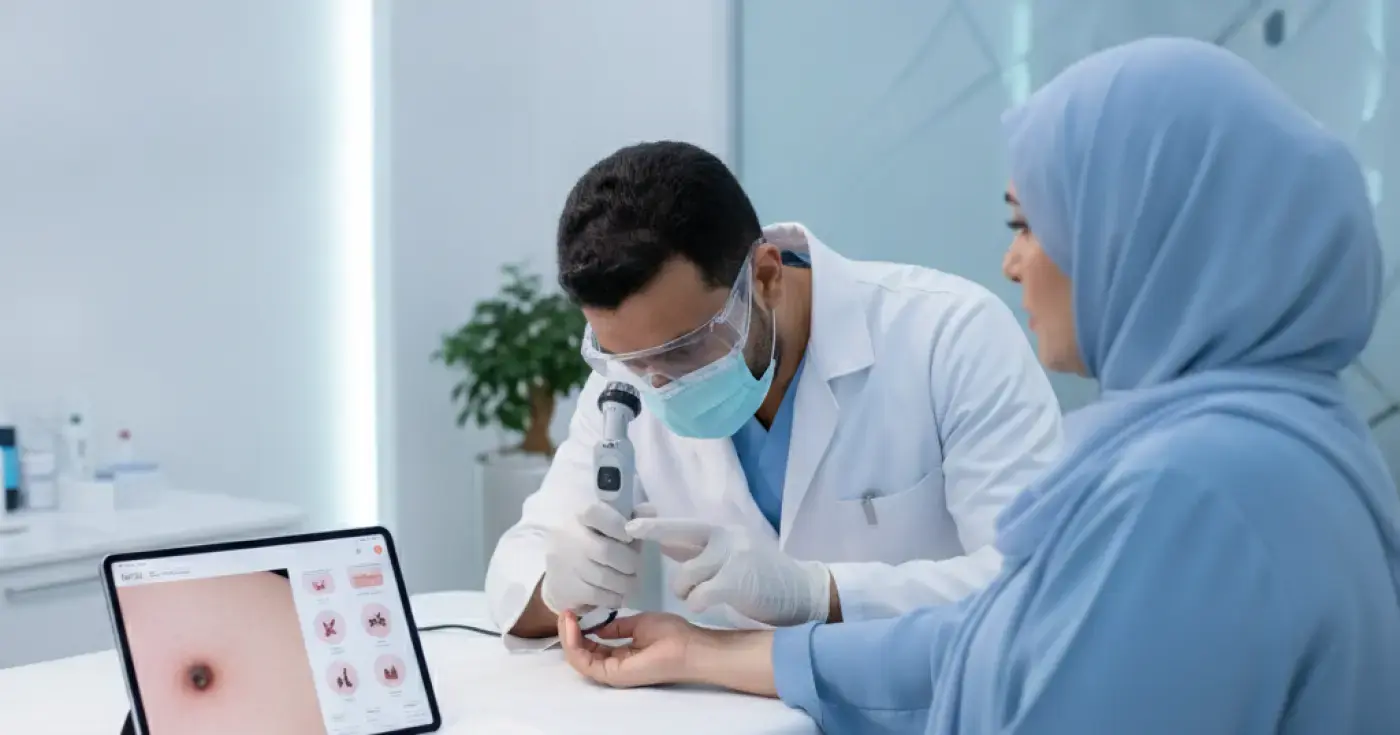
Learn how to identify normal moles, recognize atypical warning signs using the ABCDE rule, and know when to seek a professional skin examination.
Read article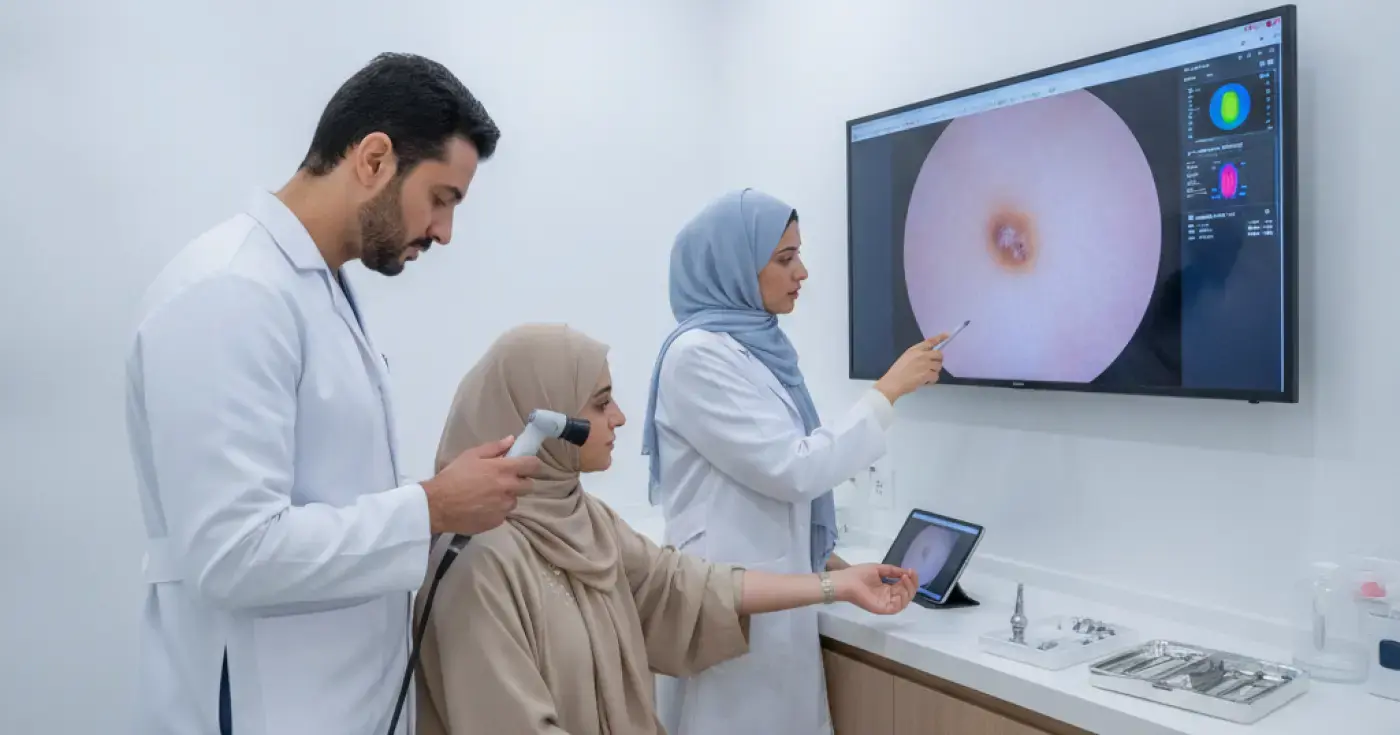
Learn how dermatologists evaluate moles using dermoscopy, visual exams, and skin biopsies to ensure early detection of atypical lesions.
Read article
Learn the importance of regular mole screening, the ABCDE rule for self-exams, and warning signs that require an immediate visit to a dermatologist.
Read article