
Lahalak Medical PlatformDifferentiate Care
Learn what happens after a PRP session for face and hair. Discover the recovery timeline, essential post-care tips, normal side effects, and when to see results.
Advertisement
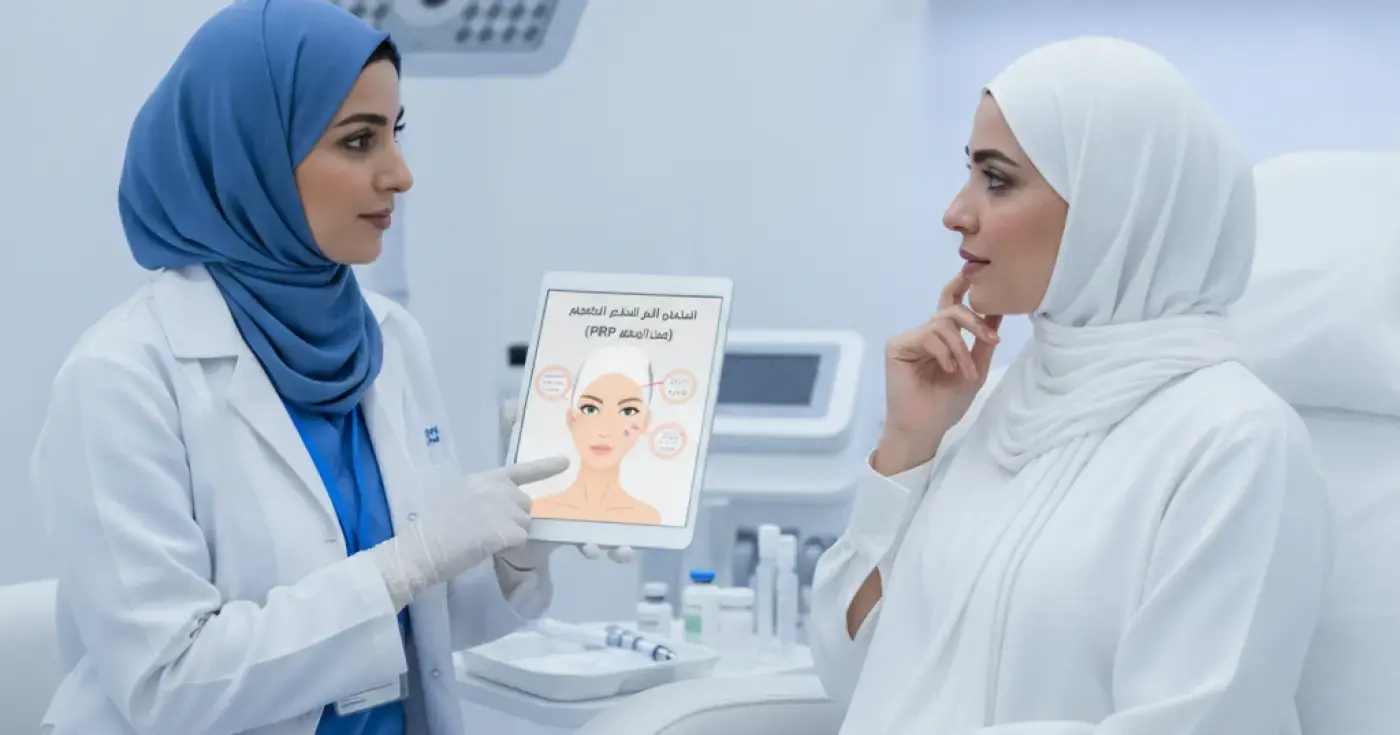
Platelet-Rich Plasma (PRP) therapy is one of the most prominent autologous regenerative treatments in modern aesthetic medicine. This technique relies on drawing a small sample of the patient's own blood, processing it in a centrifuge to concentrate platelets and biological growth factors, and then reinjecting it into target areas such as the scalp or facial skin. The scientific principle behind PRP injection therapy is to stimulate local stem cells, promote collagen and elastin production, and improve blood microcirculation in the treated tissues.
Upon injection, the concentrated platelets release vital proteins called growth factors, such as Platelet-Derived Growth Factor (PDGF) and Transforming Growth Factor-beta (TGF-beta). These factors send chemical signals that trigger tissue repair and cellular regeneration. To understand what happens after the session, one must realize that the body undergoes a temporary, medically programmed inflammatory phase, which is an essential part of the natural healing and rejuvenation process immediately following the injection.
Immediately after the procedure, the skin exhibits natural reactions due to micro-injections and the biological materials introduced. In the first 24 hours, mild to moderate redness is highly expected in the treated areas, accompanied by a feeling of warmth or slight tingling, similar to a mild sunburn. This redness is caused by increased local blood flow and activation of circulation by growth factors.
Patients may also notice mild swelling at the injection sites, which is completely normal and due to the injected fluid and the body's initial inflammatory response. In some cases, tiny pinpoint bleeding or minor bruising may appear where the needle entered, which gradually resolves within the first few hours. During this phase, doctors advise against touching the treated area to minimize the risk of bacterial transfer or infection in the newly opened micro-channels.
Recovery speed varies from person to person based on skin type, needle size, and adherence to post-care instructions. The following table outlines the expected recovery phases and associated symptoms:
| Timeframe | Expected Symptoms and Biological Activity | Recommended Actions |
|---|---|---|
| Day 1 (0-24 Hours) | Redness, mild swelling, warmth, and raised injection points. | Avoid washing the area, do not touch the face or scalp, and avoid makeup. |
| Days 2 to 3 | Redness gradually fades, mild skin dryness, and swelling begins to subside. | Apply a gentle, fragrance-free medical moisturizer and use sunscreen. |
| Days 4 to 7 | Most visible symptoms disappear, very mild skin peeling may occur (for facial PRP). | Gradually return to your regular skincare routine; avoid strong chemical exfoliants. |
| Week 2 Onward | Smoother skin, improved elasticity, and initiation of hair follicle stimulation. | Adhere to follow-up sessions as scheduled by your treating physician. |
It is crucial for patients to distinguish between normal, temporary side effects and unwanted complications. Normal side effects that should not cause concern include:
If you undergo a facial PRP session, adhering to post-treatment skincare tips is the deciding factor in the success of the treatment. The face should be washed only after at least 6 hours using lukewarm water, without any harsh chemical cleansers. It is recommended to apply an approved, fragrance-free medical moisturizer to soothe the skin and help restore its natural protective barrier.
Avoiding direct sun exposure is paramount during the first three days when the skin is highly sensitive and prone to hyperpigmentation. A broad-spectrum sunscreen with high protection (SPF 50) must be applied if you must go outside, and reapplied every two hours. Additionally, makeup must be avoided for at least 24 to 48 hours to prevent clogging the micro-channels created by the injections.
When undergoing a hair PRP session to treat hair thinning or stimulate growth, avoid washing your hair or scalp for a full 24 hours to ensure maximum absorption of the injected growth factors. When washing for the first time, use a gentle, sulfate-free and paraben-free medical shampoo, avoiding vigorous scrubbing or very hot water.
Avoid using thermal hair dryers, chemical dyes, or harsh styling products for at least one week after the session. It is also advised to avoid wearing tight hats or head coverings that may compress the injection sites and hinder local blood circulation during the first few days following the procedure.
To ensure safety and prevent neutralizing the activity of the injected platelets, patients must strictly avoid the following:
It is important to understand that PRP results are not immediate; they are gradual and cumulative, relying on the body's natural cellular renewal cycle. For facial PRP and skin rejuvenation, patients typically begin to notice a visible improvement in skin texture and radiance about two to three weeks after the first session, as new collagen begins to form beneath the skin.
For hair PRP, results require more time, aligning with the natural growth cycle of hair follicles. Initial results, such as a reduction in hair shedding, usually appear after the second or third session (about two months), while improvements in hair density and thickness become clearly visible after 4 to 6 months of starting the comprehensive treatment plan.
A single session is rarely sufficient to achieve the desired therapeutic and aesthetic outcomes. Specialists in Saudi Arabia recommend a treatment plan consisting of 3 to 4 consecutive sessions, spaced 4 to 6 weeks apart. After completing the initial treatment course, a maintenance session is recommended every 6 to 12 months to sustain the results and provide continuous cellular stimulation.
Although PRP is extremely safe because it utilizes the patient's own blood (eliminating the risk of allergic reactions), patients must watch for unusual signs that could indicate complications such as a skin infection. Contact your clinic or doctor immediately if you experience any of the following:
In conclusion, the success of PRP therapy depends heavily on the skill of the treating physician, the sterility of the equipment, and the quality of the blood collection and separation tubes. Choosing a licensed medical center and an experienced dermatologist ensures you receive a safe, high concentration of platelets while minimizing the risks of contamination or side effects. Discuss your medical history and current medications with your doctor before starting treatment to ensure the best possible results with the highest safety standards.
Clear, direct answers
Advertisement
Continue exploring
Discover how Platelet-Rich Plasma (PRP) injections stimulate collagen and rejuvenate skin cells. Learn about the benefits, steps, and expected results.
Read article
Discover the clinical differences between facial and hair PRP therapy, including benefits, injection techniques, and recovery times.
Read article
Discover when PRP facial results appear, how long they last, the recommended session timeline, and clinical tips for maximizing your skin rejuvenation.
Read article