
Lahalak Medical PlatformDifferentiate Care
Learn how trichoscopy (microscopic scalp analysis) helps dermatologists accurately differentiate alopecia areata from other hair loss types.
Advertisement
Hair loss is a common concern that deeply impacts self-esteem and psychological well-being. Because hair loss can stem from numerous causes, an accurate diagnosis is the essential first step toward an effective treatment plan. Historically, dermatologists relied primarily on visual clinical exams and hair pull tests. Today, trichoscopy has emerged as a revolutionary, non-invasive tool that allows specialists to identify the exact type of hair loss, especially when distinguishing alopecia areata from other conditions.
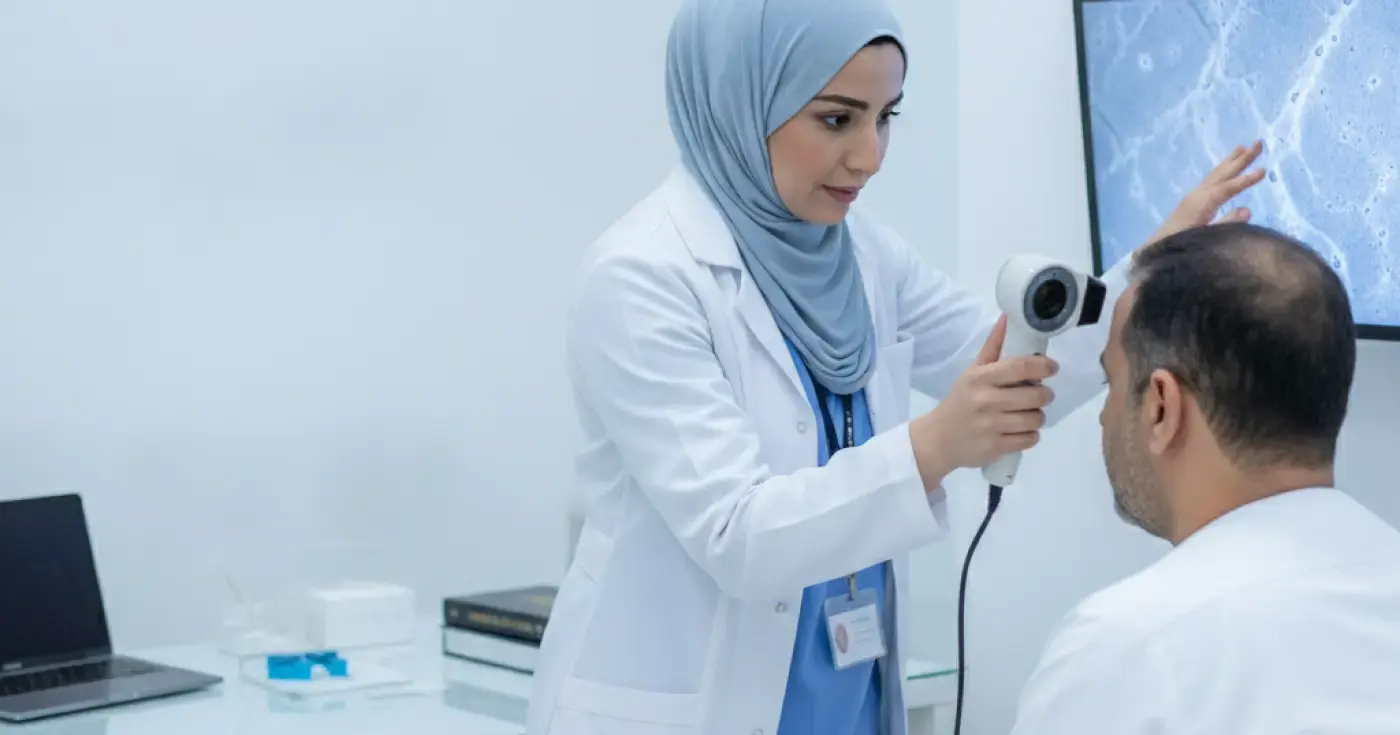
Trichoscopy is an advanced clinical method that utilizes a handheld dermoscope to magnify the scalp and hair follicles by 10 to over 100 times. This high magnification enables dermatologists to visualize microscopic details invisible to the naked eye, such as the hair shaft structure, follicular openings, scalp blood vessels, and the surrounding skin microenvironment.
This examination is quick, painless, and completely safe. The physician places the dermoscope lens directly onto the scalp, either dry or using a specialized interface fluid. The magnified images are projected onto a screen in real-time, allowing for detailed scalp analysis. These images can be saved to monitor treatment progress over time, helping determine if the hair loss is autoimmune, genetic, or temporary.
Alopecia areata is an autoimmune condition where the immune system mistakenly attacks hair follicles. It presents highly specific trichoscopic markers that help confirm the diagnosis, including:
Telogen effluvium is a temporary shedding condition often triggered by severe stress, childbirth, major surgery, or nutritional deficiencies. Under microscopic evaluation, telogen effluvium shows a healthy scalp background without exclamation mark hairs or black dots. Instead, it reveals an increased proportion of empty follicles or telogen hairs without active inflammation, making it easy to differentiate from active alopecia areata.
Androgenetic alopecia (pattern hair loss) differs fundamentally from alopecia areata. While alopecia areata is characterized by sudden immune-mediated destruction, androgenetic alopecia involves a gradual process called follicular miniaturization. Trichoscopy reveals significant hair shaft diameter diversity (thick terminal hairs next to very thin, miniaturized hairs) and an increased number of single-hair follicular units, with an absolute absence of exclamation mark hairs.
| Trichoscopic Feature | Alopecia Areata | Androgenetic Alopecia | Telogen Effluvium |
|---|---|---|---|
| Exclamation Mark Hairs | Highly common and active | Absent | Absent |
| Black Dots | Present in active phases | Very rare | Absent |
| Hair Diameter Diversity | Irregular and sudden | Highly common (miniaturization) | Normal and uniform |
| Yellow Dots | Present (distinct and round) | May appear in advanced stages | Very rare |
Trichoscopy is not only valuable for initial diagnosis but also plays a crucial role in monitoring hair loss treatment efficacy. By comparing sequential trichoscopic images, dermatologists can detect early signs of regrowth, such as fine upright vellus hairs, weeks before they become visible to the naked eye, providing early confirmation of treatment success.
It is highly recommended not to wait until hair loss becomes severe or leaves large bald patches. You should consult a qualified dermatologist as soon as you notice excessive daily shedding (exceeding the normal rate of 100 hairs per day), sudden circular bald patches, or if the hair loss is accompanied by scalp itching, pain, or scaling, to ensure an accurate microscopic diagnosis and timely intervention.
Clear, direct answers
Advertisement
Continue exploring
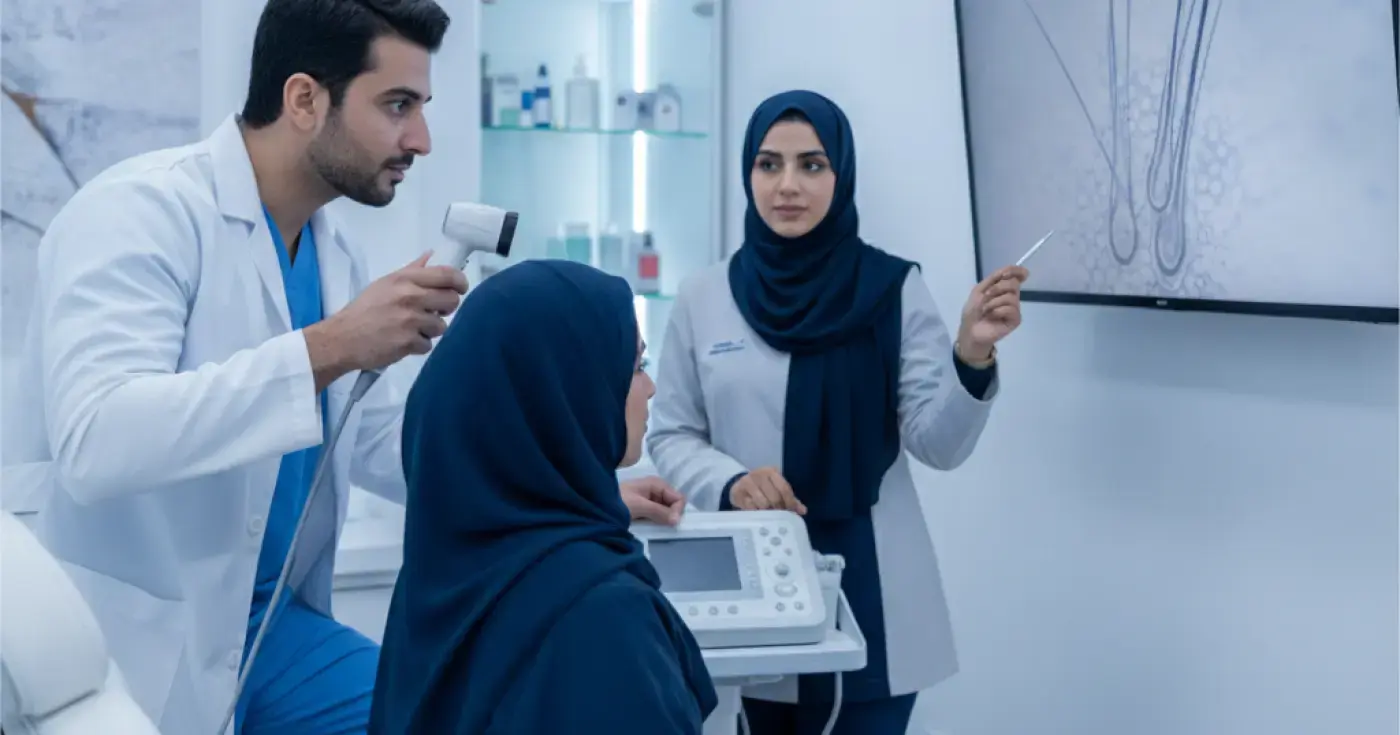
Discover how scalp trichoscopy (microscopic examination) helps dermatologists diagnose hair loss, alopecia, and scalp inflammation accurately and painlessly.
Read article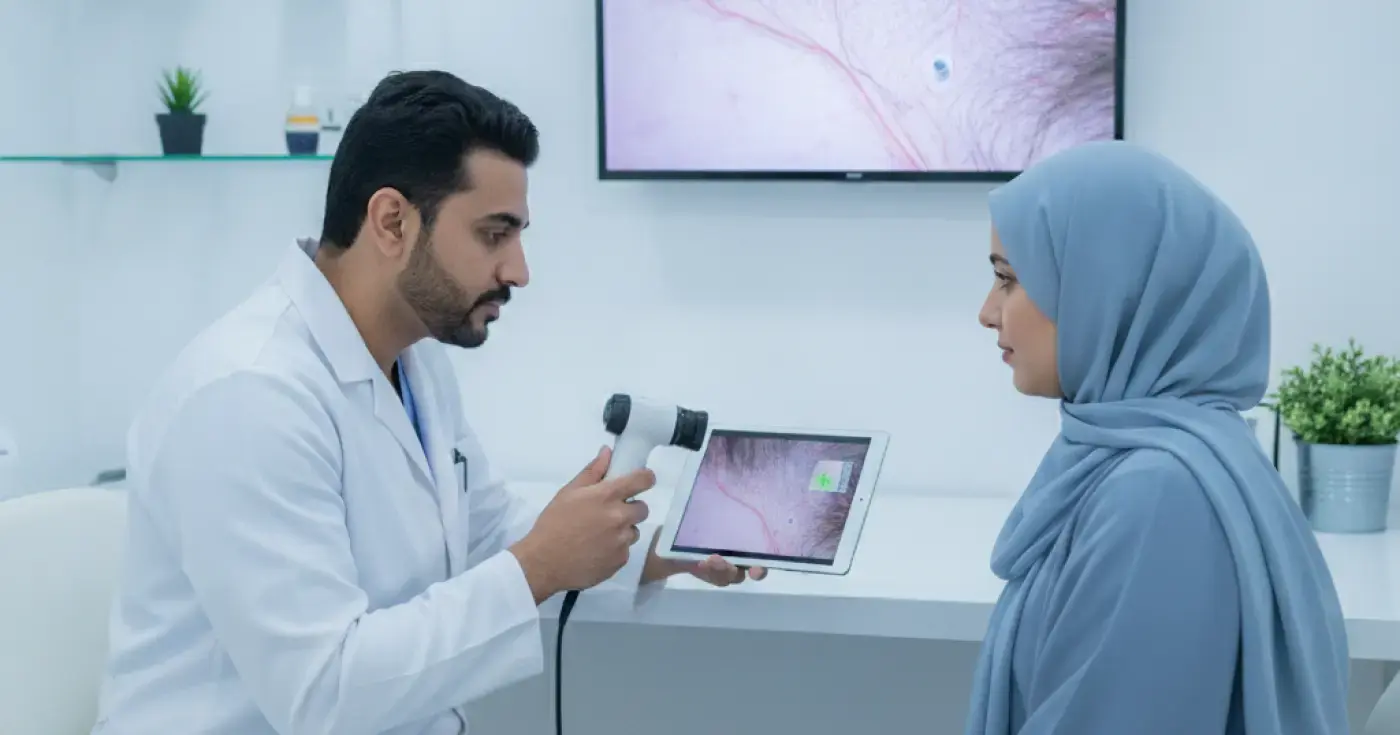
Learn how microscopic hair diagnosis (trichoscopy) helps dermatologists identify the root causes of hair loss and design effective treatment plans.
Read article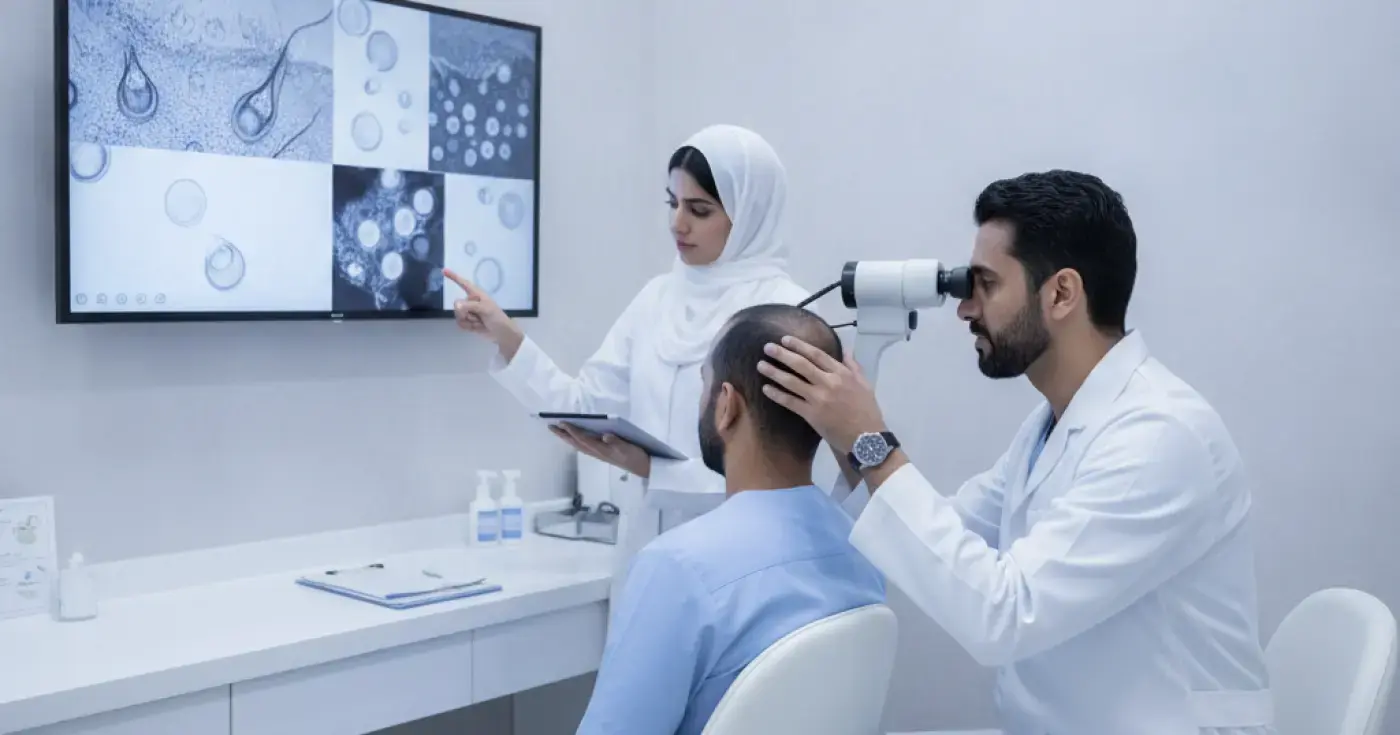
Learn how trichoscopy (microscopic hair analysis) helps dermatologists detect follicle weakness and identify the exact causes of hair loss non-invasively.
Read articleExplore the topic