
Lahalak Medical PlatformDifferentiate Care
Explore the best clinical treatments for atrophic acne scars, including lasers, subcision, and fillers, with expert dermatological advice.
Advertisement
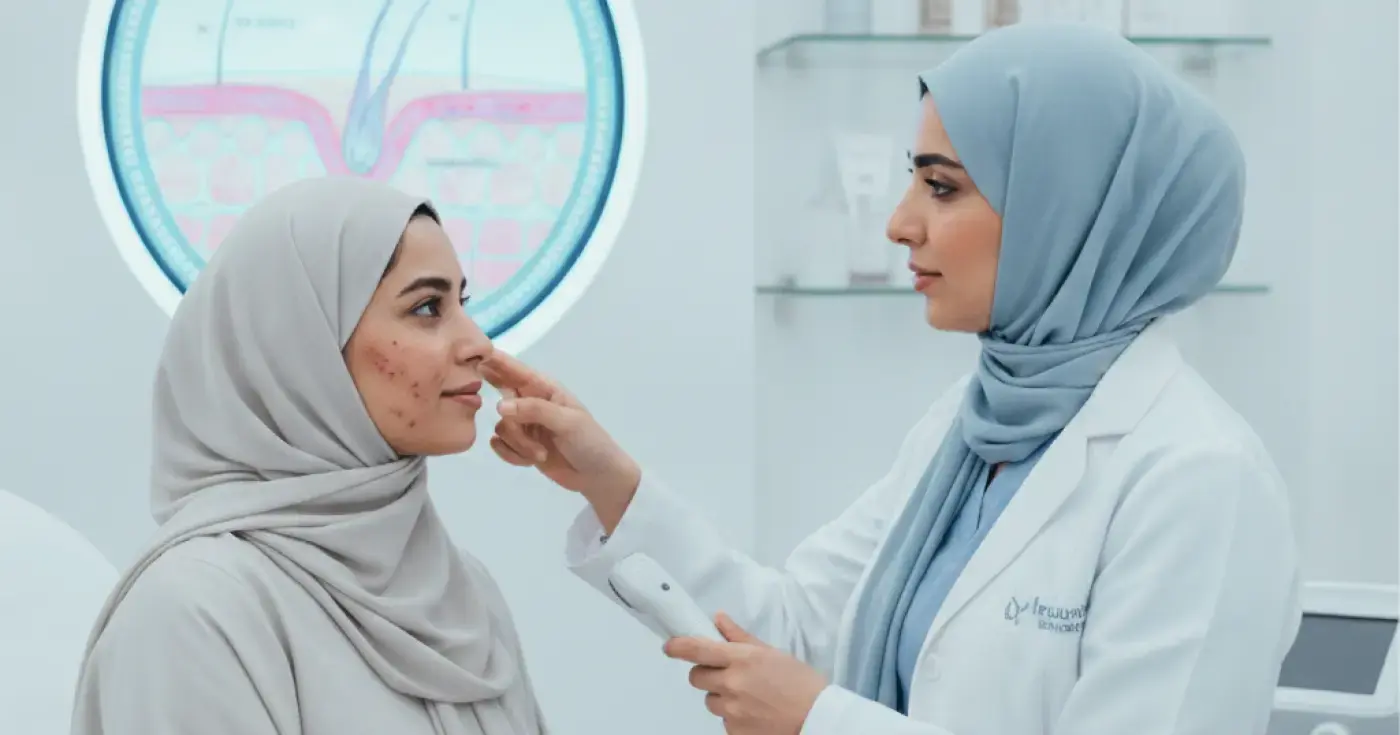
Acne is a highly prevalent skin condition, but the scars it leaves behind can often cause more distress than the active breakouts themselves. Atrophic or depressed acne scars develop when there is a loss of collagen and underlying dermal tissue during the healing process of inflammatory acne. When the skin heals without adequate structural support, depressions or pits form on the skin surface.
Dermatologists classify atrophic acne scars into three primary types, and identifying the specific type is crucial for designing an effective treatment plan:
Depressed scars are the result of an unbalanced inflammatory response. When acne cysts or nodules penetrate deep into the dermis, the body attempts to repair the damage by producing collagen. If the inflammation is severe, prolonged, or exacerbated by squeezing and picking at the pimples, the healing process is disrupted, leading to insufficient collagen production and subsequent tissue loss.
Because most patients present with a combination of scar types, dermatologists often employ a multi-modality approach to achieve optimal skin resurfacing and remodeling.
Laser technology is highly effective at stimulating collagen production and smoothing out the skin surface. Lasers are broadly categorized into two types:
Consulting a specialist for laser acne scar treatment ensures the selection of the safest laser wavelength for your specific skin type to minimize the risk of post-inflammatory hyperpigmentation.
Subcision is considered the gold standard treatment for rolling scars. During this minor in-office procedure, the dermatologist inserts a specialized needle beneath the skin to sever the fibrous bands that anchor the scar to the deep subcutaneous tissue. Releasing these bands immediately lifts the depressed skin.
To prevent the bands from reattaching and to maximize volume restoration, clinicians frequently combine subcision therapy with dermal fillers or platelet-rich plasma (PRP) injections.
While superficial and medium-depth chemical peels improve overall skin texture and very mild scarring, deep ice pick scars require a targeted approach. The TCA CROSS (Chemical Reconstruction of Skin Scars) technique involves applying a high concentration of trichloroacetic acid directly into the base of the ice pick scar. This causes a localized chemical reaction that stimulates new collagen production, gradually closing the deep tract from the bottom up.
Standard microneedling utilizes fine needles to create controlled micro-injuries in the skin, prompting the body's natural healing cascade. When combined with radiofrequency energy (RF Microneedling), thermal energy is delivered directly into the deeper dermis. This significantly enhances collagen and elastin production, making it highly effective for boxcar and rolling scars with less downtime than ablative lasers.
Dermal fillers, particularly hyaluronic acid-based fillers or collagen stimulators, can be injected directly under depressed scars to instantly lift them to the level of the surrounding skin. While dermal fillers provide immediate and highly satisfying results for rolling and broad boxcar scars, the effect is temporary, typically lasting from several months to a year, requiring maintenance treatments.
| Treatment Modality | Best Suited For | Expected Downtime | Average Sessions | Primary Mechanism |
|---|---|---|---|---|
| Fractional CO2 Laser | Boxcar & Rolling scars | 5 - 10 days | 3 - 5 sessions | Ablates skin surface & stimulates deep collagen |
| Subcision | Rolling scars | 2 - 4 days | 2 - 4 sessions | Releases fibrous bands pulling skin down |
| TCA CROSS | Ice Pick scars | 7 - 10 days | 3 - 6 sessions | Triggers localized collagen synthesis in deep pits |
| RF Microneedling | Mild to moderate scars | 1 - 3 days | 4 - 6 sessions | Delivers deep thermal energy via micro-needles |
| Dermal Fillers | Broad rolling scars | Minimal (1 day) | 1 session (temporary) | Instantly restores lost volume under the scar |
Achieving optimal results from acne scar treatments requires patience and strict adherence to clinical guidelines:
While these procedures are highly safe when performed by qualified dermatologists, potential side effects can include temporary hyperpigmentation (especially in darker skin types), prolonged redness, swelling, localized infection, or, in very rare cases, worsening of scars if post-care instructions are neglected.
Acne scar treatment is highly individualized. There is no single treatment that works for all scar types, and most successful outcomes rely on customized combination therapy. Consulting a board-certified dermatologist is the safest and most effective way to evaluate your skin, discuss realistic expectations, and formulate a tailored treatment plan to restore your skin's smooth appearance.
Clear, direct answers
Advertisement
Continue exploring

Learn the clinical truth about permanent acne scar removal, advanced treatments like lasers and subcision, and realistic outcomes for smoother skin.
Read article
Learn the difference between temporary acne marks and permanent scars, and explore advanced clinical treatments like lasers, microneedling, and subcision.
Read article
A comprehensive medical guide on microneedling for acne scars. Learn about expected results, number of sessions, types, and post-care tips.
Read article