
Lahalak Medical PlatformDifferentiate Care
Learn the clinical truth about permanent acne scar removal, advanced treatments like lasers and subcision, and realistic outcomes for smoother skin.
Advertisement
Acne scars are among the most common and distressing dermatological concerns, affecting not only skin texture but also self-esteem and quality of life. With rapid advancements in aesthetic dermatology, one fundamental question is constantly raised in clinics: Can acne scars be removed permanently?
In this comprehensive medical guide by LahaLak, we will explore the clinical reality of scar treatment, examine the latest advanced modalities, and set realistic, evidence-based expectations to help you make informed and safe treatment decisions.
Before initiating any treatment plan, a qualified dermatologist must perform a thorough skin type analysis and accurately classify the scars. Different scar types require distinct therapeutic approaches. They are broadly categorized into two main groups:
These scars develop due to a loss of tissue and collagen during the healing process of inflammatory acne. They are the most common type and include:
Unlike atrophic scars, these present as raised, thick masses of tissue. They occur when the body overproduces collagen during the wound healing process, and are most commonly found on the jawline, chest, and back.
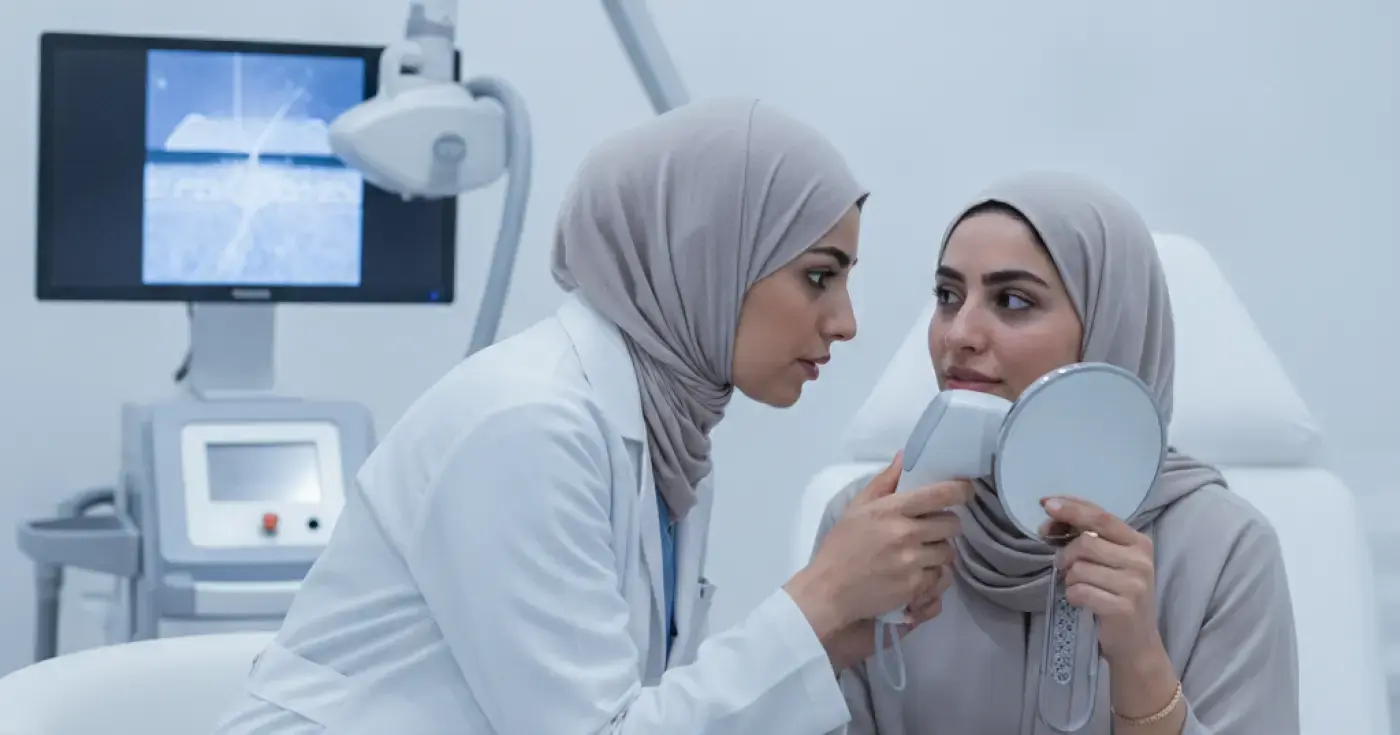
From a clinical standpoint, it is rarely possible to remove acne scars 100% and restore the skin to its exact pre-acne state. However, a realistic and highly achievable goal is a 50% to 80% improvement in scar appearance. This level of improvement makes scars significantly less noticeable to the naked eye and dramatically enhances skin smoothness.
The degree of improvement depends on several factors, including scar depth, age, skin type, and patient compliance. Combining multiple modalities (a multi-modal approach) is the current gold standard for achieving optimal clinical outcomes.
Dermatologists utilize a variety of clinical procedures depending on the scar type and depth:
Using laser skin resurfacing is highly effective for atrophic scars. Lasers deliver concentrated light beams to remove damaged outer skin layers and stimulate new collagen production in the deeper layers. They are classified into:
A minor in-office surgical procedure performed under local anesthesia. The dermatologist inserts a specialized needle beneath the skin to sever the fibrotic bands pulling the skin surface downward. This releases the depression and allows the skin to rise, often combined with dermal fillers or Platelet-Rich Plasma (PRP).
An advanced technology combining microneedling with radiofrequency energy delivered deep into the dermis. This process triggers the body's natural wound-healing response, leading to robust collagen and elastin production. It is highly effective and safe for all skin types, including darker skin tones.
Used primarily for superficial scars and post-inflammatory hyperpigmentation. Dermatologists apply clinical-grade acids to peel away outer layers and promote cell turnover. Techniques like TCA Cross are specifically used to treat deep icepick scars.
Injectable fillers can temporarily plump up atrophic scars, providing immediate improvement. While the results are temporary (lasting 6 to 12 months), some fillers help stimulate natural collagen production over time.
| Treatment Modality | Suitable Scar Types | Expected Downtime | Approximate Sessions | Expected Outcome |
|---|---|---|---|---|
| Fractional CO2 Laser | Boxcar & moderate atrophic scars | 5 - 10 days | 3 - 5 sessions | Significant texture & depth improvement |
| Subcision | Rolling scars | 2 - 4 days | 1 - 3 sessions | Immediate elevation of depressed areas |
| RF Microneedling | Superficial to moderate scars & pores | 1 - 3 days | 4 - 6 sessions | Skin tightening & texture refinement |
| TCA Cross | Deep icepick scars | 7 - 14 days | 3 - 5 sessions | Reduction of deep, narrow pits |
Middle Eastern skin types often contain higher levels of melanin, making them more prone to Post-Inflammatory Hyperpigmentation (PIH) following aggressive treatments. Therefore, dermatologists must select modalities carefully, often preferring RF microneedling or non-ablative lasers, combined with strict sun protection and pre-treatment priming creams to ensure safety and efficacy.
Achieving the best results from acne scar treatment requires careful preparation and diligent post-procedure care:
Temporary side effects such as redness, swelling, and mild peeling are normal. However, performing procedures at unlicensed facilities or failing to follow post-care guidelines can lead to complications, including:
To minimize these risks, always choose a qualified dermatologist licensed by the Saudi Commission for Health Specialties (SCFHS).
Prevention remains the most effective strategy. To reduce the likelihood of developing scars:
Treating acne scars is a journey that requires patience, commitment, and a customized clinical plan. While completely erasing scars may not be medically feasible, advanced dermatological procedures can dramatically improve skin texture and restore your confidence.
We highly recommend scheduling a consultation with a board-certified dermatologist to evaluate your skin and design the safest, most effective treatment plan for your specific needs.
Clear, direct answers
Advertisement
Continue exploring
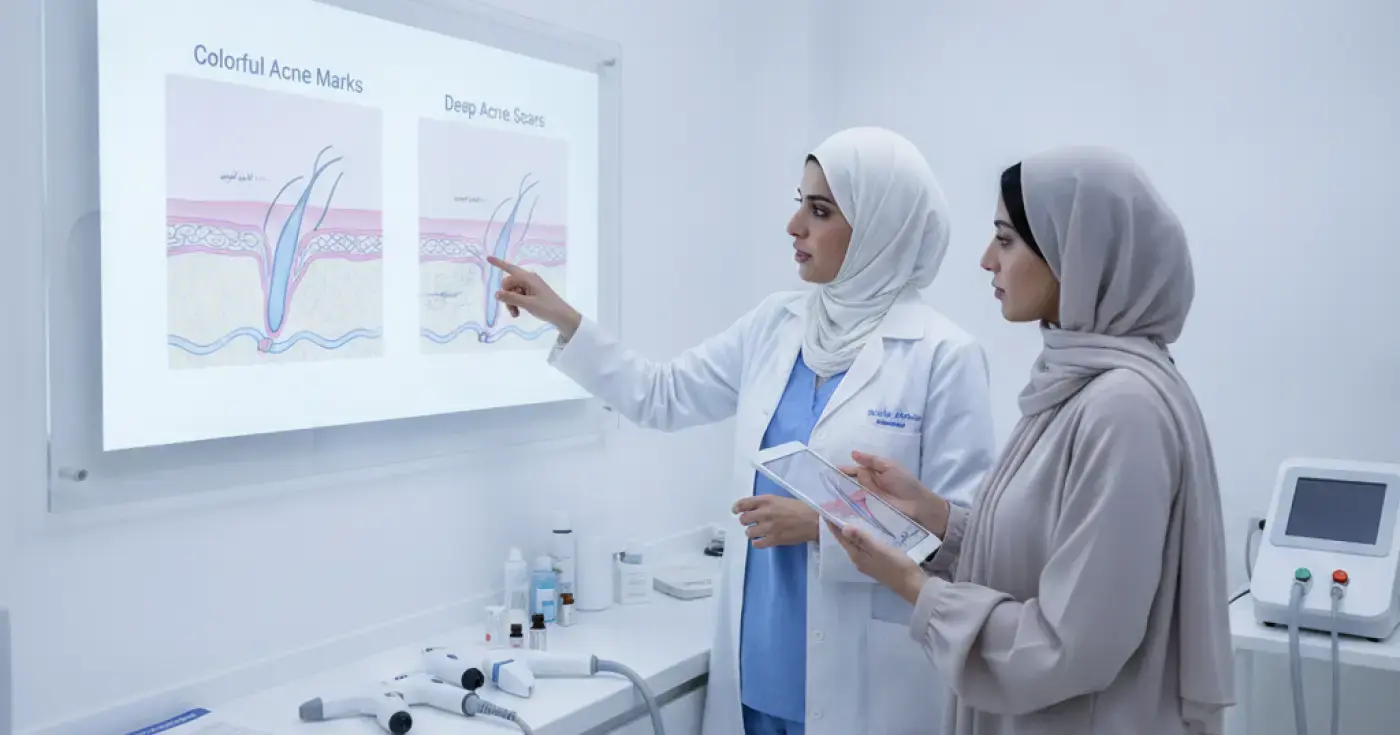
Learn the difference between temporary acne marks and permanent scars, and explore advanced clinical treatments like lasers, microneedling, and subcision.
Read article
A comprehensive medical guide on microneedling for acne scars. Learn about expected results, number of sessions, types, and post-care tips.
Read article
Discover how laser treatment can reduce acne scars. Learn about ablative vs. non-ablative lasers, ideal candidates, recovery, and essential post-care tips.
Read article