Insight Hub

Your feedback helps us raise our care standards.

LahaLak logo
LahaLakHealth Nexus | LahaLak Medical Services Office

We shape a clearer and more trusted care journey by combining medical expertise with digital technology.

Discovery

  • Vision & Mission
  • Elixir Blog
  • Success Stories

Ecosystem

  • Ambassador Program
  • Career Paths
  • Join as an Accredited Care Center
  • Practitioner Entry

Secure Access Node

Active Node

Support & Complaints Unit

0599489990

الخط المباشر|Direct Secure Line

Global Payments | سداد آمن
Privacy
Disclaimer
Editorial Policy & Medical Standards
Beneficiary Rights
Official IBAN
SA21 1000 0011 7000 0034 5102

All rights reserved to LahaLak Medical Platform © 2026
Exclusive Operator: LahaLak Medical Services Office

Reusing or copying platform content, designs, or ideas for commercial use is prohibited without prior written permission.

SBC: 0000209083CR: 4030402711VAT: 300095977700003SAIP: 1443017765BASE: Jeddah 23323
Lahalak Logo
Lahalak Medical PlatformDifferentiate Care
جاري تحميل مقال إكسير
Home›Elixir›Medical News›Skin Fungi vs. Eczema vs. Allergy: A Comprehensive Medical Guide
Medical News

Skin Fungi vs. Eczema vs. Allergy: A Comprehensive Medical Guide

Learn how to differentiate between skin fungal infections, eczema, and allergies. Discover symptoms, causes, and safe medical treatments.

By: LahaLak Medical PlatformPublished: October 8, 2026Updated: October 16, 20269 min read35 views
Comparison of skin fungal infection, eczema, and skin allergy symptoms on a patient's skin
Health education content
Sources are listed
Does not replace a clinician
Publication dates are transparent

Advertisement

Medical notice: this content is for health education and does not provide an individual diagnosis or replace appropriate medical consultation.

Introduction: Overlapping Symptoms and Diagnostic Challenges

Dermatological conditions are among the most common clinical complaints, often presenting with highly overlapping symptoms that can confuse patients. Redness, itching, and scaling are hallmark features of several distinct conditions, most notably fungal skin infections, eczema, and skin allergies. Attempting to self-treat these conditions without an accurate diagnosis can severely exacerbate the issue, especially when topical steroids are applied inappropriately. This comprehensive medical guide outlines the essential clinical differences between these three conditions based on established dermatological guidelines.

1. Fungal Skin Infections (Dermatophytosis)

Fungal skin infections are caused by microscopic organisms (dermatophytes) that feed on keratin, a protein found in the skin, hair, and nails. These fungi thrive in warm, humid environments.

Key Clinical Features of Fungal Infections:

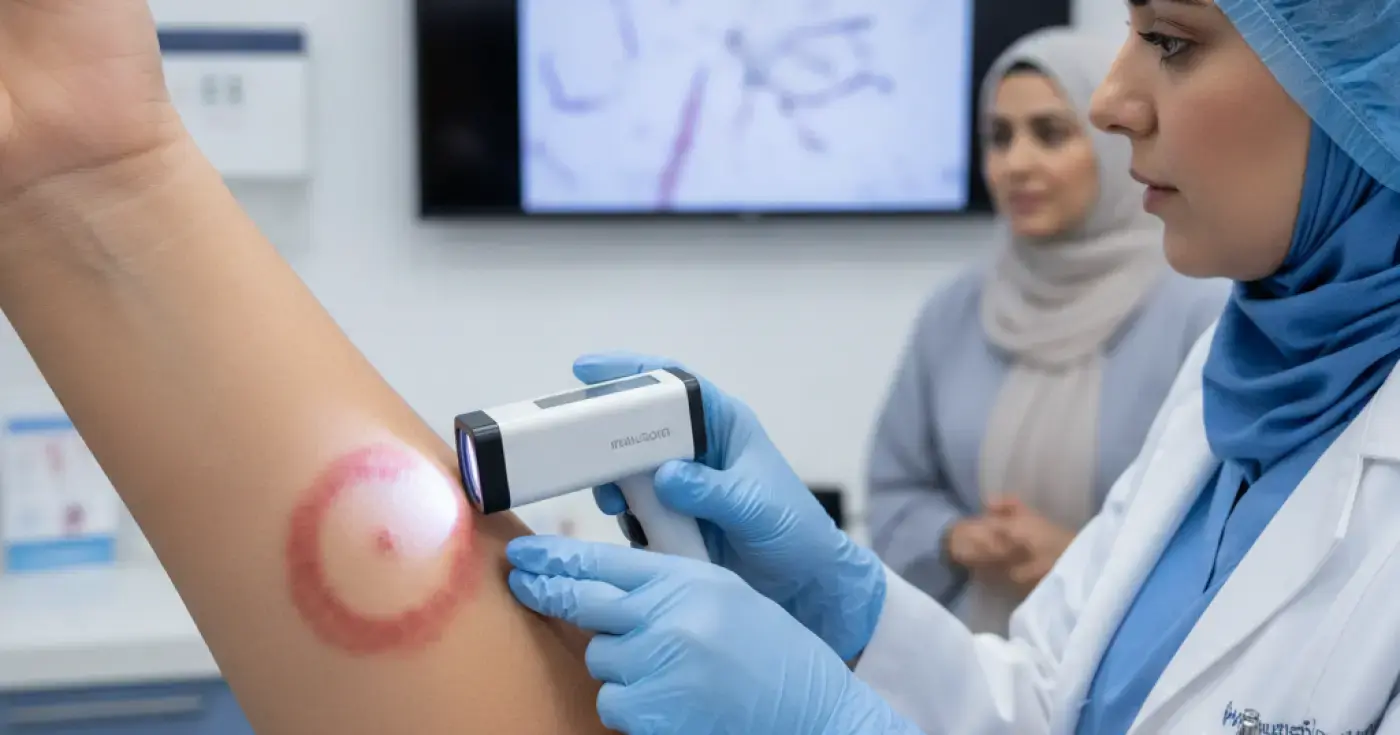
  • Annular (Ring-like) Appearance: The infection typically presents as a circular patch with raised, red, and scaly borders, while the center of the ring remains relatively clear (commonly known as ringworm or tinea).
  • Gradual Expansion: The circular lesion slowly expands outward over time.
  • Localized Pruritus: Itching is generally confined to the immediate area of the lesion.
  • Highly Contagious: Fungal infections spread easily through direct skin-to-skin contact, infected pets, or contaminated surfaces.

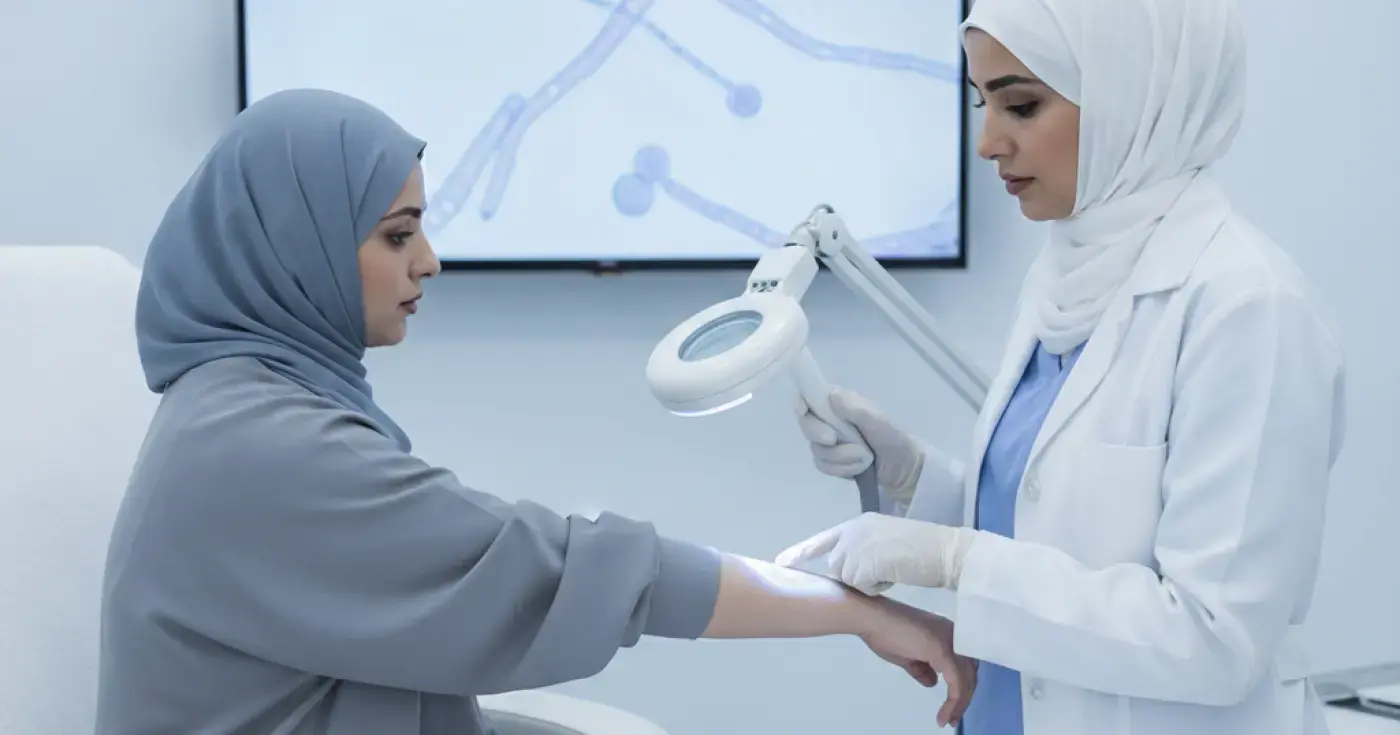
To confirm this diagnosis, a dermatologist may perform a تحليل كشط الجلد للفطريات (potassium hydroxide or KOH prep) to visualize fungal hyphae under a microscope before prescribing targeted antifungal therapy.

2. Eczema (Atopic Dermatitis)

Eczema is a chronic, non-contagious inflammatory skin condition characterized by a compromised skin barrier and immune system dysregulation. Genetic predisposition plays a significant role in its development.

Key Clinical Features of Eczema:

  • Severe Xerosis and Scaling: The affected skin is extremely dry, cracked, and rough.
  • Intense Pruritus: Itching is often severe, worsening significantly at night, leading to a chronic itch-scratch cycle that can cause secondary bacterial infections.
  • Typical Distribution: Lesions commonly appear in flexural areas, such as the creases of the elbows, behind the knees, and on the face, neck, and hands.
  • Episodic Flares: Eczema runs a relapsing course, triggered by environmental factors (e.g., harsh soaps, weather changes, or psychological stress).

Managing this condition requires consistent adherence to العناية بالبشرة الجافة protocols, focusing on frequent application of fragrance-free medical emollients.

3. Skin Allergies (Contact Dermatitis & Urticaria)

A skin allergy is an acute immune-mediated reaction triggered by direct contact with an allergen (allergic contact dermatitis) or systemic exposure to a substance like food or medication (urticaria/hives).

Key Clinical Features of Skin Allergies:

  • Sudden Onset: Symptoms typically manifest rapidly after exposure to the triggering allergen.
  • Erythema and Edema: The skin becomes intensely red, swollen, and may develop small, fluid-filled vesicles (blisters).
  • Acute, Burning Itch: The itching is sudden, intense, and may be accompanied by a burning sensation.
  • Clear Trigger Association: Symptoms are linked to specific exposures, such as cosmetics, fragrances, metals (like nickel in jewelry), or topical medications.

For persistent or recurrent cases, dermatologists often recommend a اختبار الرقعة للحساسية (patch test) to identify the exact causative allergen and prevent future flare-ups.

Comparison Table: Fungi vs. Eczema vs. Allergy

The following table summarizes the primary clinical differences between the three conditions:

FeatureFungal Infection (Tinea)Eczema (Atopic Dermatitis)Skin Allergy (Contact Dermatitis)
Primary CauseExternal fungal pathogen (microbial)Genetic barrier defect & immune dysfunctionImmune hypersensitivity to an allergen
Lesion AppearanceCircular red patches with raised, scaly edgesDry, thickened, scaly plaques in skin creasesSudden redness, swelling, and occasional blisters
Contagious?Yes, highly contagious via contact/fomitesNo, completely non-contagiousNo, completely non-contagious
Itch PatternMild to moderate, localized to the lesionSevere, persistent, and worsens at nightSudden, intense, burning, or stinging sensation
Primary TreatmentTopical or oral antifungal medicationsIntense emollients & short-term topical steroidsAvoiding triggers & oral antihistamines

The Clinical Risks of Misdiagnosis and Self-Medication

A frequent and serious clinical error is the self-application of over-the-counter topical corticosteroids to a fungal infection. Steroids suppress the local immune response of the skin, temporarily masking inflammation while allowing the fungus to proliferate unchecked. This leads to a condition known as "Tinea Incognito," where the classic ring-like presentation is lost, making subsequent clinical diagnosis highly challenging. Therefore, scheduling a استشارة طبيب الجلدية is always the safest first step before applying any active topical treatments.

General Prevention and Daily Skin Care Guidelines

  • Fungal Prevention: Keep skin clean and dry, especially in skin folds and between toes. Avoid sharing personal items like towels, and wear protective footwear in communal gym showers or pool areas.
  • Eczema Management: Take short, lukewarm showers instead of hot baths. Apply rich, ceramide-dominant moisturizers immediately after bathing to lock in moisture, and avoid harsh, scented soaps.
  • Allergy Prevention: Carefully review ingredient labels on skincare products, perform patch tests on a small skin area before using new products, and strictly avoid known allergens.

Sources and References

  1. Ministry of Health Saudi Arabia
  2. World Health Organization
  3. MedlinePlus
  4. Centers for Disease Control and Prevention CDC
  5. American College of Obstetricians and Gynecologists ACOG

Clear, direct answers

Frequently Asked Questions

Can eczema turn into a fungal skin infection?+
No, eczema cannot turn into a fungal infection because they have completely different causes; eczema is an inflammatory immune condition, while fungi are living microorganisms. However, the cracked skin barrier in eczema can allow fungi or bacteria to enter and cause a secondary infection.
How can I tell if my itching is caused by fungi or an allergy?+
Fungal itching is typically localized and accompanied by a circular, red, scaly-bordered patch that expands slowly. Allergic itching usually starts suddenly, may be widespread, and is often linked to contact with a specific trigger, subsiding once the trigger is removed.
Are fungal skin infections contagious?+
Yes, fungal skin infections are highly contagious. They can easily spread from person to person through direct skin contact, sharing personal items like towels or clothing, or by touching infected pets.
Why do doctors warn against using steroid creams for fungal infections?+
Steroids suppress local skin immunity. While they may temporarily reduce redness and itching, they allow the fungus to grow and spread deeper into the skin, leading to a modified, hard-to-diagnose condition called Tinea Incognito.
Is eczema a hereditary condition?+
Yes, genetics play a major role in eczema (atopic dermatitis). Individuals with eczema often have a family history of eczema, asthma, or allergic rhinitis (hay fever).

Explore the topic

Related articles

  • Is Skin Fungus Contagious? Transmission, Prevention, and TreatmentElixir · Health Panorama
  • Jock Itch (Tinea Cruris): Causes, Symptoms, Treatment, and PreventionElixir · Health Panorama
  • Ringworm (Tinea): Symptoms, Transmission, and Treatment OptionsElixir · Health Panorama

Elixir

Explore health content

Medical News

Browse Elixir sections and continue exploring content related to this article.

Medical NewsConsumer AwarenessInspiring Stories

Advertisement

Your opinion matters

Was this content helpful?

Have a note?

Comments require login.Log in
Loading comments
Loading related articles

Continue exploring

Related Articles

Is Skin Fungus Contagious? Transmission, Prevention, and Treatment

Is Skin Fungus Contagious? Transmission, Prevention, and Treatment

Discover if skin fungal infections are contagious, how they transmit between people, and effective medical treatments and prevention tips.

Read article

Jock Itch (Tinea Cruris): Causes, Symptoms, Treatment, and Prevention

Jock Itch (Tinea Cruris): Causes, Symptoms, Treatment, and Prevention

A comprehensive medical guide on jock itch (tinea cruris), covering causes, symptoms, clinical treatments, and effective prevention strategies.

Read article
Ringworm (Tinea): Symptoms, Transmission, and Treatment Options

Ringworm (Tinea): Symptoms, Transmission, and Treatment Options

A comprehensive medical guide on ringworm (tinea): explore symptoms, transmission routes, clinical diagnosis, and effective treatment options.

Read article