
Lahalak Medical PlatformDifferentiate Care
Discover if skin fungal infections are contagious, how they transmit between people, and effective medical treatments and prevention tips.
Advertisement
Skin fungal infections are common dermatological conditions caused by microscopic organisms that live on our skin and in our surrounding environment. Under normal circumstances, these fungi coexist harmlessly with human hosts. However, when provided with a warm, humid environment and compromised immunity, they can multiply rapidly, leading to various skin infections. These infections vary in severity and location, affecting millions of people worldwide annually.
Understanding how these organisms interact with keratin—a protein found in skin, nails, and hair—is crucial. Fungi (dermatophytes) feed on keratin, triggering inflammatory responses. This article, prepared for LahaLak / لها ولك الطبية, explores how easily these infections spread within households and public spaces, and how to prevent them.
Yes, most types of skin fungal infections are highly contagious. They can easily spread from an infected person to a healthy individual, or even from pets to humans. The ease of transmission depends on the specific type of fungus, the host's immune status, and environmental factors such as temperature and humidity.
Fungal spores can survive on dry surfaces and fabrics for extended periods. This means direct physical contact is not always necessary for transmission; touching contaminated surfaces can also lead to infection, making awareness and prevention essential.
Fungal skin infections can be transmitted through several primary pathways:
This occurs through direct skin-to-skin contact with an infected individual. It is common in contact sports like wrestling or judo, or within households through close physical contact if the infected area is exposed.
This is one of the most common transmission routes. Fungal spores spread when people share personal items such as towels, nail clippers, hairbrushes, clothing, and shoes. Fungi also thrive in damp, shared environments like swimming pool decks, gym locker rooms, and public showers, where walking barefoot can easily lead to athlete's foot.
Pets, especially kittens and puppies, can carry fungal infections like ringworm and transmit them to humans during play or cuddling. Infected animals may not always show obvious symptoms, or they may present with scaly, hairless patches on their skin.
Although less common, some fungi live in organic-rich soil. These can be transmitted to humans during direct contact with soil without protective gloves, especially if there are minor cuts or abrasions on the skin.
Fungal infections present differently depending on the affected body part:
| Fungal Type | Affected Area | Contagiousness Level | Primary Transmission Route |
|---|---|---|---|
| Tinea Pedis (Athlete's Foot) | Between toes and soles of feet | Very High | Walking barefoot in damp, shared public areas |
| Tinea Corporis (Ringworm) | Body skin (non-hairy areas) | High | Direct skin contact, sharing towels or clothes |
| Tinea Capitis | Scalp and hair follicles | Very High (especially children) | Sharing combs, hats, pillows, or contact with pets |
| Tinea Cruris (Jock Itch) | Groin and inner thighs | Moderate | Friction, moisture, sharing undergarments or towels |
| Tinea Versicolor | Chest, back, and shoulders | Non-contagious | Overgrowth of normal skin yeast due to heat/humidity |
While fungi are ubiquitous, certain factors make individuals more susceptible to infection:
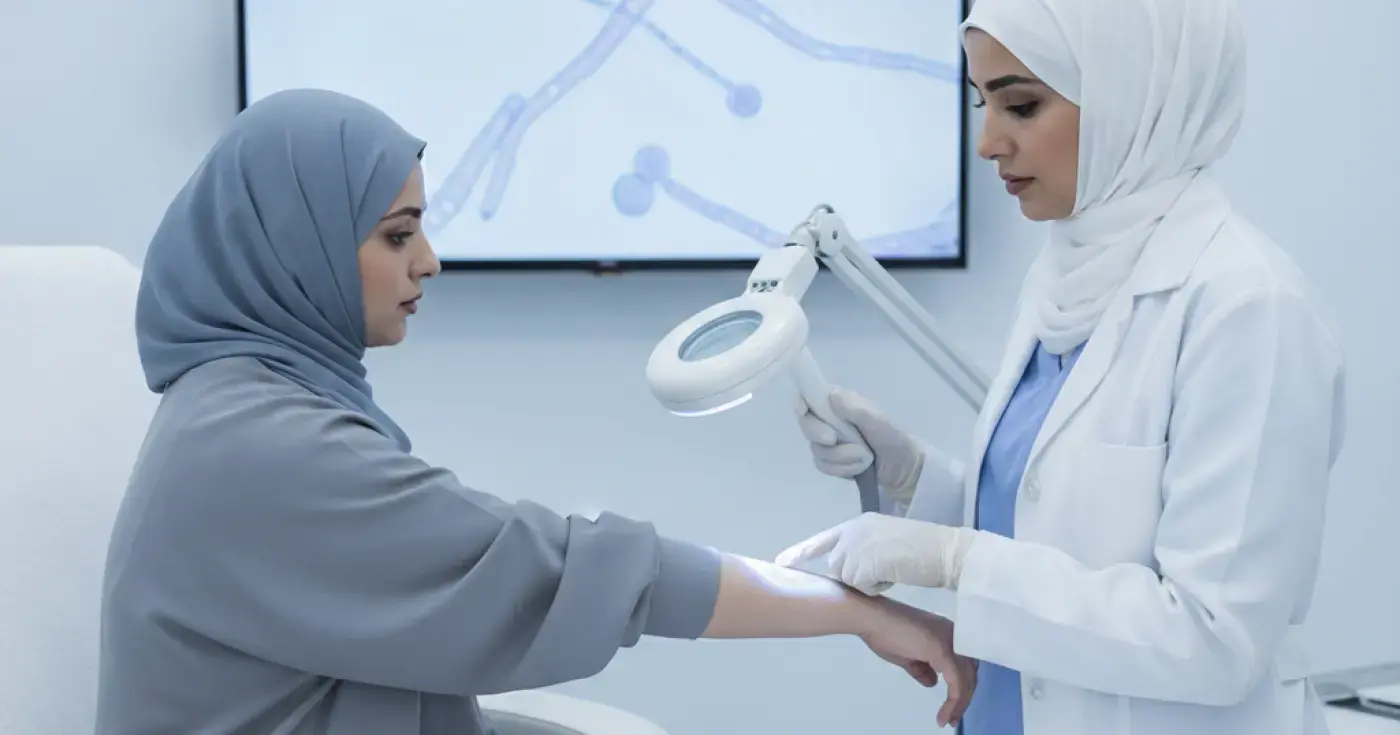
During a clinical visit, the specialist will perform a الفحص السريري للجلد (clinical skin examination) to evaluate the lesions. To confirm the diagnosis and rule out other conditions like eczema or psoriasis, the doctor may perform:
Fungal skin infections are treated using topical or oral medications, depending on the severity and location:
Used for mild to moderate, localized infections. These include antifungal creams, ointments, sprays, and shampoos (e.g., ketoconazole, miconazole, terbinafine). Consistent application is necessary even after symptoms resolve to ensure complete eradication of spores.
Oral antifungals are prescribed for scalp ringworm, nail infections, or widespread, resistant skin infections. These require medical supervision and occasional liver function monitoring.
Proper العناية بالبشرة المصابة (care for infected skin) involves keeping the area clean and dry, and avoiding scratching to prevent secondary bacterial infections.
Prevention is key to controlling the spread of skin fungi:
Seek a استشارة طبيب الجلدية (dermatologist consultation) if:
Clear, direct answers
Advertisement
Continue exploring

A comprehensive medical guide on jock itch (tinea cruris), covering causes, symptoms, clinical treatments, and effective prevention strategies.
Read article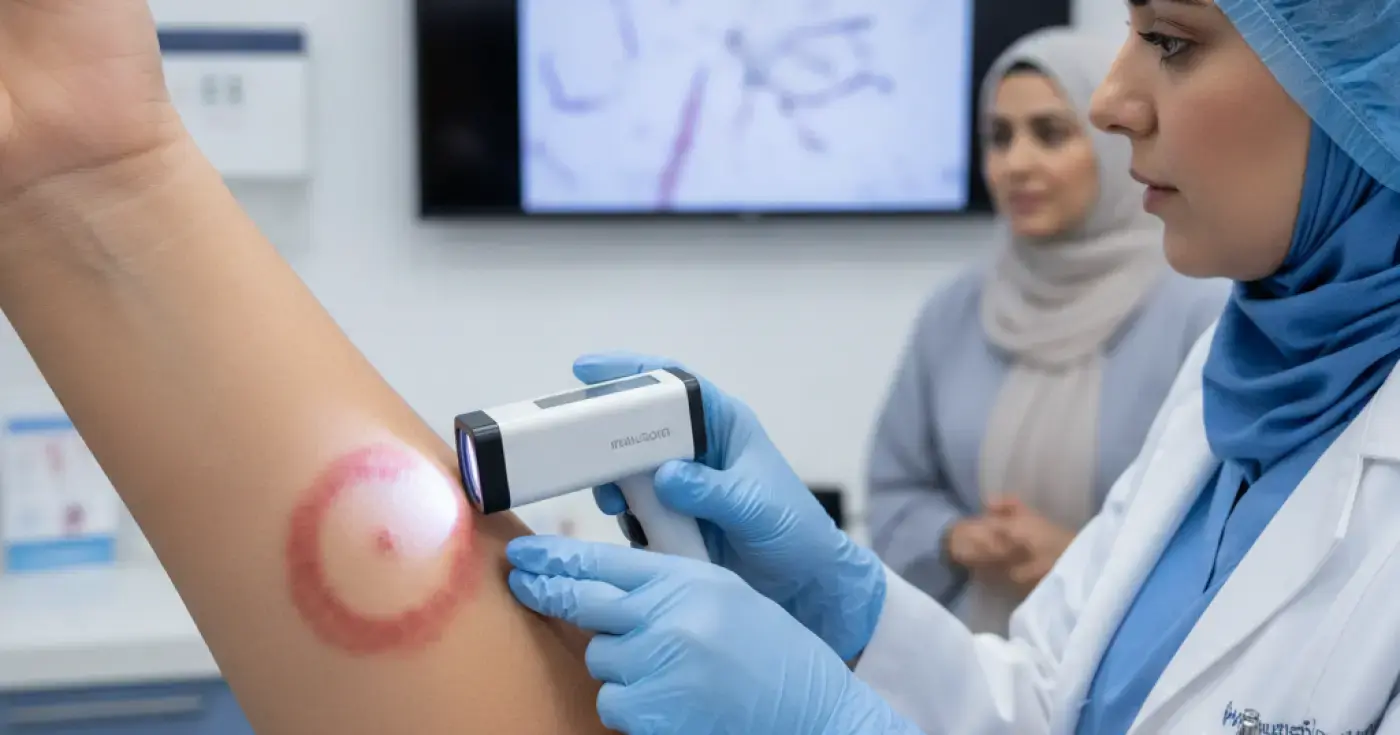
A comprehensive medical guide on ringworm (tinea): explore symptoms, transmission routes, clinical diagnosis, and effective treatment options.
Read article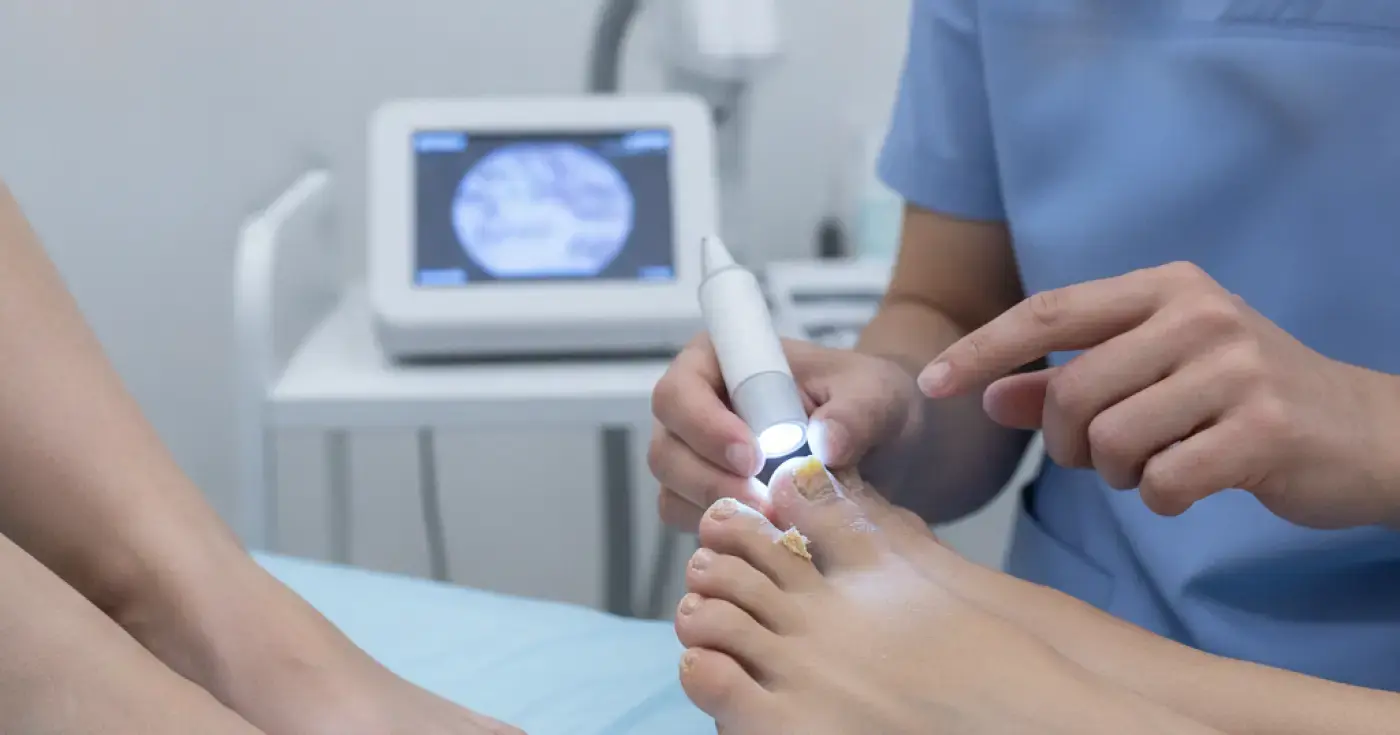
A comprehensive medical guide on nail fungus (onychomycosis): explore causes, symptoms, clinical diagnosis, treatments, and prevention tips.
Read article