
Lahalak Medical PlatformDifferentiate Care
A comprehensive medical guide on ringworm (tinea): explore symptoms, transmission routes, clinical diagnosis, and effective treatment options.
Advertisement
Ringworm, medically known as tinea or dermatophytosis, is a highly common superficial fungal infection that affects millions of people worldwide. Despite its misleading name, ringworm has absolutely nothing to do with worms. Instead, it is caused by microscopic fungi called dermatophytes. These fungi thrive on keratin, a tough, protective protein found in the outer layers of the skin, hair, and nails.
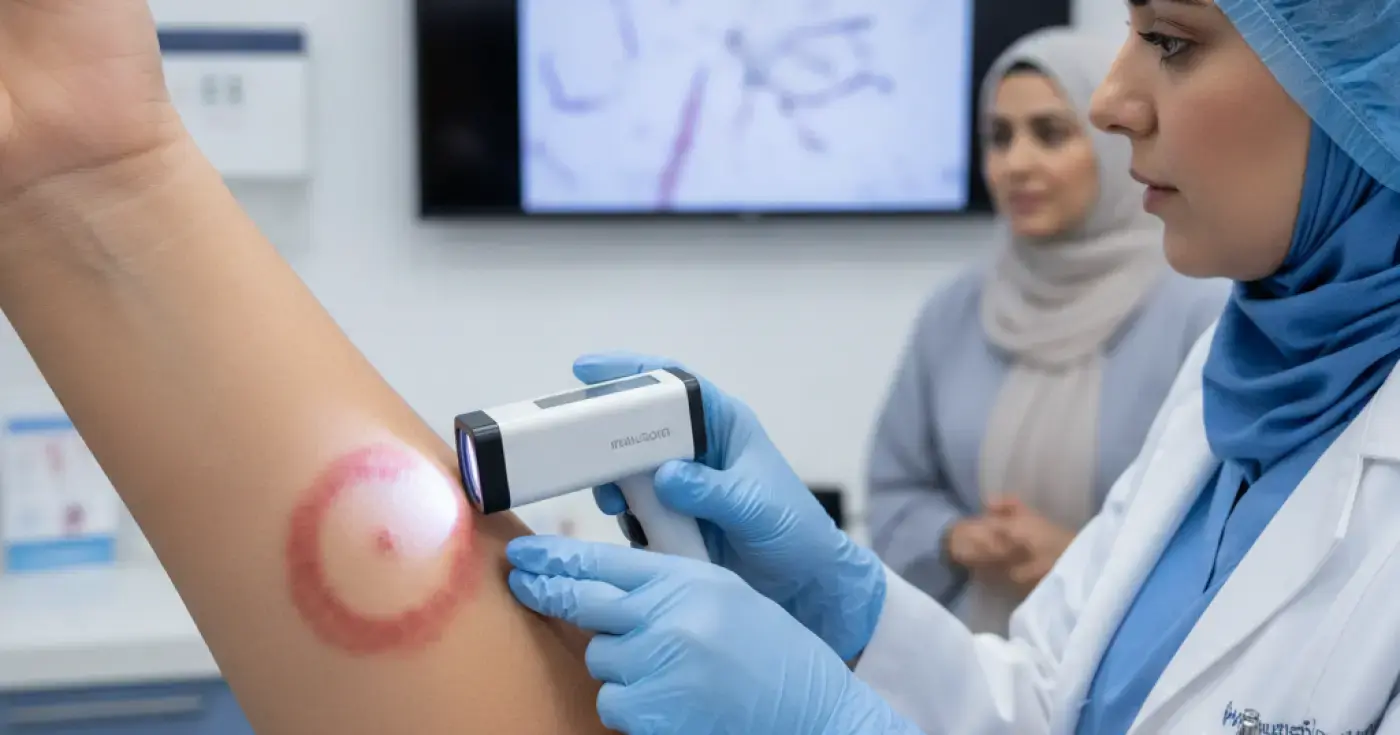
The infection is characterized by a distinctive ring-like rash that is typically red, itchy, and slightly raised at the edges, while the skin in the center of the ring often appears clear or less inflamed. Ringworm can develop on various parts of the body, and its medical classification depends on the specific area affected.
Dermatophyte infections are classified based on their anatomical location. The most common clinical presentations include:
This type occurs on the trunk, limbs, or face. It begins as a small, scaly red patch that gradually expands outward, forming the classic circular pattern with raised, active borders and intense itching.
Highly prevalent among school-aged children, this infection targets the scalp and hair shafts. It causes patches of hair loss (localized alopecia), scaly gray or red skin, and in severe cases, a painful, pus-filled inflammatory mass known as a kerion.
Commonly affecting athletes and individuals who wear tight, enclosed footwear. It typically manifests in the webs between the toes, causing scaling, peeling, cracking, burning, and persistent itching, often accompanied by an unpleasant odor.
This infection affects the groin, perineum, and inner thighs. It presents as a red, itchy, and scaly rash that spreads from the groin folds, particularly in warm, humid conditions where friction and sweating are high.
A fungal infection of the fingernails or toenails. It causes the nails to become thickened, discolored (yellow, white, or brown), brittle, and prone to crumbling at the edges, occasionally leading to nail separation from the nail bed.
While symptoms can vary based on the location of the infection, common clinical signs include:
Dermatophytes are highly contagious and resilient organisms. Understanding how they spread is key to preventing infection:
Direct skin-to-skin contact with an infected individual is a primary route of transmission. Sharing personal items such as towels, clothing, hairbrushes, and bed linens can also easily spread the fungi.
Direct contact with infected animals, particularly domestic pets like cats and dogs (especially kittens and puppies), can transmit the fungus to humans. Infected animals often show patches of missing fur and scaly skin.
The fungal spores can survive for extended periods on inanimate objects and surfaces. Walking barefoot in damp communal areas, such as locker rooms, public showers, and swimming pool decks, is a common source of exposure.
In rare instances, direct contact with highly fertile soil containing geophilic dermatophytes can lead to infection, particularly among gardeners or agricultural workers.
Several factors can increase susceptibility to ringworm infections, including:
A dermatologist typically diagnoses ringworm through a physical examination of the characteristic rash. To confirm the diagnosis and rule out other skin conditions like eczema or psoriasis, the physician may perform a KOH prep test. This involves gently scraping a small sample of scales from the active edge of the lesion, treating it with potassium hydroxide, and examining it under a microscope to visualize the fungal hyphae. In atypical or resistant cases, a fungal culture may be obtained.
The choice of treatment depends on the severity and location of the infection:
For mild to moderate infections of the body, groin, or feet, topical antifungal creams, ointments, or sprays (such as clotrimazole, miconazole, or terbinafine) are the first line of therapy. These should be applied to the lesion and the surrounding skin for the full duration prescribed by the doctor, even if symptoms resolve early.
Infections involving the scalp (tinea capitis) or nails (onychomycosis), as well as widespread or resistant skin infections, require oral antifungal medications. Common systemic agents include terbinafine, itraconazole, and fluconazole. These medications require professional medical supervision to monitor potential side effects and liver function.
| Type of Tinea | Most Common Location | Key Symptoms | Standard First-Line Treatment |
|---|---|---|---|
| Tinea Corporis | Trunk, limbs, face | Itchy, red, circular scaly plaques | Topical antifungal creams |
| Tinea Capitis | Scalp and hair follicles | Scaly patches, hair breakage, alopecia | Oral antifungals and medicated shampoo |
| Tinea Pedis | Between toes, soles of feet | Peeling, cracking, itching, odor | Topical antifungal sprays or creams |
| Tinea Cruris | Groin and inner thighs | Spreading red rash with intense itching | Topical antifungals and keeping area dry |
| Tinea Unguium | Toenails and fingernails | Thickened, discolored, crumbling nails | Oral antifungal tablets for several months |
Adhering to a proper hygiene routine is vital to support recovery and prevent reinfection. Patients should follow a structured fungal skin care guide, which includes:
While ringworm is generally highly treatable, seeking a professional dermatology consultation is necessary in certain situations. You should see a doctor if:
Clear, direct answers
Advertisement
Continue exploring

Learn about the causes, symptoms, clinical treatments, and prevention tips for foot fungus (tinea pedis) to keep your feet healthy.
Read article
A comprehensive medical guide on nail fungus (onychomycosis): explore causes, symptoms, clinical diagnosis, treatments, and prevention tips.
Read article
Discover the common types of skin fungal infections, their symptoms, diagnostic methods, and how to distinguish between them clinically.
Read article