Insight Hub

Your feedback helps us raise our care standards.

LahaLak logo
LahaLakHealth Nexus | LahaLak Medical Services Office

We shape a clearer and more trusted care journey by combining medical expertise with digital technology.

Discovery

  • Vision & Mission
  • Elixir Blog
  • Success Stories

Ecosystem

  • Ambassador Program
  • Career Paths
  • Join as an Accredited Care Center
  • Practitioner Entry

Secure Access Node

Active Node

Support & Complaints Unit

0599489990

الخط المباشر|Direct Secure Line

Global Payments | سداد آمن
Privacy
Disclaimer
Editorial Policy & Medical Standards
Beneficiary Rights
Official IBAN
SA21 1000 0011 7000 0034 5102

All rights reserved to LahaLak Medical Platform © 2026
Exclusive Operator: LahaLak Medical Services Office

Reusing or copying platform content, designs, or ideas for commercial use is prohibited without prior written permission.

SBC: 0000209083CR: 4030402711VAT: 300095977700003SAIP: 1443017765BASE: Jeddah 23323
Lahalak Logo
Lahalak Medical PlatformDifferentiate Care
جاري تحميل مقال إكسير
Home›Elixir›Medical News›Skin Biopsy: A Comprehensive Guide to Types, Uses, and Recovery
Medical News

Skin Biopsy: A Comprehensive Guide to Types, Uses, and Recovery

Learn what a skin biopsy is, why doctors recommend it, the different types (shave, punch, excision), and how to care for your wound post-procedure.
By: LahaLak Medical PlatformPublished: October 6, 2026Updated: October 15, 202610 min read7 views
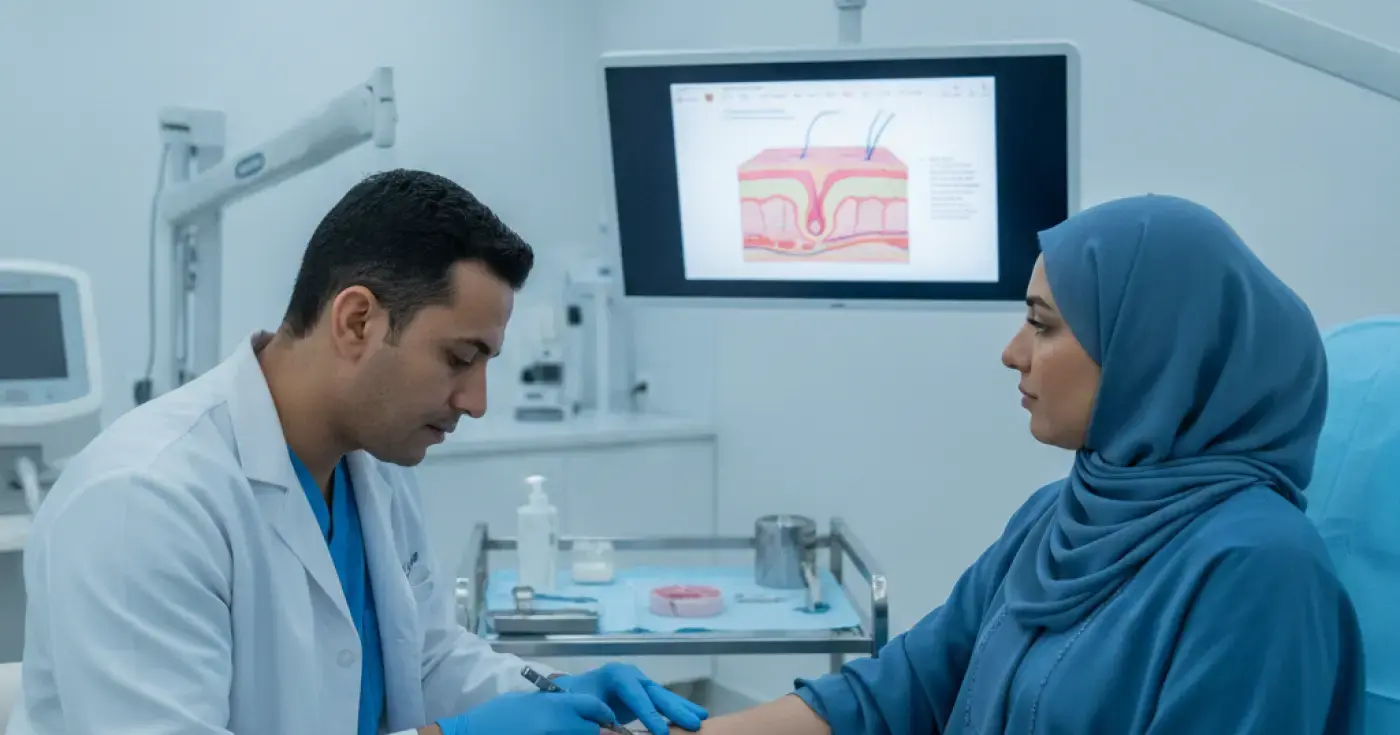
Dermatologist performing a skin biopsy on a patient in a clinic
Health education content
Sources are listed
Does not replace a clinician
Publication dates are transparent

Advertisement

Medical notice: this content is for health education and does not provide an individual diagnosis or replace appropriate medical consultation.

What is a Skin Biopsy?

A skin biopsy is a straightforward medical procedure in which a dermatologist removes a small sample of skin cells or tissue from the body to send to a laboratory for histopathological analysis under a microscope. This procedure helps doctors diagnose a wide range of skin conditions, from simple inflammatory rashes and infections to benign and malignant skin tumors. It serves as the cornerstone for establishing an accurate, personalized treatment plan.

Why Do Doctors Recommend a Skin Biopsy?

Dermatologists recommend a skin biopsy when they observe abnormal skin changes that cannot be definitively diagnosed through visual examination alone. The primary reasons for ordering a biopsy include:

  • Diagnosing skin cancers: such as basal cell carcinoma, squamous cell carcinoma, and melanoma.
  • Evaluating suspicious moles: that change in size, shape, or color over time.
  • Diagnosing inflammatory skin conditions: such as psoriasis, severe eczema, and cutaneous lupus.
  • Identifying skin infections: whether fungal, bacterial, or viral, that do not respond to standard treatments.
  • Investigating blistering disorders: such as pemphigus vulgaris or bullous pemphigoid.

The Main Types of Skin Biopsies

The method used to perform a biopsy depends on the size, location, and depth of the skin lesion. The main types include:

1. Shave Biopsy

During a shave biopsy, the doctor uses a tool similar to a sharp razor blade to shave off the superficial layers of the skin (the epidermis and part of the dermis). This is typically used for superficial moles, skin tags, and lesions that do not extend deep into the skin. It rarely requires stitches.

2. Punch Biopsy

The doctor uses a circular, sharp tool resembling a small cookie cutter to punch through the skin and extract a cylindrical core of tissue, including deeper layers (epidermis, dermis, and subcutaneous fat). This is ideal for diagnosing inflammatory diseases and deep lesions, and usually requires one or two stitches to close.

3. Excisional Biopsy

The doctor uses a scalpel to remove the entire skin lesion along with a margin of surrounding healthy skin to ensure complete removal. This is commonly used when malignant tumors like melanoma are suspected. It always requires surgical stitches to close the wound.

Comparison Table of Skin Biopsy Types

Biopsy TypeTarget DepthStitches RequiredCommon Use Case
Shave BiopsySuperficial (Epidermis & upper Dermis)RarelySkin tags, superficial moles
Punch BiopsyDeep (Reaches subcutaneous fat)Usually (1-2 stitches)Rashes, inflammatory conditions
Excisional BiopsyFull depth with safety marginsAlwaysSuspected tumors, melanoma

How to Prepare for Your Skin Biopsy

A skin biopsy is a quick outpatient procedure performed under local anesthesia, but proper preparation ensures safety and a smooth process. You should inform your doctor about:

  • Your complete medical history and any drug allergies, especially to local anesthetics like lidocaine.
  • Any blood-thinning medications you take, such as aspirin, warfarin, or NSAIDs, as they can increase the risk of bleeding.
  • Any bleeding disorders or history of prolonged bleeding.
  • Pregnancy or breastfeeding to ensure safe selection of medications and antiseptics.

What to Expect During the Procedure

The procedure typically takes 15 to 30 minutes and involves the following steps:

  1. Cleaning and disinfecting the target skin area with a sterile medical antiseptic.
  2. Injecting a local anesthetic into the area around the lesion, which may cause a brief stinging sensation before the skin goes completely numb.
  3. Removing the tissue sample using the appropriate tool for the chosen biopsy type.
  4. Controlling minor bleeding using direct pressure, electrocautery, or topical hemostatic agents.
  5. Closing the wound with surgical stitches if necessary.
  6. Applying an antibiotic ointment and covering the wound with a sterile bandage to protect it from contamination.

Post-Biopsy Care and Wound Healing

Proper wound care after a biopsy is crucial to accelerate healing and minimize the risk of scarring or infection. Home care recommendations include:

  • Keeping the bandage dry and clean for the first 24 to 48 hours as directed by your doctor.
  • Washing your hands thoroughly with soap and water before touching the wound or changing the dressing.
  • Gently cleaning the wound with mild soap and water, then patting it dry without rubbing.
  • Applying a thin layer of petroleum jelly or prescribed ointment to keep the wound moist and prevent dry scabs, which can worsen scarring.
  • Covering the wound with a clean bandage to protect it from friction and dirt.
  • Avoiding strenuous physical activities that could put tension on the wound and cause stitches to open or bleed.

Potential Risks and Complications

Although a skin biopsy is highly safe, like any surgical procedure, it carries minor risks, including:

  • Mild bleeding at the biopsy site.
  • Temporary mild pain, swelling, or redness around the wound.
  • Bacterial infection at the wound site.
  • Permanent scarring, which depends on the biopsy location, size, and your skin type (such as a tendency to form keloids).
  • An allergic reaction to the local anesthetic or the adhesive tape used.

When to Contact Your Healthcare Provider

You should contact your doctor or seek medical attention if you experience any of the following signs of complications:

  • Persistent bleeding that does not stop even after applying direct pressure for 20 minutes.
  • Severe, worsening pain that does not respond to over-the-counter pain relievers.
  • Clear signs of infection, such as increased redness, severe swelling, or warmth around the wound.
  • Yellow or pus-like discharge with an unpleasant odor coming from the wound.
  • A fever or elevated body temperature.

Understanding Your Skin Biopsy Results

After the sample is collected, it is sent to a pathology lab where a specialist examines the cells under a microscope and prepares a detailed report. Results usually take anywhere from a few days to two weeks. The report will classify the findings as benign (such as normal moles or simple inflammatory conditions) or abnormal/malignant, which will require a follow-up discussion with your dermatologist to plan the appropriate treatment.

Sources and References

  1. Ministry of Health Saudi Arabia
  2. World Health Organization
  3. MedlinePlus
  4. Centers for Disease Control and Prevention CDC
  5. American College of Obstetricians and Gynecologists ACOG

Clear, direct answers

Frequently Asked Questions

Is a skin biopsy painful?+
The procedure is performed under local anesthesia, so you will not feel pain during the biopsy itself, except for a brief sting from the anesthetic injection. Mild soreness after the numbness wears off can be managed with simple pain relievers.
How long do skin biopsy results take?+
Skin biopsy results typically take between 5 to 14 days, depending on the specific laboratory tests required.
Will a skin biopsy leave a permanent scar?+
Most skin biopsies leave a small scar that fades and improves in appearance over time. The severity of the scar depends on the biopsy type, location, and how well you follow post-procedure care instructions.
Can I shower after a skin biopsy?+
It is usually recommended to keep the biopsy site dry for the first 24 to 48 hours. After that, you can shower gently, avoiding scrubbing the wound, and pat it dry with a clean towel.
Does a skin biopsy always mean cancer?+
No, a skin biopsy is a diagnostic tool used to identify many benign conditions, including infections, psoriasis, eczema, and benign moles, not just skin cancer.

Explore the topic

Related articles

  • Pre-Removal Tests for Benign Skin Tumors: A Comprehensive Medical GuideElixir · Health Panorama
  • Do Benign Skin Tumors Return After Removal? A Comprehensive GuideElixir · Health Panorama
  • Methods of Removing Benign Skin Tumors in the Clinic: A Comprehensive GuideElixir · Health Panorama

Elixir

Explore health content

Medical News

Browse Elixir sections and continue exploring content related to this article.

Medical NewsConsumer AwarenessInspiring Stories

Advertisement

Your opinion matters

Was this content helpful?

Have a note?

Comments require login.Log in
Loading comments
Loading related articles

Continue exploring

Related Articles

Pre-Removal Tests for Benign Skin Tumors: A Comprehensive Medical Guide

Pre-Removal Tests for Benign Skin Tumors: A Comprehensive Medical Guide

Learn about the essential tests, biopsies, and blood work required before benign skin tumor removal to ensure safety and prevent complications.

Read article
Do Benign Skin Tumors Return After Removal? A Comprehensive Guide

Do Benign Skin Tumors Return After Removal? A Comprehensive Guide

Learn if benign skin tumors can return after removal, the causes of regrowth, common removal methods, and essential post-procedure care tips.

Read article
Methods of Removing Benign Skin Tumors in the Clinic: A Comprehensive Guide

Methods of Removing Benign Skin Tumors in the Clinic: A Comprehensive Guide

Explore safe medical methods for removing benign skin tumors, including cryotherapy, laser, and surgical excision, with expert recovery tips.

Read article