
Lahalak Medical PlatformDifferentiate Care
Learn about the essential tests, biopsies, and blood work required before benign skin tumor removal to ensure safety and prevent complications.
Advertisement
Benign skin tumors are common clinical presentations in dermatology and plastic surgery practices. These include melanocytic nevi (moles), seborrheic keratoses, lipomas, dermatofibromas, epidermoid cysts, and hemangiomas. Although these lesions are non-cancerous and do not pose an immediate threat to life, their removal requires careful clinical assessment and pre-operative evaluation to ensure patient safety and prevent complications.
Undergoing diagnostic tests before removal is not merely a formality; it is a critical step to confirm the diagnosis, rule out malignancy (which can sometimes mimic benign lesions), and assess the patient's systemic health to choose the most appropriate surgical or cosmetic technique.
The evaluation process always begins with a thorough clinical examination and a detailed medical history. The dermatologist will inquire about the lesion's onset, growth rate, and associated symptoms such as itching, pain, or bleeding.
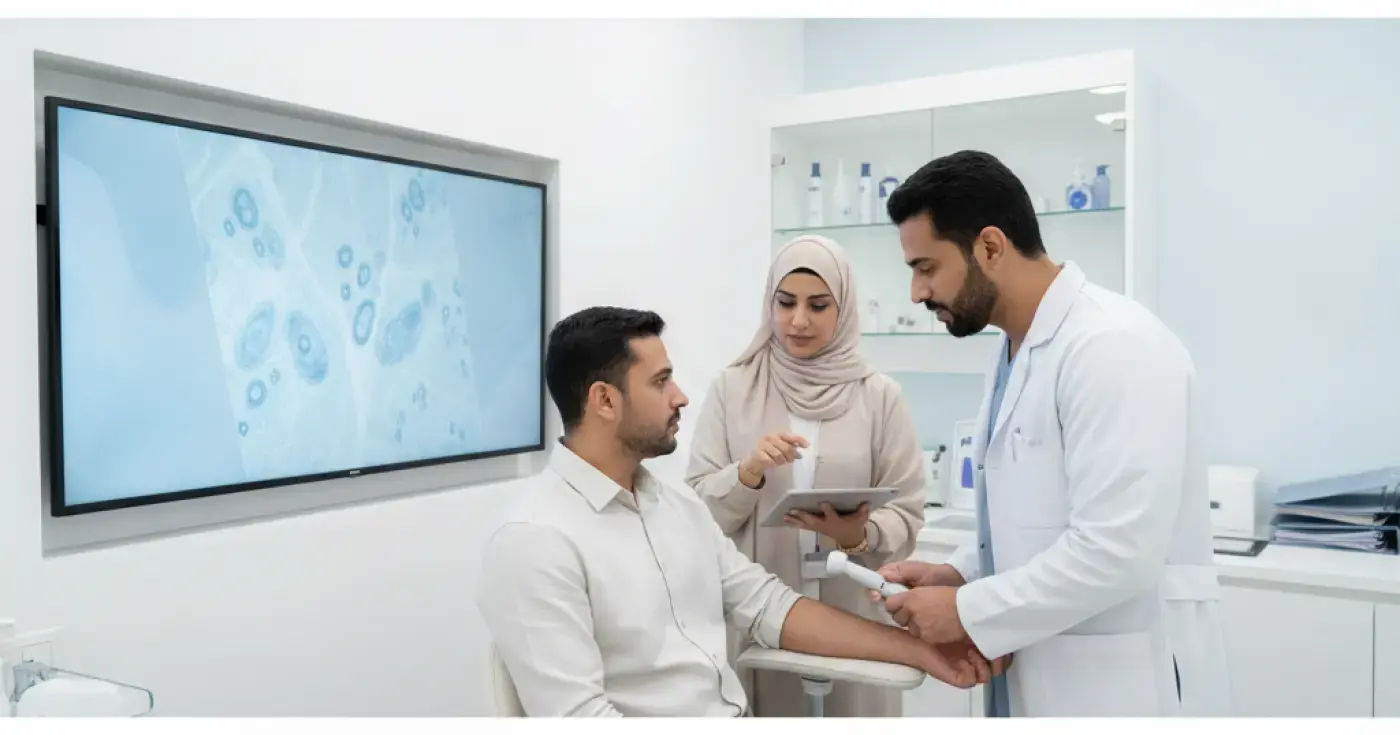
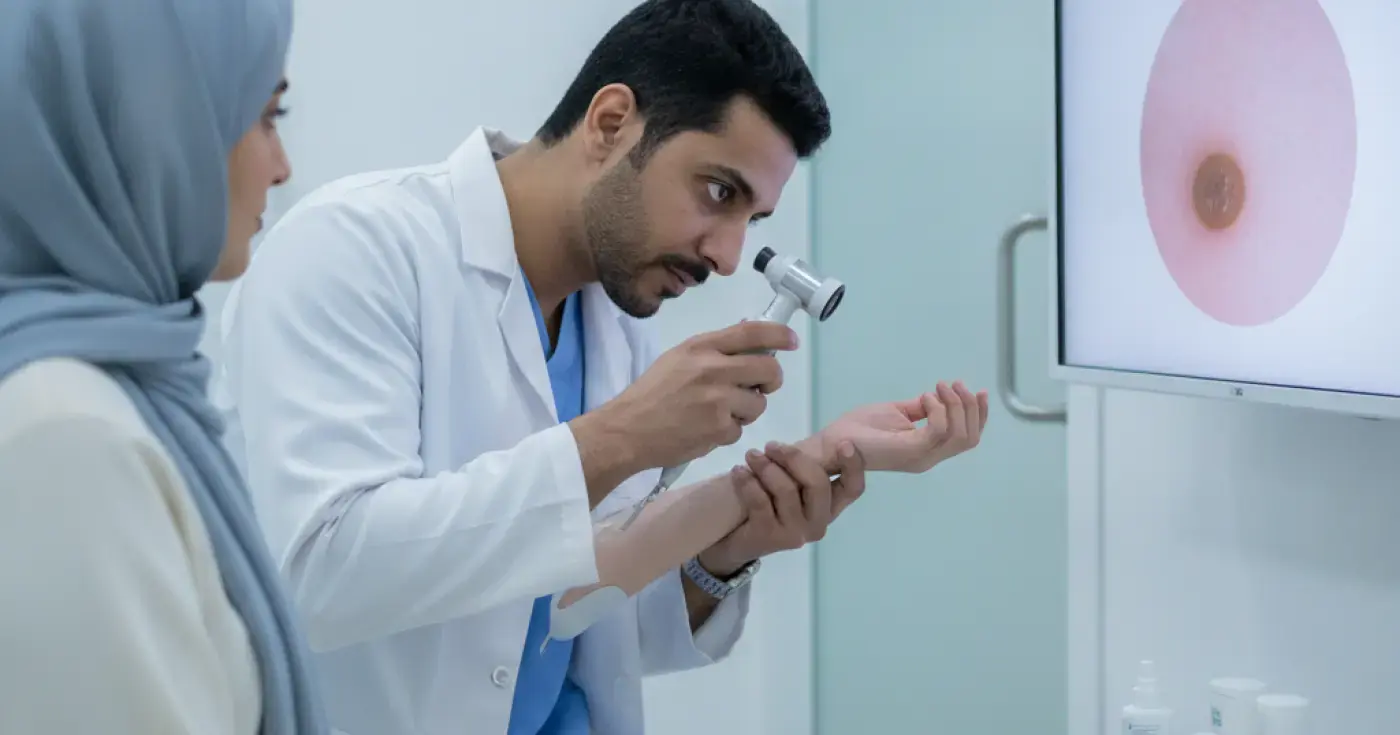
A dermoscopy is a non-invasive, handheld diagnostic tool that allows the physician to visualize the microscopic structures and pigment patterns of the skin lesion. This high-magnification examination helps distinguish benign lesions, like seborrheic keratosis, from early-stage melanoma or basal cell carcinoma, which may look similar to the naked eye.
When clinical examination alone cannot definitively confirm that a lesion is benign, a skin biopsy is performed. This diagnostic procedure involves taking a tissue sample for histopathological analysis before or during the complete removal.
Some benign skin tumors, such as lipomas or deep epidermoid cysts, lie beneath the skin surface in the subcutaneous tissue. In these cases, imaging studies are valuable to determine the tumor's size, depth, and relationship to adjacent blood vessels and nerves.
High-frequency skin ultrasound is a highly effective, non-invasive tool to evaluate the depth, borders, and consistency (fluid-filled vs. solid) of a subcutaneous mass. This helps the surgeon plan the incision and minimize scarring.
An MRI is rarely required but may be ordered for very large, deep, or fixed masses to rule out deep tissue infiltration and ensure safe surgical margins during excision.
Prior to any surgical intervention, even minor procedures performed under local anesthesia, the patient's general health must be assessed through basic blood tests.
Patients must disclose all medications, over-the-counter drugs, and herbal supplements they are taking. Supplements like fish oil and vitamin E, along with medications like aspirin or warfarin, can increase bleeding risks and may need to be adjusted prior to the procedure.
Most benign skin tumor removals are performed under local anesthesia (typically lidocaine). If a patient has a history of adverse reactions to anesthetics, a skin allergy test may be performed beforehand to identify a safe alternative agent.
The table below summarizes the common pre-removal tests, their primary indications, and the level of invasiveness involved:
| Test Type | Primary Purpose | Target Cases | Invasiveness Level |
|---|---|---|---|
| Dermoscopy | Non-invasive evaluation of pigment patterns | All moles and superficial skin lesions | Non-invasive (Visual) |
| Skin Biopsy | Histopathological confirmation of tissue type | Suspicious or atypical lesions | Minimally invasive (Local anesthesia) |
| High-Frequency Ultrasound | Determining depth and borders of deep masses | Lipomas, deep epidermoid cysts | Non-invasive (Imaging) |
| Coagulation Profile (PT/INR) | Assessing clotting ability to prevent hemorrhage | Elderly patients, those on blood thinners | Minimally invasive (Blood draw) |
The results of the pre-removal tests guide the dermatologist or surgeon in selecting the optimal technique for mole removal or tumor excision. These methods include:
Rushing into the removal of a skin lesion without proper diagnostic evaluation can lead to serious medical complications, including:
When planning to have any skin lesion removed, patients in Saudi Arabia should consult licensed dermatologists or plastic surgeons at healthcare facilities accredited by the Saudi Ministry of Health (MOH). Always discuss the necessary pre-operative tests, the type of anesthesia, expected recovery times, and proper wound care protocols to minimize scarring and ensure a safe, successful outcome.
Clear, direct answers
Advertisement
Continue exploring
Learn if benign skin tumors can return after removal, the causes of regrowth, common removal methods, and essential post-procedure care tips.
Read article
Explore safe medical methods for removing benign skin tumors, including cryotherapy, laser, and surgical excision, with expert recovery tips.
Read article
Learn if benign skin lesions can become cancerous, discover the ABCDE warning signs, and understand when to consult a dermatologist.
Read articleExplore the topic