
Lahalak Medical PlatformDifferentiate Care
A comprehensive medical guide on how a skin biopsy is performed, its types, preparation steps, wound care, and understanding your results.
Advertisement
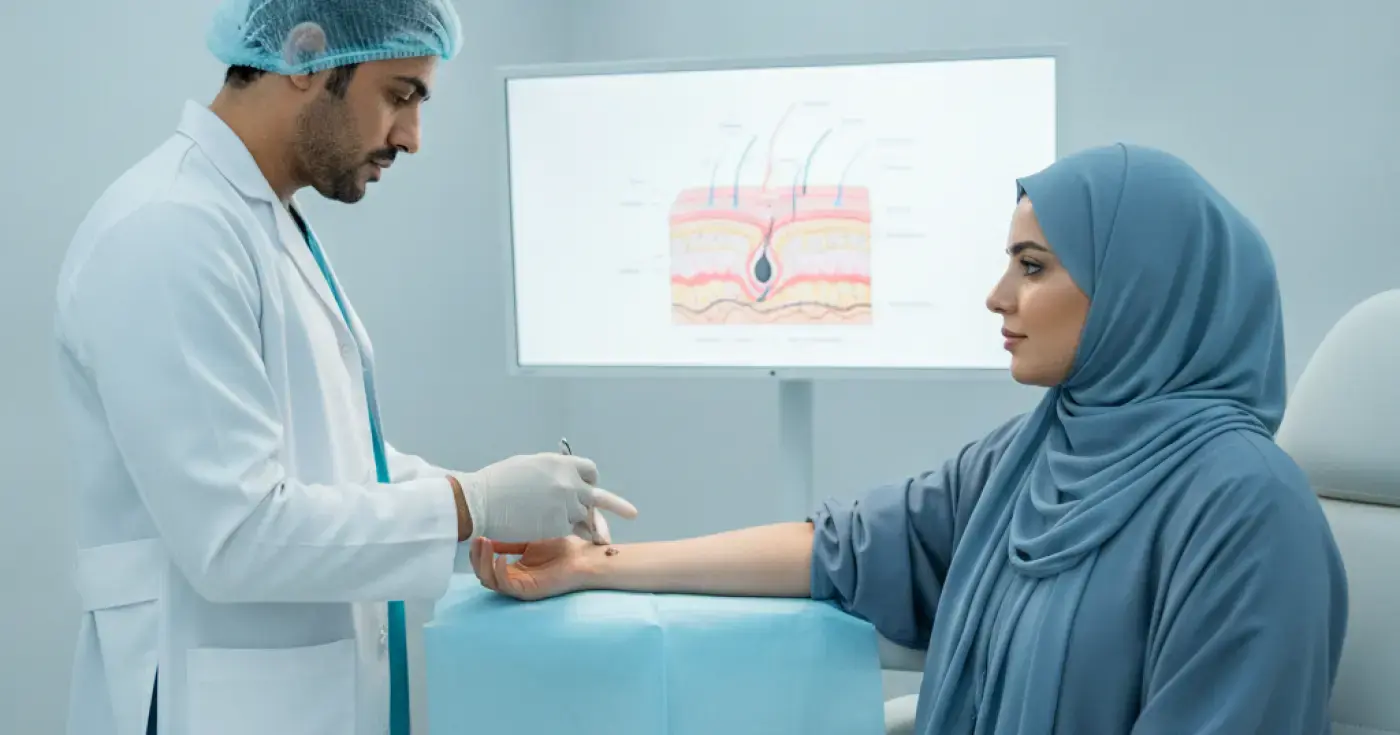
A skin biopsy is a straightforward, outpatient medical procedure in which a dermatologist removes a small sample of skin cells or tissue from the body. The primary goal of this procedure is to send the sample for histopathological examination under a microscope, helping doctors accurately diagnose a wide range of skin conditions, from simple inflammatory disorders to skin tumors.
Doctors recommend a skin biopsy when a visual examination alone is insufficient to confirm a diagnosis. Key medical indications include:
The method of obtaining a biopsy depends on the size, location, and depth of the skin lesion. The following table compares the three main types of skin biopsies:
| Biopsy Type | Procedure Method | Stitches Required | Common Indications |
|---|---|---|---|
| Shave Biopsy | Shaving off the superficial layers of the skin using a thin blade. | Usually no stitches needed. | Superficial lesions and elevated moles. |
| Punch Biopsy | Using a circular tool to punch through deeper layers of the skin. | May require one or two stitches depending on size. | Rashes and deeper skin lesions. |
| Excisional Biopsy | Removing the entire lesion along with a margin of healthy skin using a scalpel. | Stitches are required to close the wound. | Suspected skin tumors and deep moles. |
Preparing for a skin biopsy is simple but essential to ensure safety and avoid complications. Key preparation steps include:
A skin biopsy is typically performed in a doctor's office and takes about 15 to 30 minutes. The detailed steps include:
The nurse or doctor cleans the target skin area with an antiseptic solution to minimize the risk of infection.
A local anesthetic (usually lidocaine) is injected into the biopsy site using a very fine needle. You may feel a brief stinging sensation before the area becomes completely numb.
The doctor uses the appropriate tool (blade, punch, or scalpel) to carefully remove the pre-determined tissue sample.
Pressure is applied to the site to stop any bleeding. For punch or excisional biopsies, stitches may be placed. Finally, an antibiotic ointment is applied, and the wound is covered with a sterile bandage.
Proper wound care is vital to ensure optimal healing and minimize scarring. Follow these guidelines closely:
Although a skin biopsy is highly safe, minor risks can include:
Contact your healthcare provider if you experience any of the following warning signs:
Clear, direct answers
Advertisement
Continue exploring
Learn what a skin biopsy is, why doctors recommend it, the different types (shave, punch, excision), and how to care for your wound post-procedure.
Read article
Learn about the essential tests, biopsies, and blood work required before benign skin tumor removal to ensure safety and prevent complications.
Read article
Learn if benign skin tumors can return after removal, the causes of regrowth, common removal methods, and essential post-procedure care tips.
Read articleExplore the topic