
Lahalak Medical PlatformDifferentiate Care
Discover the essential blood tests, scalp evaluations, and clinical assessments required before undergoing a hair transplant for optimal safety.

Advertisement
A hair transplant is a sophisticated surgical procedure that requires meticulous planning and a thorough medical evaluation. Pre-operative assessments are crucial not only to ensure the survival and growth of the transplanted grafts but also to safeguard the patient's health and prevent any intraoperative or postoperative complications. Skipping these essential evaluations can lead to poor graft survival, unexpected bleeding, or severe scalp infections.
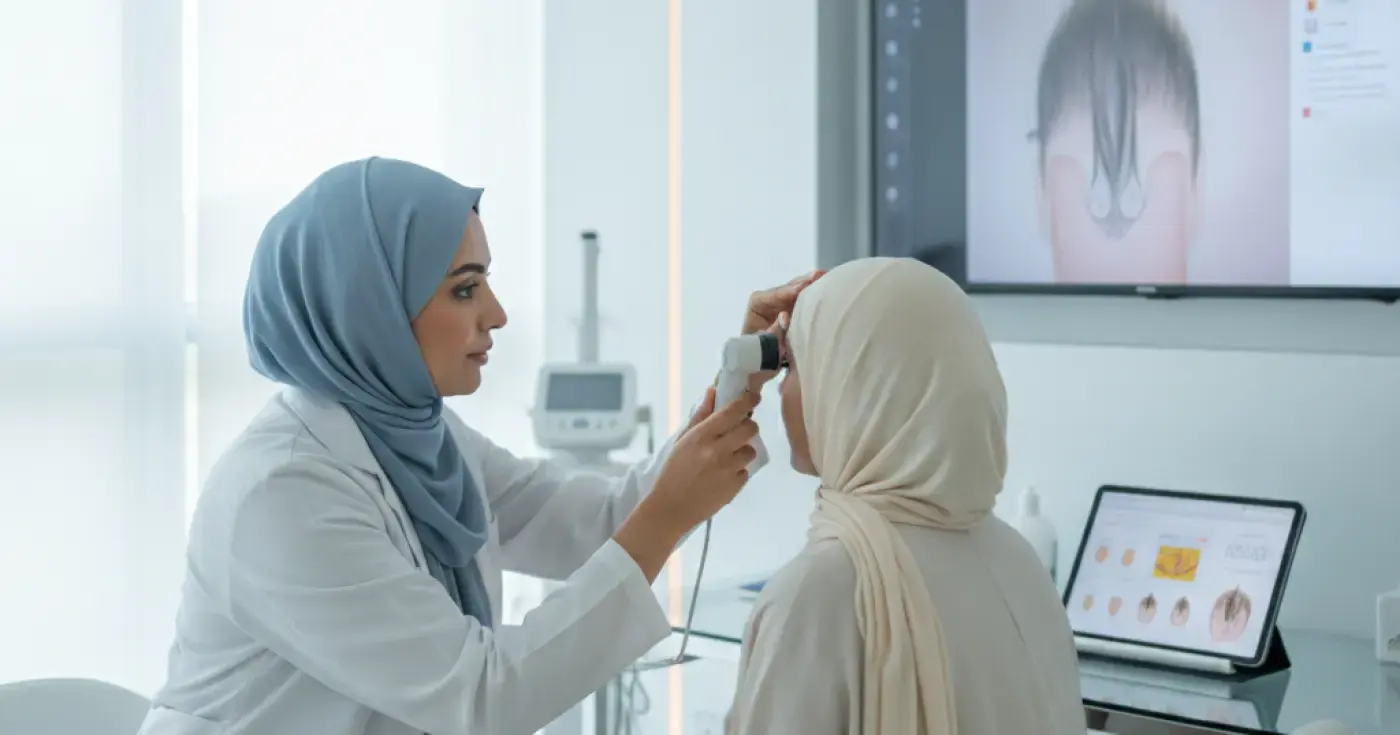
Every successful hair restoration journey begins with a detailed clinical medical consultation. During this session, the specialist examines the scalp to evaluate the hair loss pattern and determine if the patient is a suitable candidate for the procedure. The clinical evaluation includes:
The surgeon evaluates the hair density in the donor area (typically the back and sides of the scalp), hair shaft caliber, and scalp elasticity. This assessment helps determine the number of available grafts and the most appropriate extraction technique, such as Follicular Unit Extraction (FUE) or Direct Hair Implantation (DHI).
Using a trichoscopy device is a critical diagnostic step. This specialized tool allows the physician to examine hair follicles under high magnification to rule out active inflammatory scalp conditions, such as alopecia areata or scarring alopecias, which are absolute contraindications for surgery.
Preparing for a hair transplant requires a panel of routine blood tests to assess the patient's general health and identify any underlying conditions that could impair healing or cause excessive bleeding. These tests include:
A Complete Blood Count is essential to evaluate hemoglobin levels, red and white blood cells, and platelets. This test rules out anemia, which can compromise graft oxygenation, and ensures there are no active systemic infections.
These tests measure the blood's clotting ability. This step is vital to prevent excessive bleeding during the extraction and implantation phases and helps the surgeon manage any blood-thinning medications the patient might be taking.
A thyroid panel is ordered to rule out thyroid dysfunction, which is a common cause of non-androgenetic hair loss. If a thyroid disorder is detected, it must be medically managed and stabilized before proceeding with surgery.
Routine screenings for blood-borne pathogens, including Hepatitis B, Hepatitis C, and HIV, are performed to ensure clinical safety. Additionally, HbA1c levels are checked for diabetic patients; uncontrolled diabetes impairs wound healing and significantly increases the risk of postoperative infections.
| Test Name | Purpose of the Test | Clinical Significance for Hair Transplant |
|---|---|---|
| Complete Blood Count (CBC) | Evaluates hemoglobin & platelets | Rules out anemia and ensures proper tissue healing |
| Prothrombin Time (PT/INR) | Measures blood clotting time | Prevents excessive bleeding during graft extraction |
| HbA1c (Glycated Hemoglobin) | Assesses long-term blood sugar control | Ensures safe wound healing and reduces infection risks |
| Thyroid Stimulating Hormone (TSH) | Screens for thyroid disorders | Confirms hair loss is not driven by active thyroid disease |
| Serum Ferritin | Measures iron stores | Rules out iron deficiency anemia that limits graft growth |
A psychological assessment is just as important as physical testing. The surgeon must discuss the patient's expectations to ensure they are realistic. Some patients may suffer from Body Dysmorphic Disorder (BDD), making them chronically dissatisfied with cosmetic outcomes. A psychological evaluation helps prepare the patient for the gradual growth phases of the transplanted hair, which can take up to a full year to show final results.
Based on the test results, the medical team provides strict guidelines to follow at least two weeks before the procedure. These include: completely stopping smoking and alcohol consumption, as nicotine constricts blood vessels and reduces blood flow to the newly transplanted grafts; stopping blood-thinning medications and supplements like aspirin and Vitamin E; and discontinuing topical minoxidil to reduce scalp vascularity during surgery.
Test results may sometimes reveal contraindications that require postponing or canceling the procedure for patient safety. Key reasons include: active scalp infections or severe psoriasis, uncontrolled blood glucose levels, severe bleeding disorders, or an inadequate donor area that cannot provide sufficient coverage to achieve an aesthetically acceptable result.
Clear, direct answers
Advertisement
Continue exploring
Discover female hair transplant suitability, advanced techniques, pre-op tests, and expected results for a natural, fuller look.
Read article
Learn how surgeons evaluate hair density and the donor area during a hair transplant consultation to ensure a successful procedure.
Read article
Discover the key questions to ask your doctor during a hair transplant consultation to ensure safety, realistic expectations, and successful outcomes.
Read articleExplore the topic