
Lahalak Medical PlatformDifferentiate Care
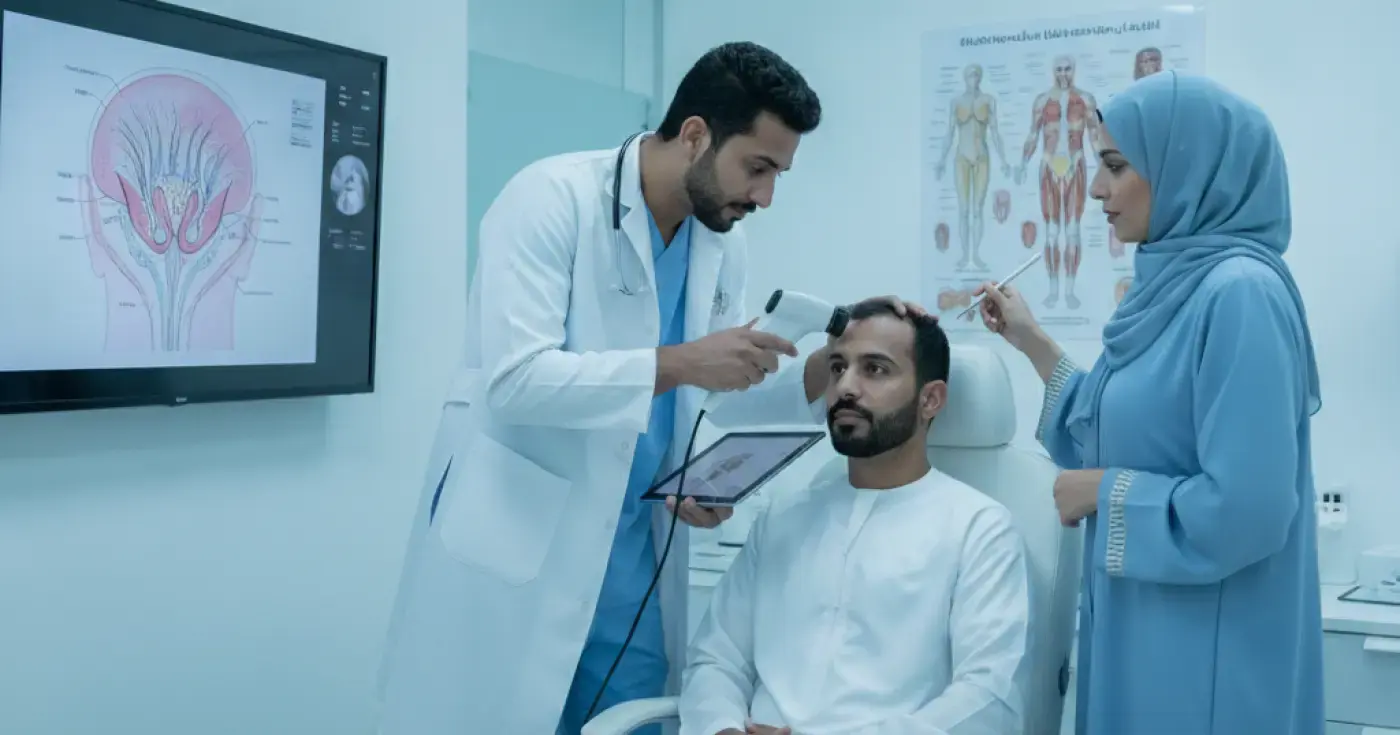
Learn how surgeons evaluate hair density and the donor area during a hair transplant consultation to ensure a successful procedure.
Advertisement
A medical consultation is the foundational step in any hair restoration journey. It is not merely an administrative meeting to discuss costs or draw a hairline; rather, it is a comprehensive clinical examination that determines a patient's candidacy and the long-term viability of the procedure. A precise understanding of scalp characteristics prevents complications and ensures a natural, harmonious outcome.
The donor area refers to the back and sides of the scalp. Hair follicles in this region are genetically resistant to dihydrotestosterone (DHT), the hormone responsible for androgenetic alopecia (male pattern baldness). This area serves as the sole source of follicles for transplantation. The success of a hair transplant relies entirely on the quality and quantity of these donor grafts, as donor hair cannot be sourced from other individuals due to immunological rejection.
Specialists evaluate hair density using advanced diagnostic tools to determine the number of follicular units per square centimeter. Evaluation methods include:
Evaluation goes beyond simple numbers; it encompasses physical hair characteristics, including:
During the consultation, the surgeon performs a precise balancing calculation. The recipient area is measured in square centimeters and multiplied by the target density (typically 35 to 50 grafts per cm2) to determine the required graft count. The donor area is then assessed to ensure it can safely yield this number without causing visible thinning or "over-harvesting."
Scalp laxity, or mobility, is a critical factor, particularly when planning a Follicular Unit Transplantation (FUT) strip procedure. The surgeon assesses how easily the scalp skin stretches. A tight scalp can make wound closure difficult after strip harvesting, potentially leading to wider scars, whereas a supple scalp facilitates easier closure and superior healing.
The clinical evaluation may reveal factors that contraindicate or delay the procedure, such as:
| Evaluation Parameter | Clinical Measurement Method | Impact on Treatment Plan & Outcomes |
|---|---|---|
| Follicular Density | Digital Trichoscopy | Determines the maximum safe lifetime limit of harvestable grafts. |
| Hair Shaft Caliber | Micrometer / Digital Analysis | Determines visual coverage; thicker hair requires fewer grafts. |
| Scalp Laxity | Manual Mobility Test | Determines suitability for FUT strip harvesting versus FUE. |
| Scalp Health | Direct Clinical Examination | Rules out inflammatory or autoimmune conditions that cause graft failure. |
When visiting a specialized clinic, patients undergo a structured evaluation process:
To ensure the most accurate clinical assessment during your consultation, consider the following:
A hair transplant is a precise surgical procedure requiring extensive clinical expertise. Proper evaluation of hair density and the donor area during the initial consultation is the only way to avoid unnatural results or permanent donor depletion. This evaluation must always be performed by a qualified, licensed hair restoration surgeon to ensure patient safety and optimal aesthetic outcomes.
Clear, direct answers
Advertisement
Continue exploring

Discover the key questions to ask your doctor during a hair transplant consultation to ensure safety, realistic expectations, and successful outcomes.
Read article
Learn how a hair transplant consultation evaluates your suitability, donor area density, required medical tests, and expectations for successful results.
Read article
Learn why a medical consultation is essential before a hair transplant. Discover the role of tests, choosing techniques, and designing a natural hairline.
Read article