Medical notice: this content is for health education and does not provide an individual diagnosis or replace appropriate medical consultation.
Introduction: Why the Consultation is Your Most Important Step
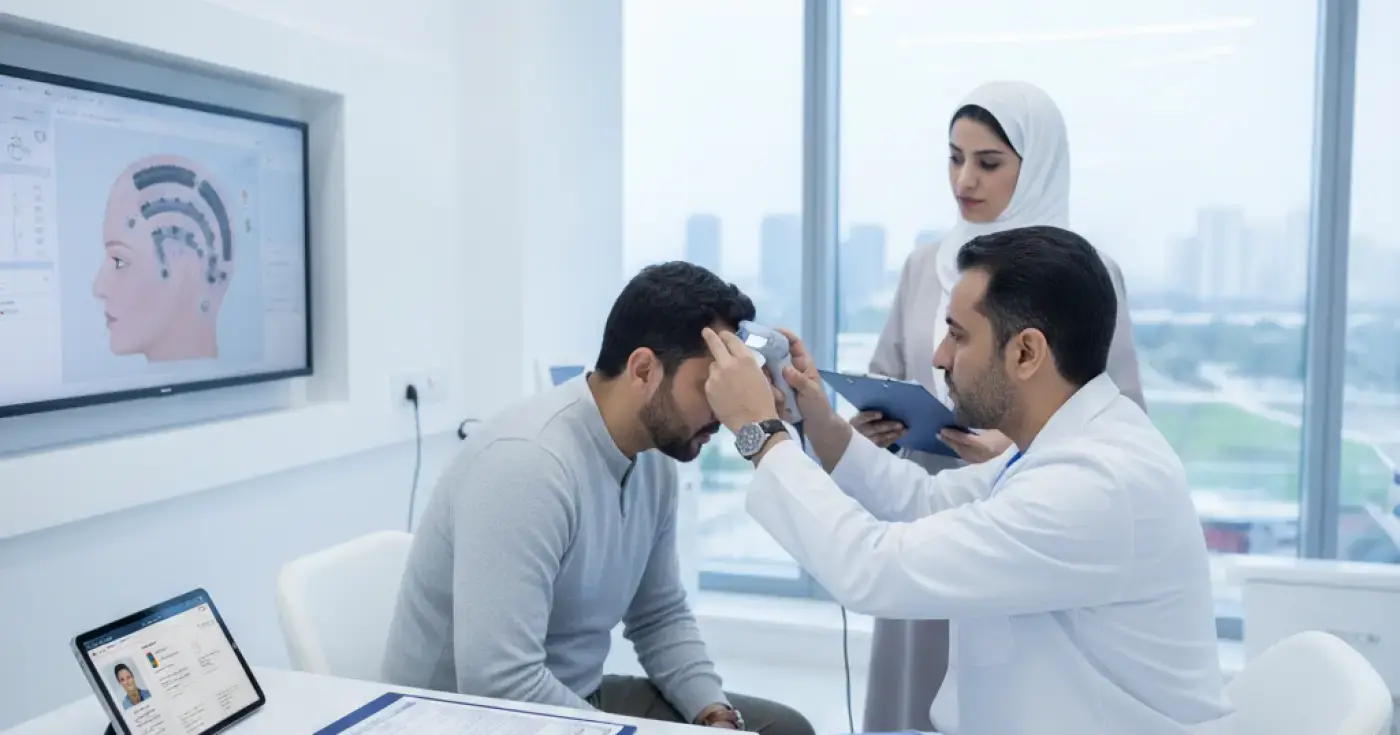
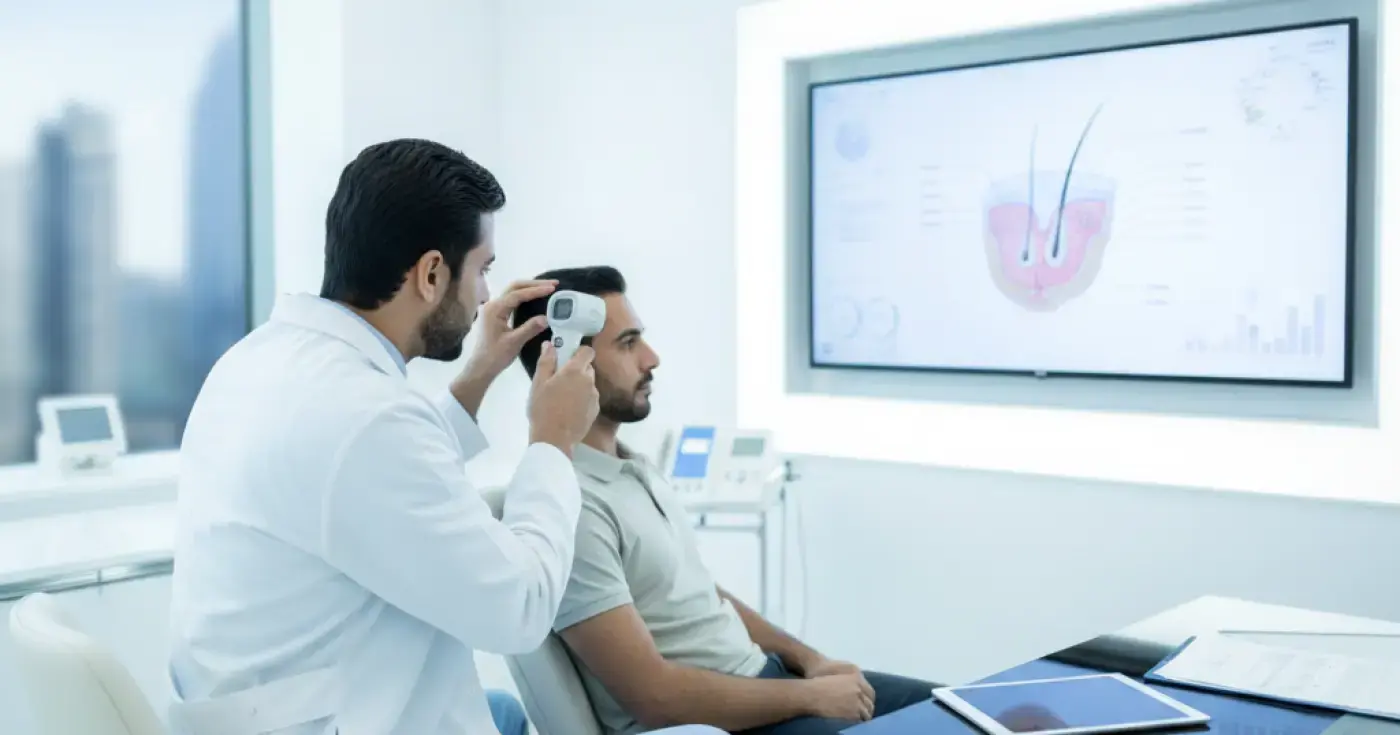
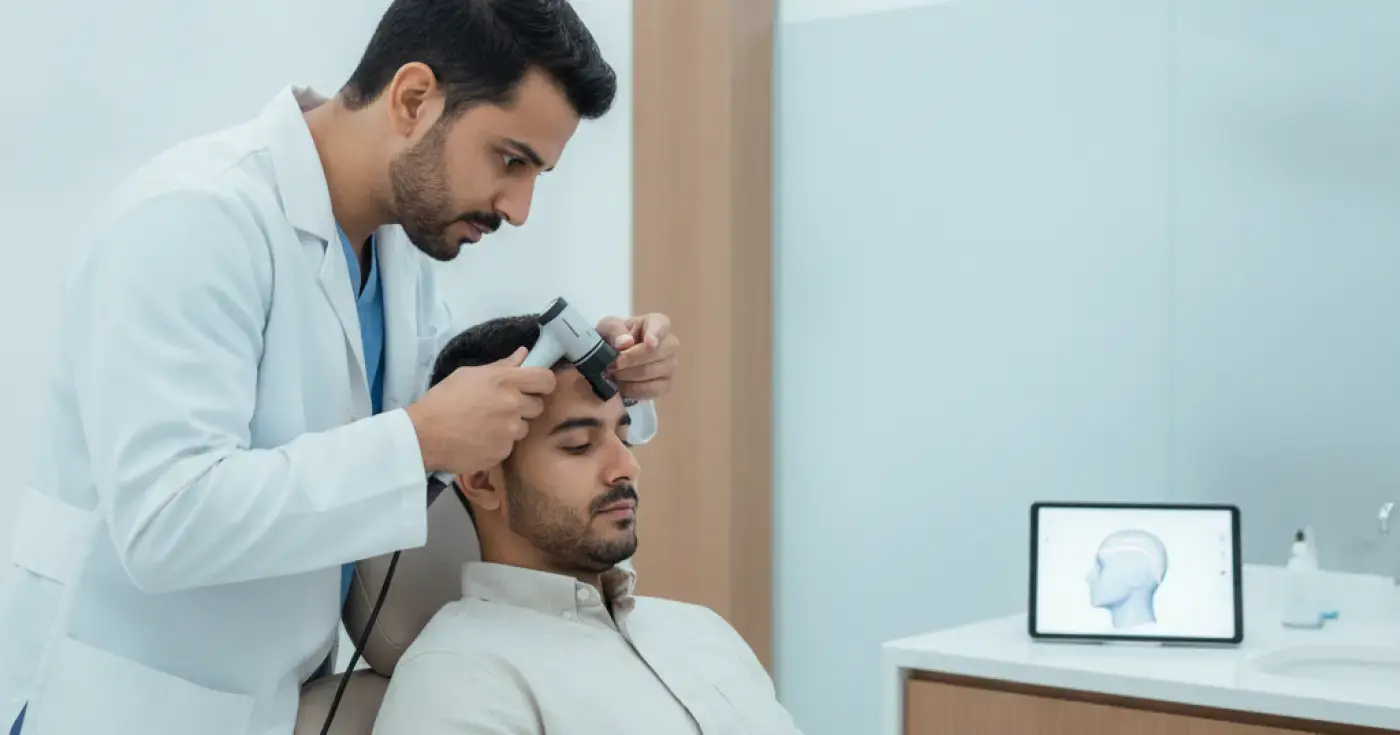
A medical consultation is the cornerstone of a successful hair restoration journey. It is not merely an administrative appointment to discuss pricing; rather, it is a comprehensive clinical evaluation. During this session, a qualified specialist assesses your hair loss pattern, examines the health of your donor area, and determines whether you are a suitable candidate for a hair transplant.
In Saudi Arabia, medical standards are strictly regulated by the Saudi Commission for Health Specialties (SCFHS) to ensure patient safety. Being prepared with the right questions during your consultation empowers you to make an informed decision, set realistic expectations, and minimize potential risks. This guide outlines the essential questions you should ask your surgeon.
Questions Regarding the Surgeon’s Credentials and Experience
Ensuring your surgeon is highly qualified and experienced is vital for achieving natural-looking results and ensuring surgical safety. Ask the following:
- Are you licensed by the Saudi Commission for Health Specialties to perform hair transplants? This confirms the surgeon has met the rigorous training and clinical standards required to practice in the Kingdom.
- How many hair transplant procedures have you performed, and can I see before-and-after photos of previous patients? Reviewing past cases helps you evaluate the surgeon’s aesthetic skill, particularly in designing natural-looking hairlines.
- Who will perform the key steps of the surgery? It is important to know which parts of the procedure (such as graft extraction and site creation) will be performed directly by the surgeon and which will be assisted by technicians.
Questions About Your Diagnosis and Candidacy
Not all hair loss is treatable with surgery. A thorough hair loss evaluation is necessary to diagnose the underlying cause:
- What is the exact cause of my hair loss? Is it androgenetic alopecia (pattern baldness), or is it driven by hormonal imbalances, nutritional deficiencies, or autoimmune conditions?
- Is my hair loss stabilized? Performing surgery while active hair loss is ongoing can lead to unnatural patterns as the surrounding non-transplanted hair continues to fall out.
- Do I need to undergo pre-operative blood tests? Tests for iron levels, thyroid function, and complete blood counts are often necessary to rule out underlying medical issues that could affect healing.
Questions About the Recommended Hair Transplant Techniques
Different techniques offer different benefits depending on your individual scalp characteristics. Ask your doctor:
- Which technique is best suited for my case (FUE, DHI, or FUT) and why? The choice depends on factors such as the size of the balding area, scalp laxity, and donor hair density.
- What are the differences in terms of recovery time and scarring? Follicular Unit Extraction (FUE) and Direct Hair Implantation (DHI) leave tiny, virtually invisible scars and offer faster recovery compared to the traditional Follicular Unit Transplantation (FUT) strip method.
Comparison Table of Common Hair Transplant Techniques
The following table provides a clear comparison of the primary hair restoration techniques to help you discuss your options with your surgeon:
| Feature | FUE (Follicular Unit Extraction) | DHI (Direct Hair Implantation) | FUT (Follicular Unit Transplantation) |
|---|
| Extraction Method | Individual follicular units extracted one by one | Individual follicular units extracted one by one | A strip of scalp tissue is surgically removed |
| Implantation Method | Channels are opened, then grafts are placed | Grafts are implanted directly using specialized pens | Strip is dissected into grafts and placed in channels |
| Scarring | Tiny, scattered micro-scars (nearly invisible) | Minimal micro-scars (virtually undetectable) | A linear scar at the back of the head |
| Shaving Required | Usually requires shaving donor and recipient areas | Can often be performed with partial or no shaving | Requires shaving only the donor strip area |
| Recovery Time | Short (7 to 10 days) | Very fast (5 to 7 days) | Longer (stitches removed after 14 days) |
Questions About Designing Your Hairline and Graft Count
The design of your hairline determines how natural your results will look as you age. Discuss these details:
- How will you design my hairline to suit my facial features and age? A natural hairline should avoid harsh, straight lines and should not be placed too low, ensuring it looks appropriate as you grow older.
- How many grafts do I need to achieve satisfactory density? There must be a balance between the coverage needed in the balding areas and the preservation of the donor area.
- Will my donor area have enough remaining grafts if I need another procedure in the future? Preserving the donor reserve is crucial in case hair loss progresses over time.
Questions About Pre-Operative Preparation and Anesthesia
To ensure a safe and comfortable surgical experience, ask about the preparation process:
- What type of anesthesia will be used, and how is pain managed? Most procedures are performed under local anesthesia. You can ask if needle-free anesthesia options are available to minimize discomfort during the initial numbing.
- What pre-operative instructions must I follow? This typically includes stopping blood-thinning medications, avoiding certain supplements, and abstaining from smoking for a specified period before surgery to ensure optimal blood flow to the grafts.
Questions About Recovery, Post-Op Care, and Timeline
Post-operative care plays a significant role in graft survival. Ensure you ask:
- What is the correct sleeping position after the procedure? Patients are usually advised to sleep at a 45-degree angle using a special pillow to prevent swelling and protect the newly implanted grafts from friction.
- When and how should I wash my hair for the first time? Your clinic should provide detailed instructions on gentle washing techniques using specialized lotions and shampoos.
- When can I return to work and resume physical activities? Light desk work can typically be resumed within a few days, while strenuous exercise, swimming, and direct sun exposure should be avoided for at least a month.
Questions About Expected Results, Risks, and Complications
A reputable surgeon will always provide transparent information regarding outcomes and risks:
- What is the timeline for seeing my final results? Transplanted hair temporarily sheds within the first few weeks (shock loss). New growth begins around month 3, with final results visible between 12 and 18 months.
- What are the common side effects? Temporary swelling, mild itching, redness, and scabbing are normal parts of the healing process.
- What are the potential risks, and how are they managed? Ask about the protocols in place to prevent infections or address poor graft uptake.
Conclusion
Asking these essential questions during your hair transplant consultation ensures you are fully prepared and have realistic expectations. A professional surgeon will welcome your questions and provide clear, scientifically backed answers. Always choose licensed, accredited medical centers to ensure a safe, high-quality clinical experience.