
Lahalak Medical PlatformDifferentiate Care
Learn what happens during your first hair transplant consultation, including scalp analysis, medical history review, technique selection, and planning.
Advertisement
The first step toward restoring your hair density and natural appearance is the initial medical consultation. This session is not merely a booking appointment; it is a fundamental pillar upon which the success of the entire procedure rests. During this meeting, the specialist evaluates your health status and examines your scalp to determine if you are a suitable candidate for a hair transplant, establishing realistic and safe expectations in line with approved medical standards in Saudi Arabia.
Proper planning is the key to success in plastic and reconstructive surgeries. The first consultation allows the physician to understand your hair loss pattern, ruling out any underlying medical conditions that might hinder the success of the procedure or require prior medical treatment. This session also provides you with the opportunity to ask questions, understand the available alternatives, and learn about the detailed steps of the procedure and the expected recovery period.
The physician begins the session by gathering detailed information about your medical history. This includes:
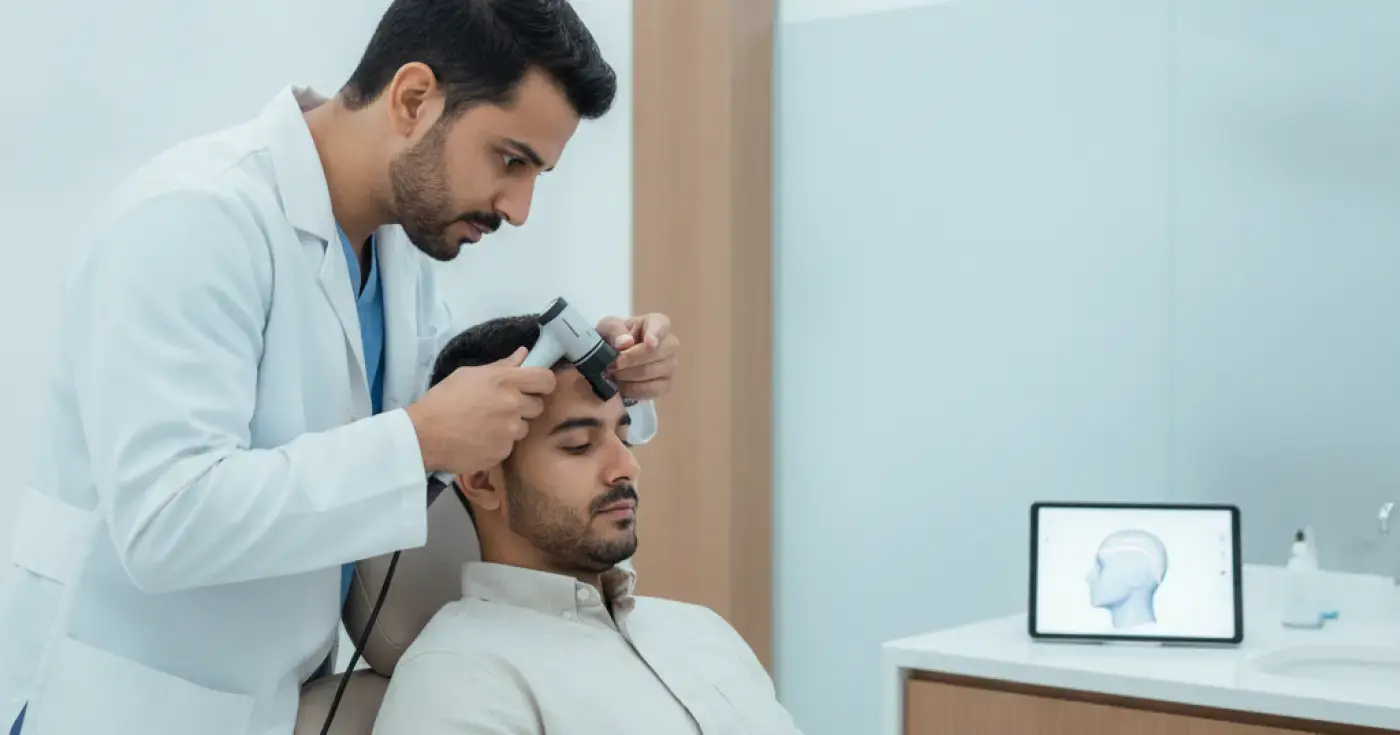
The doctor performs a thorough physical examination using specialized magnifying tools to evaluate two primary areas:
Located at the back and sides of the head. The doctor assesses hair density, skin elasticity, and follicular unit quality to ensure they can provide a sufficient number of grafts without aesthetically impacting the donor site after extraction.
The area experiencing balding or thinning. Its surface area is measured, and the number of grafts required to achieve a natural and harmonious density is determined.
Using diagnostic tools such as the Norwood Scale for men or the Ludwig Scale for women, the physician identifies the stage of hair loss. In some cases, the doctor may request a complete blood count and other lab tests to rule out vitamin deficiencies (such as iron and vitamin D) or hormonal imbalances that must be medically treated first.
During the consultation, the doctor will present the most suitable techniques for your case. The most common techniques include:
This step is both artistic and medical. The physician draws the proposed frontal hairline based on your facial features, age, and forehead muscle structure to ensure a completely natural appearance. This design is discussed and modified with you until an aesthetically and medically satisfying result is reached.
Based on the examination and design, the physician determines the approximate number of grafts required. The distribution of these grafts across different zones is explained to ensure a natural transition of density from front to back.
For medical safety and transparency, the physician is committed to explaining the expected side effects and potential risks, which include:
This simplified table helps you understand the key differences between the primary techniques to discuss with your doctor:
| Feature | FUE Technique | DHI Technique | FUT Technique |
|---|---|---|---|
| Extraction Method | Individual extraction with a micro-punch | Individual extraction with a micro-punch | Surgical removal of a skin strip |
| Implantation Method | Creating channels, then inserting with forceps | Direct implantation using Choi pens | Dividing the strip and implanting in channels |
| Resulting Scars | Microscopic circular scars (virtually invisible) | Microscopic circular scars (virtually invisible) | A linear scar at the back of the head |
| Expected Recovery | 7 to 10 days | 5 to 7 days | 14 to 21 days | Shaving Required | Usually required | Can be done without fully shaving | Not required for the entire recipient area |
At the end of the consultation, if you are deemed a suitable candidate, the medical team will provide you with a list of important pre-operative guidelines, including:
The success of a hair transplant begins with choosing a licensed surgeon and an accredited medical center approved by the Saudi Ministry of Health. Always verify the surgeon's academic credentials and clinical experience in this field, and do not hesitate to ask to see before-and-after photos of previous cases. Remember that adhering to post-operative care instructions represents half the journey toward achieving your desired results safely.
Clear, direct answers
Advertisement
Continue exploring
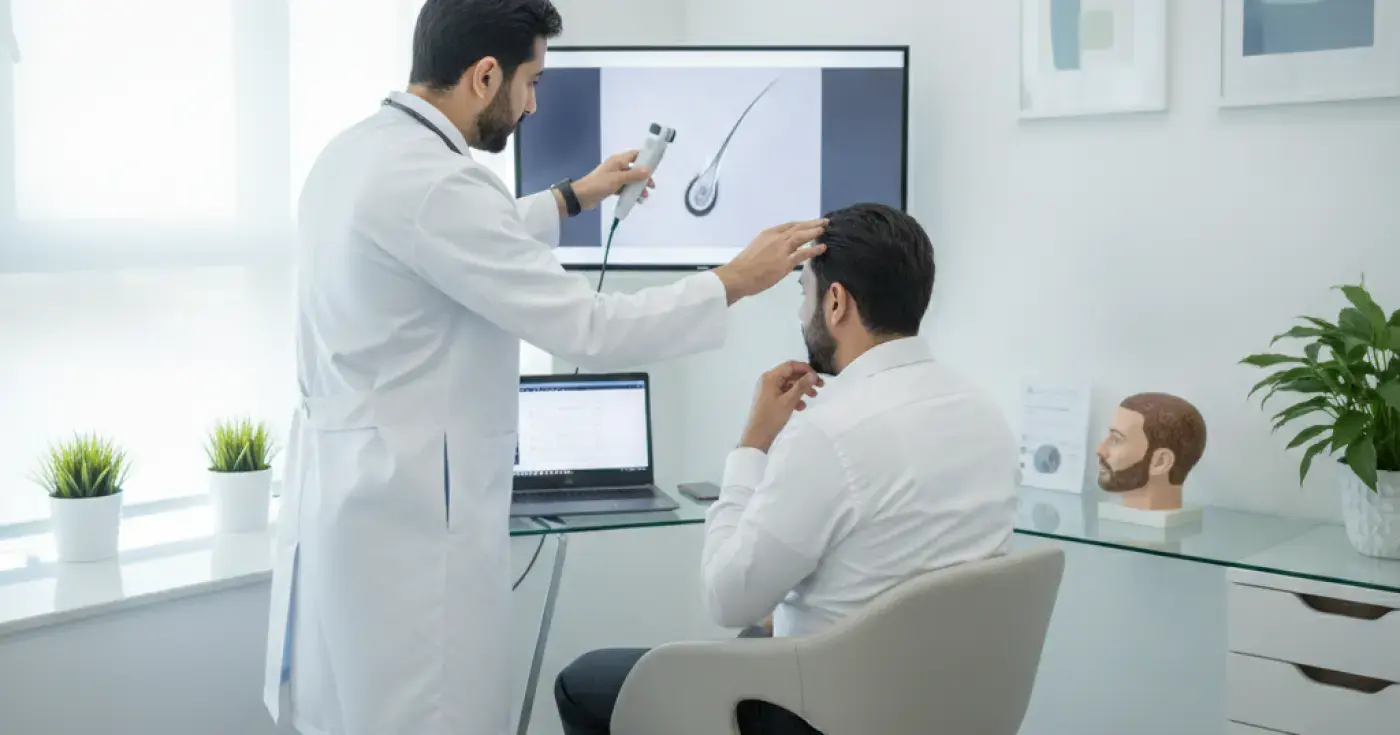
Learn what to expect during your hair transplant consultation, key questions to ask, pre-op tests, and how to choose the right technique.
Read article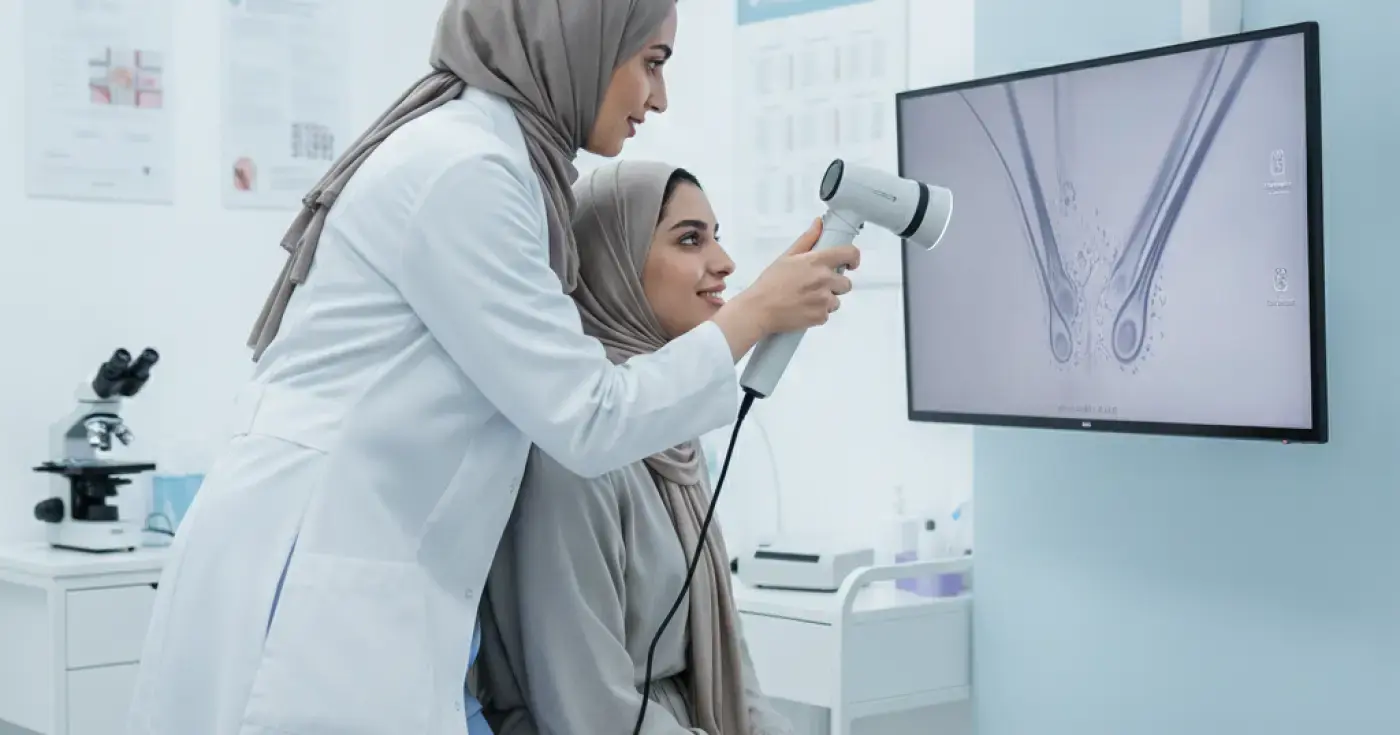
Learn how microscopic hair analysis (trichoscopy) accurately diagnoses hair loss causes and guides dermatologists to select the best treatment.
Read article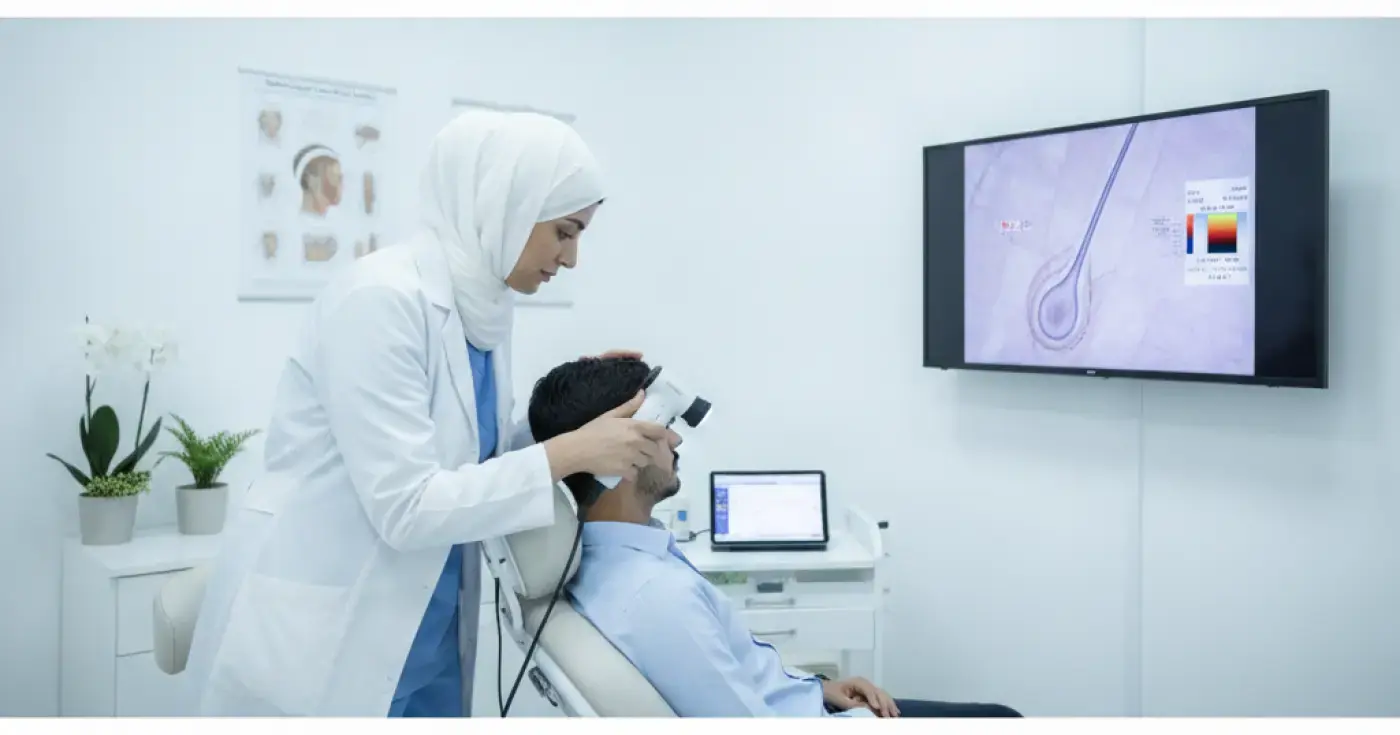
Discover the importance of microscopic hair and scalp analysis (trichoscopy) to diagnose hair loss causes and find the right treatment with dermatologists.
Read articleExplore the topic