
Lahalak Medical PlatformDifferentiate Care
Learn what to expect during your hair transplant consultation, key questions to ask, pre-op tests, and how to choose the right technique.
Advertisement
Undergoing a hair transplant is a significant cosmetic and medical decision that requires careful planning and a deep understanding of the procedure and its expected outcomes. This journey does not begin in the operating room; it starts in the physician's clinic during the initial medical consultation. This session is not a mere formality, but the essential foundation upon which the success of the entire procedure rests, helping to avoid any unwanted complications.
During the consultation, the specialist evaluates the patient's general health, diagnoses the underlying cause of hair loss, and determines whether surgery is the optimal solution or if other medical treatments are more appropriate. This session also provides the patient with an opportunity to ask questions, address concerns, and establish realistic, scientifically grounded expectations.
A hair transplant consultation is a comprehensive evaluation session between the patient and a licensed hair transplant surgeon. The primary goal is to study the pattern of hair loss, assess its stability, and examine the donor area (usually the back and sides of the head) to ensure that the hair density and quality are sufficient to provide enough grafts to cover the balding areas.
One of the most important goals of the medical consultation is to design a customized treatment plan. What suits one patient may not suit another, and designing the hairline requires high artistic and medical skill to ensure a natural appearance that harmonizes with the patient's facial features and age.
Not everyone experiencing hair loss is an immediate candidate for surgery. Specific medical criteria are evaluated by the physician during the consultation, including:
The consultation session consists of several precise clinical steps to ensure all aspects of the case are covered:
The physician begins by reviewing the patient's complete medical history, including chronic illnesses, previous surgeries, drug allergies, and family history of hair loss. Current medications and supplements are also reviewed, as some (such as blood thinners) must be discontinued before the procedure for a period specified by the doctor.
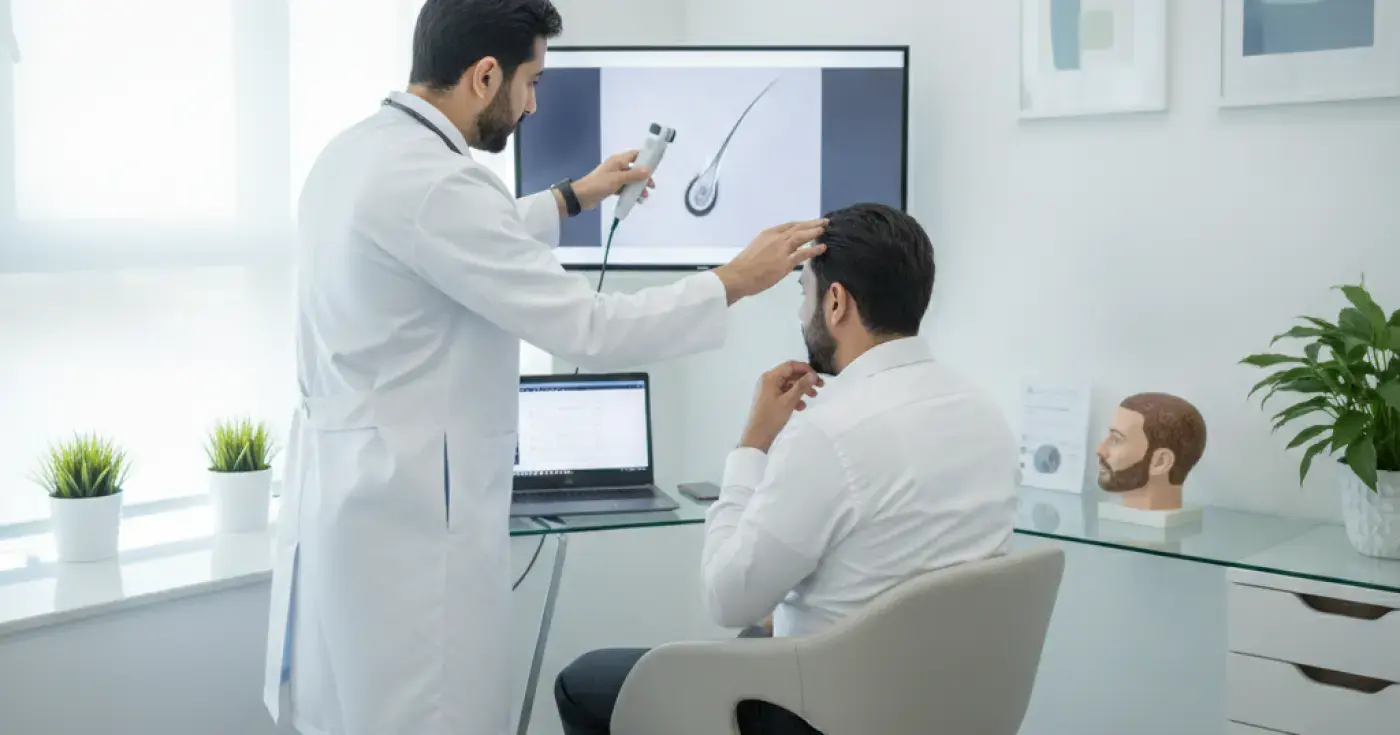
Using specialized magnifying tools, the doctor examines the scalp to evaluate follicle density per square centimeter and determine the stage of hair loss using the Norwood Scale for Hair Loss in men or the Ludwig Scale in women. This examination helps estimate the number of grafts required to achieve the desired coverage.
The physician presents the different hair transplant techniques, explaining the advantages and disadvantages of each in relation to the patient's condition, budget, and hair characteristics.
Choosing the right technique is a pivotal part of the medical consultation. The following table provides a comprehensive comparison of the most common techniques:
| Technique | Mechanism | Expected Recovery Time | Resulting Scarring | Ideal Candidate |
|---|---|---|---|---|
| Follicular Unit Extraction (FUE) | Individual follicles are extracted using a micro-punch tool, then channels are opened in the recipient area for implantation. | 7 to 10 days | Tiny, point-like scars that are virtually invisible. | Those requiring a moderate to large number of grafts who prefer short hairstyles. |
| Direct Hair Implantation (DHI) | Follicles are extracted and implanted directly using specialized Choi pens without the need for pre-opened channels. | 5 to 7 days | Microscopic point-like scars that are barely noticeable. | Those wishing to increase density or target specific areas without a full head shave. |
| Follicular Unit Transplantation (FUT) | A strip of skin is harvested from the back of the head, dissected under a microscope into individual grafts, and implanted. | 14 to 21 days | A linear scar in the donor area, which can be covered by longer hair. | Cases with advanced hair loss requiring a very large number of grafts in a single session. |
To ensure patient safety and avoid complications during or after surgery, the physician will request pre-operative blood tests. These typically include:
One of the most important roles of the medical consultation is to correct misconceptions and build realistic expectations. Patients must understand that hair transplantation does not yield immediate results. The transplanted hair goes through natural growth phases, including:
Like any surgical procedure, hair transplantation carries some potential risks that must be discussed transparently during the consultation, including:
Based on the outcomes of the consultation, the physician will provide a list of important pre-operative instructions, including:
A successful hair transplant begins with an informed and responsible choice. Do not hesitate to spend sufficient time during your consultation, choose a board-certified surgeon with extensive experience, and strictly adhere to all pre- and post-operative medical instructions to ensure the best possible results and safely restore your confidence.
Clear, direct answers
Advertisement
Continue exploring

Learn how microscopic hair analysis (trichoscopy) accurately diagnoses hair loss causes and guides dermatologists to select the best treatment.
Read article
Discover the importance of microscopic hair and scalp analysis (trichoscopy) to diagnose hair loss causes and find the right treatment with dermatologists.
Read article
Discover how trichoscopy helps dermatologists diagnose dandruff, seborrheic dermatitis, and scalp inflammation for targeted, effective treatment.
Read articleExplore the topic