
Lahalak Medical PlatformDifferentiate Care
Discover female hair transplant suitability, advanced techniques, pre-op tests, and expected results for a natural, fuller look.
Advertisement
Hair is often deeply tied to a woman's sense of identity, confidence, and overall well-being. Consequently, experiencing severe hair thinning or hair loss can be emotionally and psychologically challenging. Contrary to popular belief, hair loss is not uniquely a male concern; a significant percentage of women experience varying degrees of hair thinning as they age, or due to hormonal and medical shifts. In this context, female hair transplant surgery has emerged as an advanced aesthetic and medical solution to restore natural hair density.
However, deciding to undergo a hair transplant is not a decision to be made lightly. It requires a meticulous and comprehensive medical evaluation. Understanding the underlying causes of hair loss and determining whether a patient is a suitable candidate are the most crucial steps to ensure procedural success and avoid unwanted complications.
The pattern of hair loss in women differs fundamentally from that in men. While men typically experience a receding hairline, most women experience a diffuse thinning across the entire scalp, particularly at the crown and part line, while often maintaining their frontal hairline. This is commonly referred to as Female Pattern Hair Loss (FPHL).
Before considering surgical options, temporary or systemic causes of hair loss must be ruled out. These include:
A hair transplant involves harvesting hair follicles that are genetically resistant to thinning from a donor area (usually the back or sides of the head) and transplanting them into the thinning or balding areas (the recipient site). Modern procedures tailored for women often do not require shaving the entire head, as specialized techniques can discreetly harvest and place follicles.
1. Follicular Unit Extraction (FUE): Individual hair follicles are extracted one by one using a micro-punch tool and then transplanted into the target channels. This technique leaves no linear scars and allows for a faster recovery.
2. Direct Hair Implantation (DHI): An evolution of FUE, where specialized pens (Choi Implanters) are used to open the channels and implant the follicles simultaneously, protecting the grafts and increasing their survival rate.
3. Follicular Unit Transplantation (FUT): Rarely used for women today except in highly specific cases, this involves removing a small strip of scalp skin from the donor area, which is then dissected under a microscope into individual grafts.
Not all women experiencing hair loss are suitable candidates for a hair transplant. To be an ideal candidate, you should meet the following criteria:
The initial consultation with a qualified dermatologist or plastic surgeon is the most critical step. During this session, the physician will:
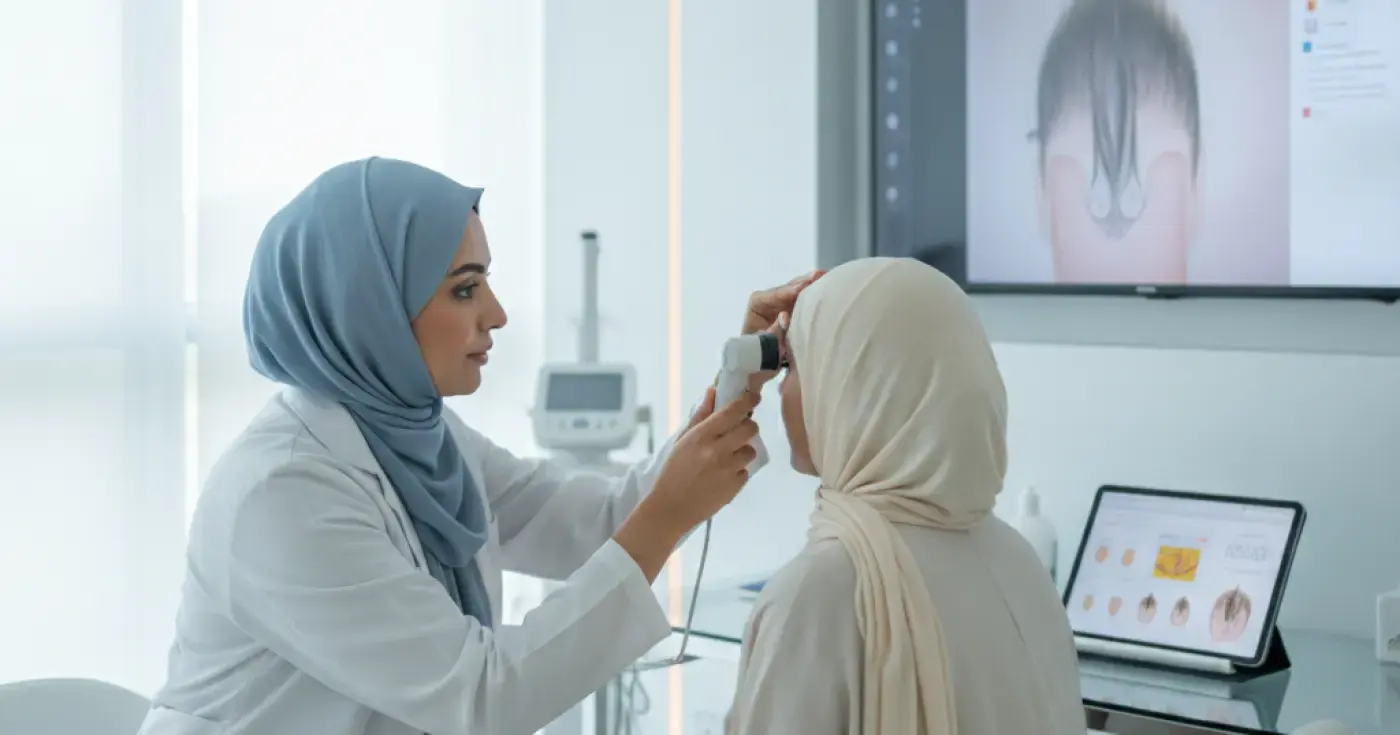
First, review your complete medical history, including current medications, hormonal changes, and family history of hair loss. Second, perform a detailed scalp examination using a trichoscope to assess follicle quality, donor density, and recipient site health. Third, discuss realistic expectations and outline achievable outcomes based on your current hair status.
Before scheduling a hair transplant, your doctor will request specific laboratory tests to rule out underlying systemic conditions that could compromise graft survival or overall health. These tests typically include:
The following table outlines the key differences between surgical hair transplantation and common non-surgical medical treatments:
| Feature | Hair Transplant Surgery | Medical Treatments (Minoxidil/Mesotherapy) | Platelet-Rich Plasma (PRP) Therapy |
|---|---|---|---|
| Procedure Type | Minimally invasive surgery (under local anesthesia) | Continuous topical or oral medication | Non-surgical clinical injections | Primary Goal | Redistribute follicles to cover thinning areas | Stimulate existing hair and reduce active shedding | Enhance blood flow and strengthen weak follicles | Longevity of Results | Permanent (transplanted follicles resist thinning) | Temporary (reverses once treatment is stopped) | Requires periodic maintenance sessions | Timeline for Results | 6 to 12 months for final aesthetic results | 3 to 6 months of consistent daily use | Gradual improvement after 3 to 4 sessions |
Patients are advised to stop taking blood-thinning medications and certain herbal supplements at least one week prior to surgery, in coordination with their physician. Smoking should also be avoided to ensure optimal blood flow and oxygenation to the newly transplanted grafts.
The procedure is performed under local anesthesia to ensure complete patient comfort. It typically takes between 4 to 8 hours depending on the number of grafts. Follicles are meticulously harvested, preserved in a specialized nutrient solution, and precisely implanted at the correct angle and direction to mimic natural hair growth.
This phase requires strict adherence to post-operative instructions to secure graft survival. Instructions include avoiding touching or scratching the recipient area, sleeping with the head elevated to minimize swelling, and using a prescribed medical shampoo to gently cleanse the scalp.
Patience is essential, as the transplanted hair must go through natural growth cycles:
While hair transplantation is highly safe when performed by a qualified specialist, like any medical procedure, it carries some minor risks:
To minimize these risks, select a licensed, reputable medical center and strictly follow the recommended hair loss treatment protocol provided by your clinical team.
To preserve the health and density of both transplanted and surrounding natural hair, maintain a balanced diet rich in proteins and vitamins, manage stress levels, and avoid harsh chemical treatments or excessive heat styling. Remember, an early and accurate medical consultation is the key to safely and effectively restoring your hair and confidence.
Clear, direct answers
Advertisement
Continue exploring
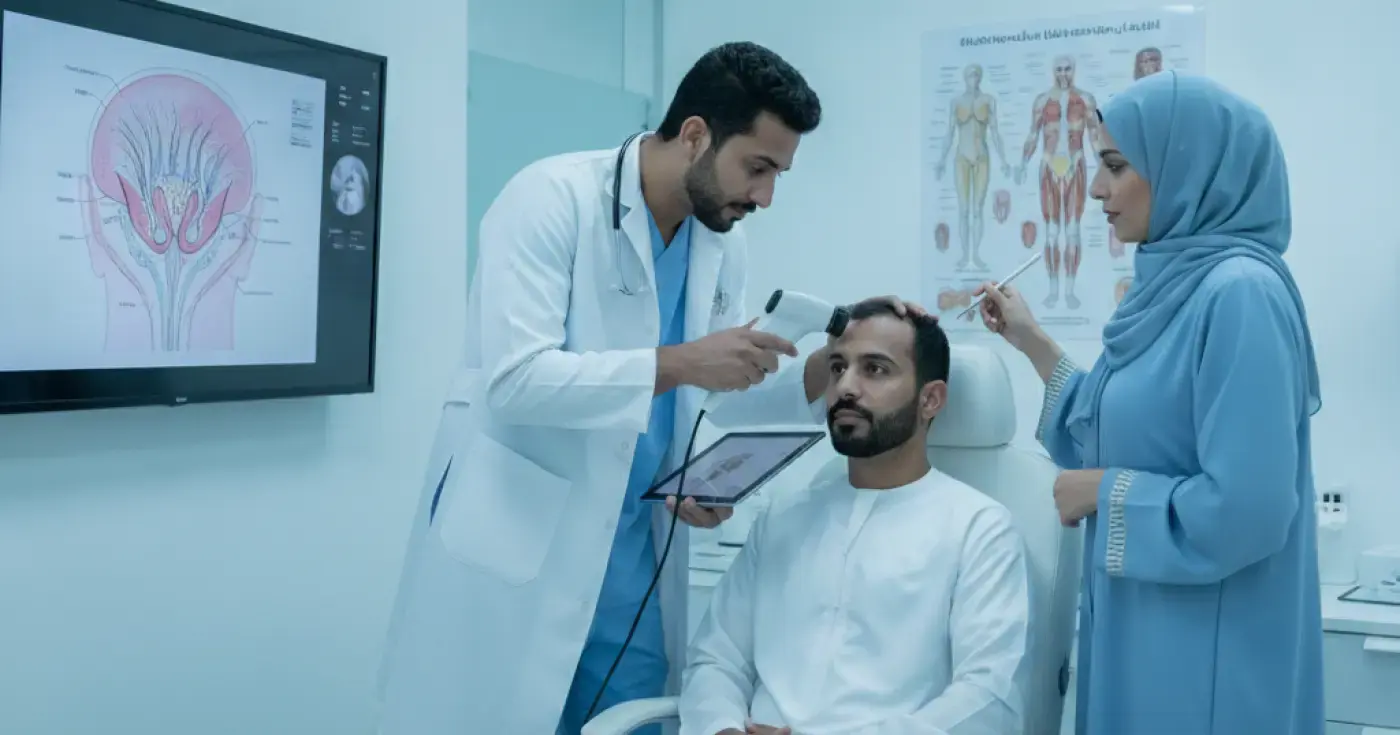
Learn how surgeons evaluate hair density and the donor area during a hair transplant consultation to ensure a successful procedure.
Read article
Discover the key questions to ask your doctor during a hair transplant consultation to ensure safety, realistic expectations, and successful outcomes.
Read article
Learn how a hair transplant consultation evaluates your suitability, donor area density, required medical tests, and expectations for successful results.
Read article