
Lahalak Medical PlatformDifferentiate Care
Discover how microscopic hair analysis (trichoscopy) helps dermatologists diagnose hair loss, alopecia, and scalp conditions accurately.
Advertisement
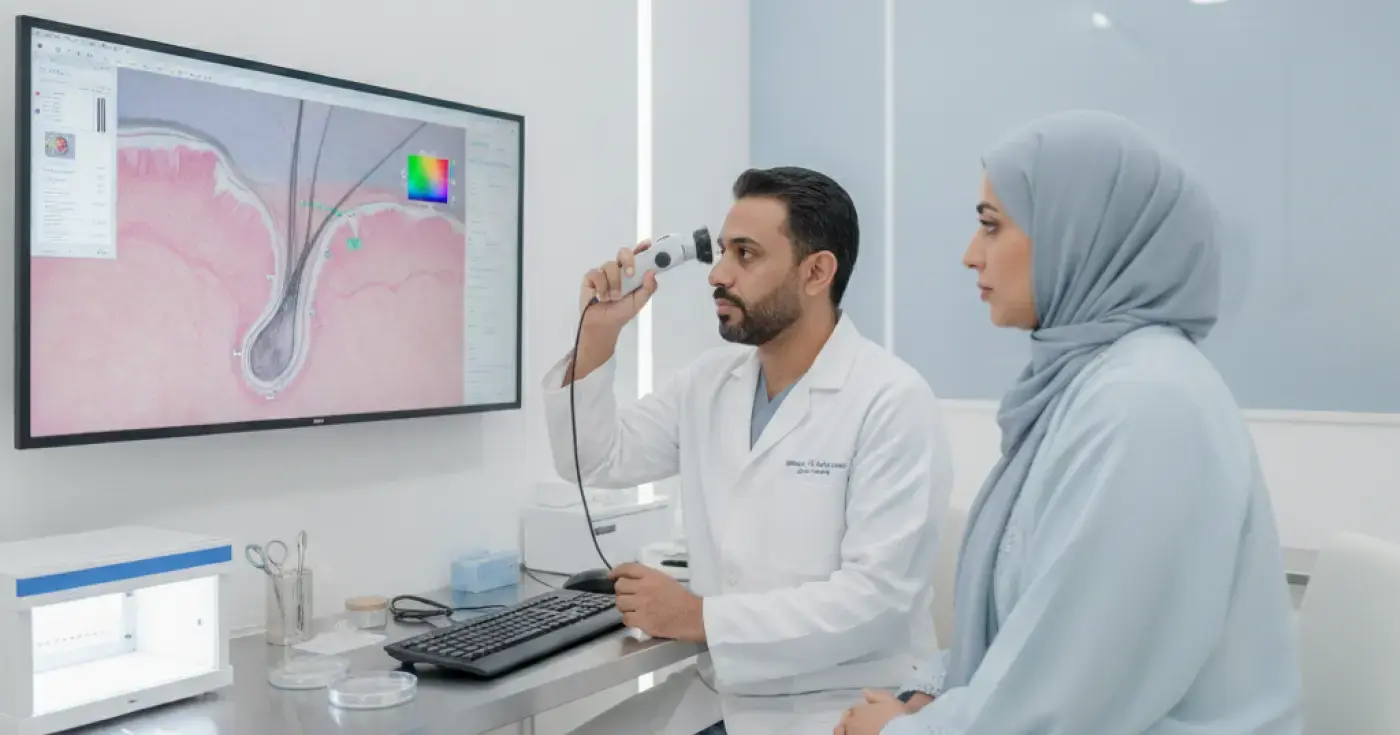
Hair loss and scalp disorders are among the most common concerns prompting consultations in dermatology clinics. Given the vast array of underlying causes—ranging from genetic and hormonal influences to environmental factors and nutritional deficiencies—an accurate diagnosis is the essential first step toward successful management. This is where microscopic hair analysis (clinically known as trichoscopy) serves as a highly advanced, non-invasive diagnostic tool that has transformed modern dermatology.
Using a specialized digital trichoscope equipped with high-resolution magnifying lenses and polarized or non-polarized light sources, a qualified dermatologist can visualize the scalp, hair follicles, and hair shafts at magnifications that are impossible to achieve with the naked eye. This detailed view reveals subtle structural alterations, microvascular patterns, and perifollicular skin changes, enabling rapid and precise diagnosis without the immediate need for invasive scalp biopsies in most cases.
The procedure relies on advanced optical technology that combines high magnification with specialized illumination. When the lens of the trichoscope is placed gently on the scalp, it magnifies the target area by 20x to 70x, or even higher with state-of-the-art digital systems. This magnification allows the clinician to evaluate three primary components:
The primary clinical value of performing a detailed scalp analysis under microscopic magnification lies in its ability to differentiate between various hair loss conditions that present similarly to the naked eye but require entirely different therapeutic approaches. For instance, early-stage androgenetic alopecia (pattern hair loss) can easily be confused with telogen effluvium (temporary shedding due to stress or nutritional deficits). Trichoscopy resolves this diagnostic challenge by clearly showing hair shaft diameter diversity, which is the hallmark of androgenetic alopecia.
Furthermore, microscopic analysis is an invaluable tool for monitoring the progress of hair loss treatment. Instead of waiting several months to see visible improvement, dermatologists can evaluate follicular response to therapies (such as topical minoxidil or platelet-rich plasma) within weeks by detecting the emergence of fine new vellus hairs or the resolution of perifollicular inflammatory signs.
Dermatologists routinely utilize trichoscopy to diagnose a wide spectrum of hair and scalp disorders, including:
Characterized by significant variation in hair shaft diameter within the affected areas compared to the healthy occipital region, along with an increased proportion of single-hair follicular units and thin vellus hairs.
Active lesions typically display highly characteristic microscopic markers, such as "exclamation mark hairs," black dots (representing hairs broken at the scalp level), and yellow dots (caused by sebum and keratinous debris accumulating in empty follicular infundibula).
This condition shows a generalized reduction in hair density without significant variation in hair shaft diameter, accompanied by an increased proportion of telogen (resting) hairs and a subsequent wave of short, upright regenerating hairs once the trigger is resolved.
A common fungal infection in pediatric patients, characterized under magnification by distinctive "comma hairs" or "corkscrew hairs" resulting from fungal invasion that weakens the hair shaft structure.
Conditions like Lichen Planopilaris and Discoid Lupus Erythematosus require urgent diagnosis to prevent permanent hair loss. Trichoscopy reveals the complete absence of follicular openings, replaced by white fibrous tracts, alongside perifollicular scaling and erythema indicating active inflammation that demands aggressive medical intervention.
The following table outlines the key differences between digital trichoscopy and other diagnostic modalities commonly used in dermatology clinics:
| Feature | Digital Trichoscopy | Trichogram | Scalp Biopsy |
|---|---|---|---|
| Method | Non-invasive visual examination using a digital magnifying lens | Plucking a sample of hairs (approx. 50) for microscopic root analysis | Surgical removal of a small skin punch specimen under local anesthesia |
| Pain & Invasiveness | Completely painless and non-invasive | Mild, temporary discomfort during hair plucking | Requires local anesthesia and sutures; leaves a tiny, minimal scar |
| Results Turnaround | Immediate, real-time visualization during the consultation | Typically takes 1 to 2 days for laboratory evaluation | Requires 7 to 10 days for histopathological processing and reporting |
| Primary Indication | Initial screening, differential diagnosis, and treatment monitoring | Assessing hair cycle ratios (anagen-to-telogen ratio) | Complex, atypical cases and suspected scarring alopecia |
A microscopic hair analysis session is quick, comfortable, and straightforward. Here is what a patient typically experiences during the clinical visit:
To ensure the highest image quality and avoid diagnostic interference, patients are advised to follow these preparation guidelines prior to their appointment:
Trichoscopy offers numerous clinical advantages that make it an indispensable tool in modern hair restoration and dermatology:
An evaluation with microscopic hair analysis is highly recommended if you experience any of the following symptoms:
In conclusion, microscopic hair analysis represents a major advancement in the clinical management of hair and scalp disorders. If you are experiencing hair loss, consulting a specialist for this simple, non-invasive, and highly accurate assessment will help establish a scientifically sound and effective treatment plan tailored to your specific needs.
Clear, direct answers
Advertisement
Continue exploring
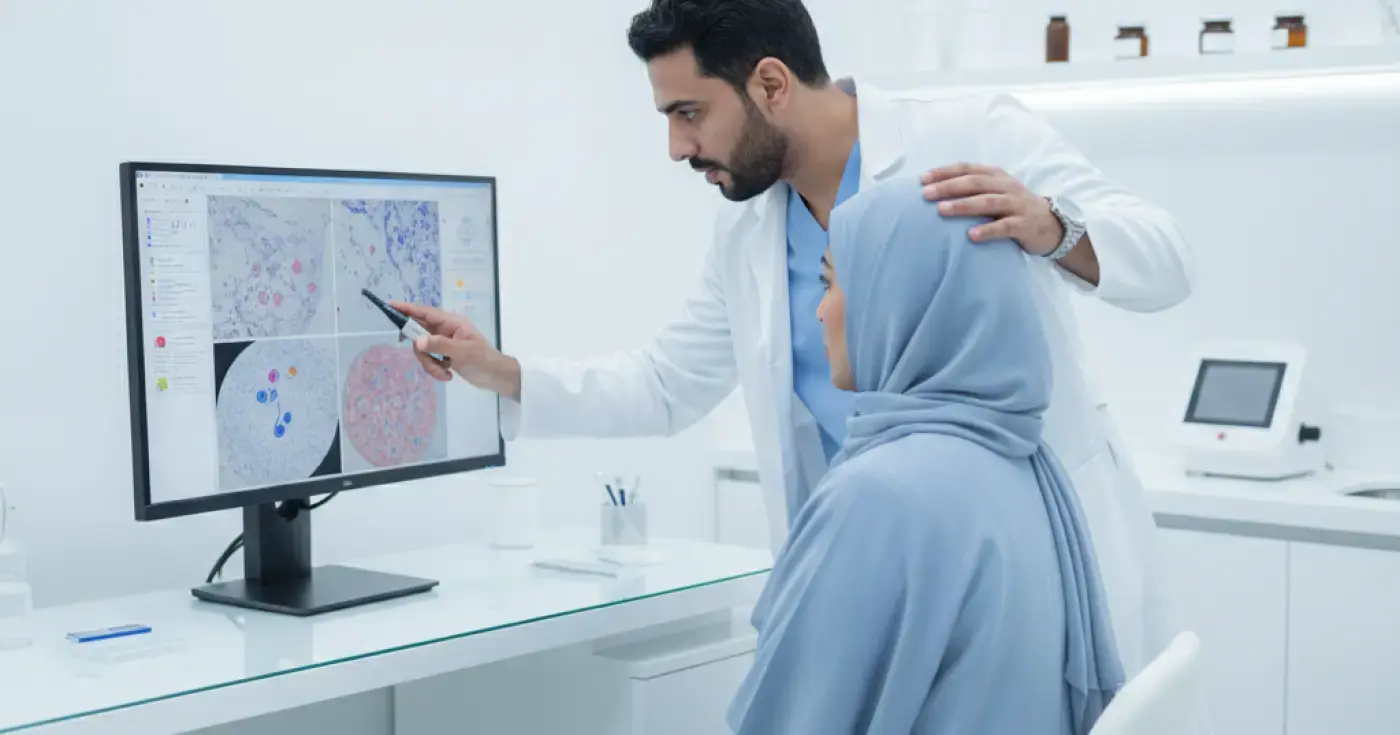
Discover how microscopic hair analysis (Trichoscopy) diagnoses hair loss causes accurately to guide effective, personalized treatment.
Read article
A comprehensive medical comparison between hair transplantation and non-surgical treatments. Discover the best option for your hair loss condition.
Read article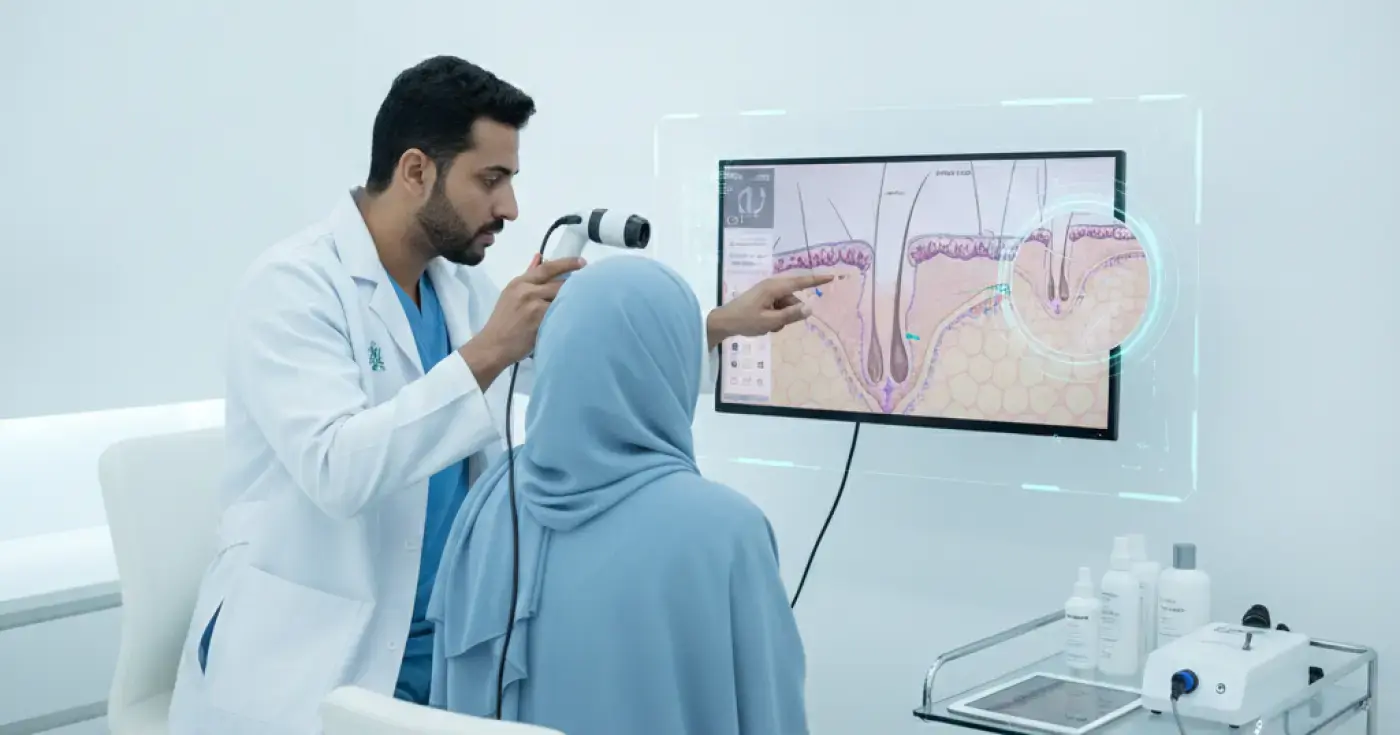
Discover the causes of weak hair follicles and the best medical and natural treatments to stimulate hair growth and density safely.
Read articleExplore the topic
Microscopic Diagnosis of Hair Problems: How Trichoscopy Reveals Hair Loss CausesElixir · Health PanoramaHair Transplant vs. Non-Surgical Treatments: Which is Best for Hair Thickening?Elixir · Health PanoramaTreating Weak Hair Follicles: Scientific Methods to Improve Hair Growth and DensityElixir · Health Panorama