
Lahalak Medical PlatformDifferentiate Care
Discover the causes of weak hair follicles and the best medical and natural treatments to stimulate hair growth and density safely.
Advertisement
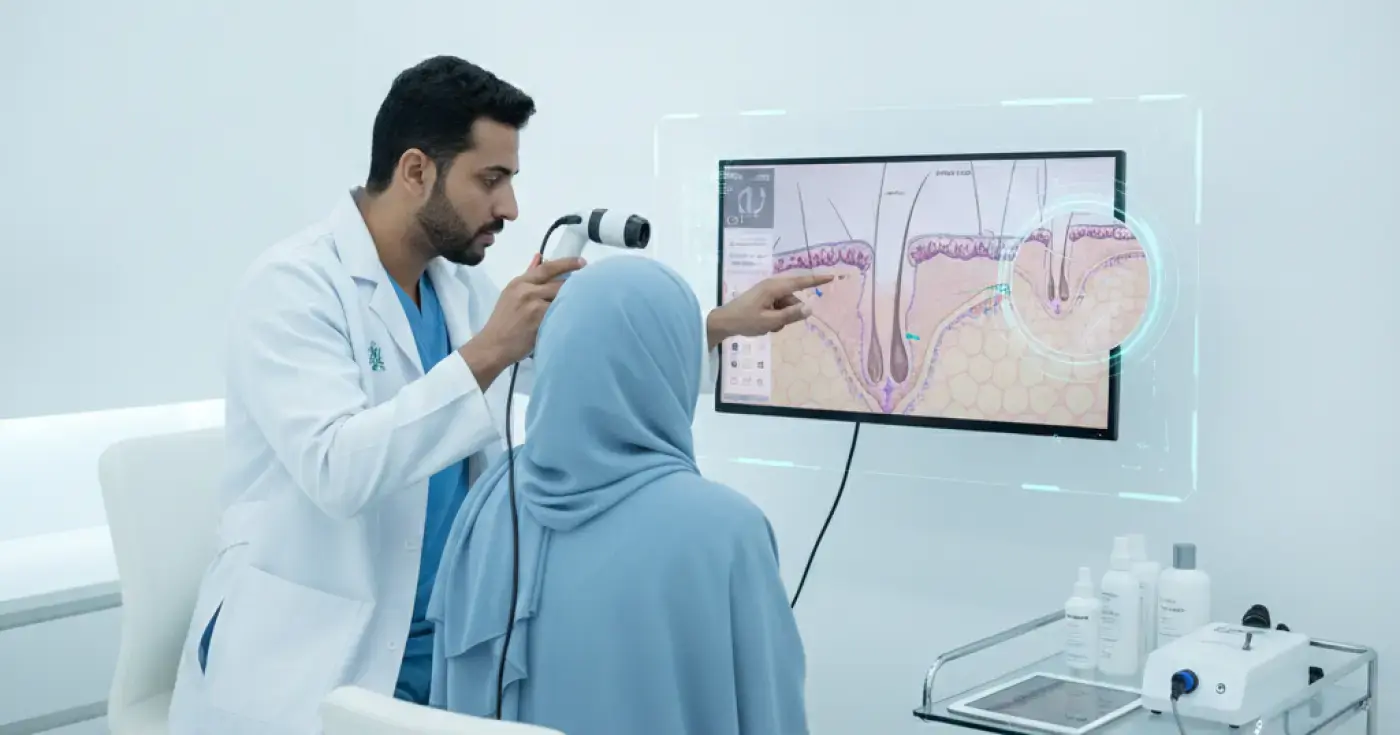
Hair follicles are the vital, complex structures located beneath the surface of the skin, responsible for hair growth, nourishment, and structural integrity. When these follicles become weak or compromised, they lose their ability to produce strong, healthy hair shafts. This leads to thin, fragile, and easily shedded hair. In clinical terms, this process is known as "follicle miniaturization," where the follicle progressively shrinks in size until it eventually stops producing hair altogether if left untreated.
In this comprehensive article, we will explore the underlying causes of weak hair follicles, how they are clinically diagnosed, and the most effective medical and natural treatments to stimulate hair growth and restore density, keeping in mind the standard clinical practices in Saudi Arabia.
A variety of genetic, hormonal, and lifestyle factors can negatively impact the health and strength of hair follicles. The most common causes include:
Genetics is the leading cause of follicle weakness, primarily manifesting as Androgenetic Alopecia (pattern hair loss). The hormone Dihydrotestosterone (DHT), a derivative of testosterone, binds to receptors in genetically susceptible hair follicles, causing them to shrink and shortening the hair's active growth cycle.
Hair follicles require a constant supply of essential nutrients to synthesize keratin, the primary protein in hair. Deficiencies in iron (anemia), zinc, vitamin D, vitamin B12, and proteins directly weaken the follicles and disrupt their normal growth phase.
Chronic stress or major physical trauma (such as major surgery or severe illness) can prematurely push a large percentage of hair follicles into the resting phase (Telogen), leading to a condition called Telogen Effluvium, characterized by sudden, diffuse hair shedding.
Excessive use of high-heat styling tools, harsh chemical dyes, and tight hairstyles (which cause traction alopecia) can cause direct mechanical and thermal damage to the hair follicles.
Conditions like Alopecia Areata (an autoimmune disorder where the immune system attacks hair follicles), severe seborrheic dermatitis, and scalp psoriasis can damage the scalp environment and impair follicle function.
Identifying weak hair follicles early can prevent permanent hair loss. Look out for the following signs:
Before starting any treatment, a proper diagnosis by a board-certified dermatologist is crucial. Diagnostic steps typically include:
Today, several advanced clinical options are available to reactivate weak follicles and promote hair regrowth. These treatments are tailored to individual needs:
Minoxidil (available in 2% or 5% formulations) is the gold standard topical treatment approved by the Saudi Food and Drug Authority (SFDA). It acts as a vasodilator, increasing blood flow, oxygen, and nutrients to the follicles, thereby prolonging the active growth phase (Anagen). Systemic treatments like Finasteride may also be prescribed for men under strict medical supervision.
PRP is one of the most popular clinical hair thickening treatments. A small sample of the patient's blood is drawn, processed to concentrate the platelets, and then injected into the scalp. The growth factors released by the platelets stimulate cellular regeneration, improve local microcirculation, and revive dormant follicles.
This technique involves micro-injecting a customized cocktail of vitamins, minerals, amino acids, and coenzymes directly into the middle layer of the scalp skin, providing immediate and targeted nourishment to the hair roots.
LLLT devices emit cool laser light at specific wavelengths to stimulate cellular activity within the follicles (photobiomodulation). This increases ATP (energy) production in the follicle cells, encouraging healthier hair growth.
In addition to clinical interventions, maintaining a proper hair care routine is essential for protecting follicles from external damage:
Strong hair starts from within. It is highly recommended to undergo a vitamin and mineral analysis to identify any deficiencies. Key nutrients for hair health include:
The following table compares the most common treatments used to revitalize weak hair follicles:
| Treatment | Mechanism of Action | Expected Results | Best Suited For |
|---|---|---|---|
| Topical Minoxidil | Dilates blood vessels, increasing nutrient delivery | Reduced shedding and new hair growth within 3-6 months | Men and women with genetic or stress-induced hair loss |
| PRP Therapy | Delivers concentrated growth factors to the roots | Improved hair thickness, density, and follicle activation | Early to moderate non-scarring hair thinning |
| Mesotherapy | Direct micro-injection of vitamins and minerals | Immediate follicle nourishment and improved hair texture | Nutritional deficiency or stress-related hair loss |
| Low-Level Laser (LLLT) | Photobiomodulation to boost cellular energy (ATP) | Gradual strengthening of fine hair and mild regrowth | Mild to moderate thinning as an adjunctive therapy |
Prevention is key to maintaining long-term hair density. Protect your hair follicles by following these preventive measures:
While some hair shedding is normal, certain signs indicate that you should consult a dermatologist to prevent irreversible follicle damage:
Clear, direct answers
Advertisement
Continue exploring
Discover the scientific truth about vitamins and supplements for hair thickening, their efficacy, risks of overuse, and when to see a doctor.
Read article
Discover the best medically backed hair thickening treatments for women. Explore clinical therapies, PRP, lifestyle changes, and expert dermatological advice.
Read article
A complete medical guide on Minoxidil for hair thickening. Discover its benefits, step-by-step application, side effects, and results.
Read articleExplore the topic