
Lahalak Medical PlatformDifferentiate Care
Discover if laser lip lightening is right for you. Learn about the procedure, ideal candidates, recovery tips, and potential side effects.
Advertisement
Dark lips or labial hyperpigmentation can be a source of cosmetic concern for many individuals. This darkening occurs due to an overproduction of melanin in the delicate tissues of the lips. Laser lip lightening is a non-invasive medical aesthetic procedure designed to target and reduce this excess pigmentation, restoring a natural, healthy pink hue to the lips.
The procedure utilizes specific laser wavelengths that are selectively absorbed by the melanin (pigment) in the lip tissue. The laser energy shatters the pigment particles into microscopic fragments, which are then naturally cleared by the body's lymphatic system over the following weeks. Additionally, the controlled thermal energy stimulates collagen production and cellular turnover, improving lip texture and volume.
Laser lip lightening is highly effective, but its suitability depends on individual clinical factors. Ideal candidates include:
Certain medical conditions and skin types require caution or absolute avoidance of this procedure:
Dermatologists select the appropriate laser technology based on the depth of pigmentation and the patient's skin type:
| Laser Technology | Mechanism of Action | Expected Sessions | Primary Advantage |
|---|---|---|---|
| Q-Switched Nd:YAG Laser | Selectively targets and shatters melanin pigments without damaging surrounding tissues. | 3 - 5 sessions | High safety profile, cost-effective, and excellent for deep pigment. |
| Picosecond Laser | Delivers ultra-short energy pulses to shatter pigment mechanically (photoacoustic effect). | 2 - 4 sessions | Less thermal damage, faster recovery, and lower risk of PIH. |
| Fractional Er:YAG Laser | Provides superficial ablation to promote rapid skin resurfacing and collagen renewal. | 1 - 3 sessions | Improves lip texture and fine lines while reducing surface pigment. |
Undergoing laser lip lightening involves structured clinical steps to ensure safety and optimal outcomes:
A thorough consultation is conducted to evaluate medical history and rule out contraindications. Patients are advised to stop smoking, avoid direct sun exposure, and start antiviral prophylaxis if they have a history of cold sores.
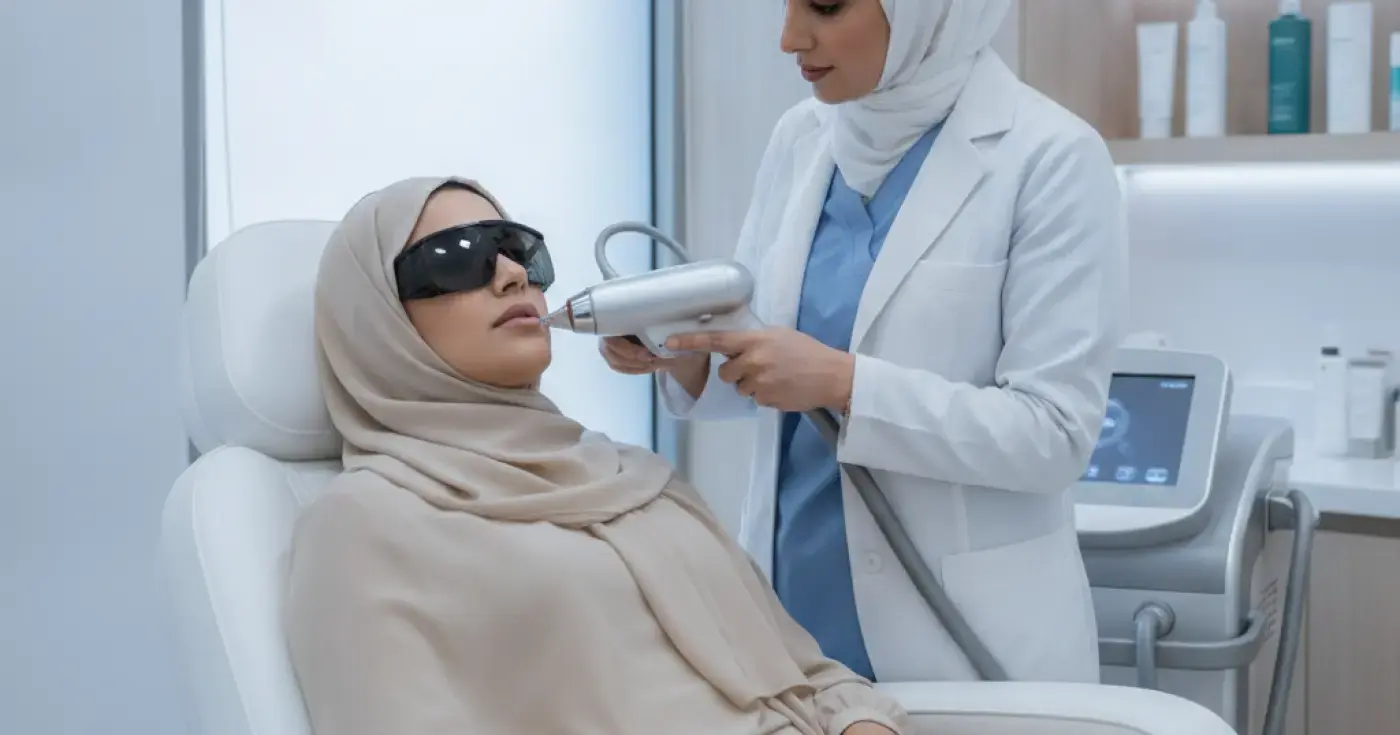
The lips are thoroughly cleansed of cosmetics, and a topical anesthetic cream is applied for 20 to 30 minutes to minimize discomfort. Protective eyewear is provided, and the dermatologist delivers precise laser pulses across the lips. The session typically takes 10 to 15 minutes.
Proper post-laser skin care is critical. The lips will appear swollen, red, and tender initially, followed by mild peeling. Patients must apply prescribed healing ointments or medical moisturizers, avoid picking at peeling skin, and strictly avoid sun exposure.
While generally safe when performed by a qualified professional, temporary side effects include swelling, redness, dryness, and mild discomfort. Rare but serious complications include superficial burns, viral outbreaks, scarring, or post-inflammatory hyperpigmentation (PIH), which can cause the lips to become darker if post-care instructions are not strictly followed.
To preserve the lightened, healthy appearance of your lips, dermatologists recommend:
Clear, direct answers
Advertisement
Continue exploring
Learn how many laser hair removal touch-up sessions you need, the ideal timing, benefits, and clinical safety tips for smooth skin.
Read article
Learn the medical reasons for laser hair removal touch-up sessions, their ideal timing, and how they help achieve optimal, smooth results safely.
Read article
Everything you need to know before your first full body laser hair removal session. Learn about laser types, preparation, post-care, and safety protocols.
Read articleExplore the topic