
Lahalak Medical PlatformDifferentiate Care
Learn how many laser hair removal touch-up sessions you need, the ideal timing, benefits, and clinical safety tips for smooth skin.
Advertisement
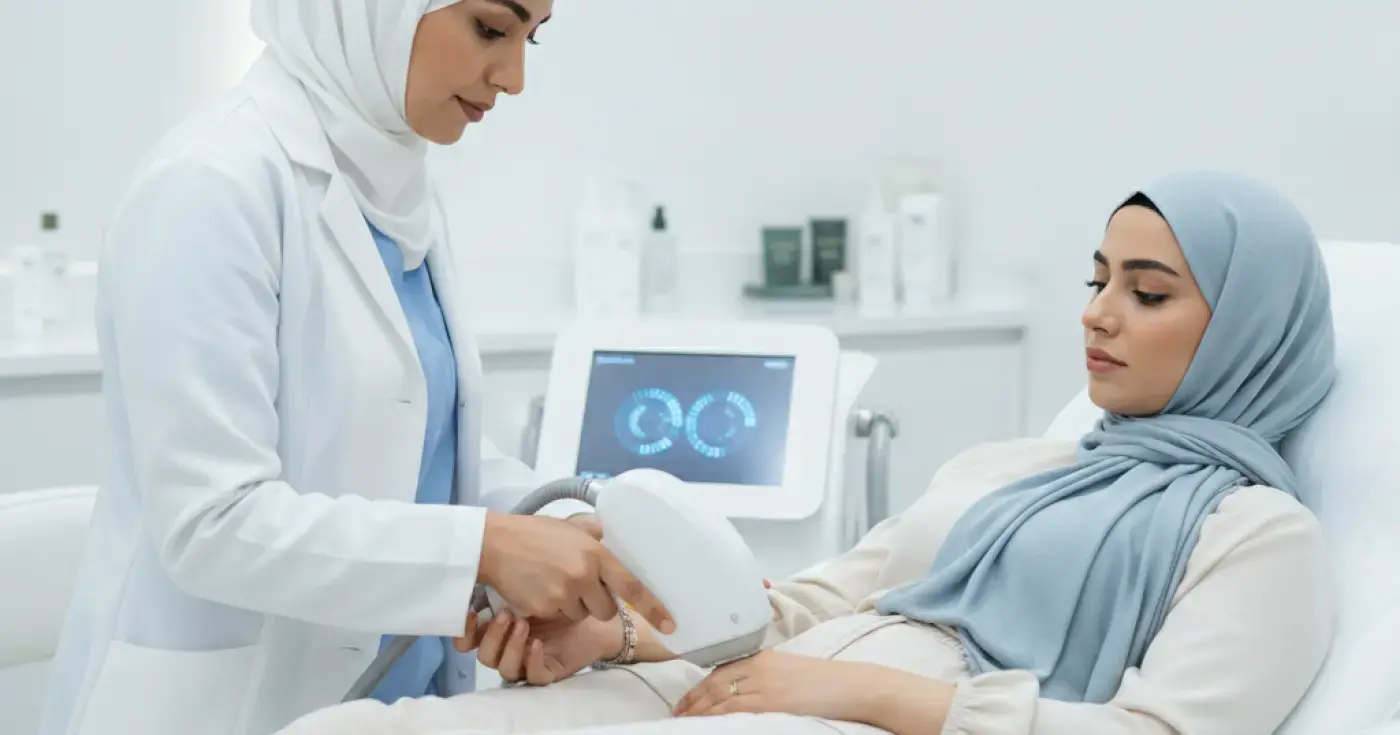
Laser hair removal is one of the most effective and widely sought-after clinical solutions for long-term hair reduction. However, patients frequently ask about the necessity and frequency of "touch-up" sessions. A touch-up session is a brief, targeted treatment performed after the main session to address any missed spots or areas where hair did not shed evenly.
Clinically speaking, a touch-up is not a full treatment session. Instead, it is a corrective measure designed to ensure uniform energy distribution across the target area, providing a smooth, consistent, and hair-free result without patchy regrowth.
The precise clinical answer is: you only need one touch-up session after each main laser session, and only if deemed necessary. There is no medical or aesthetic justification for undergoing multiple touch-up sessions between your regularly scheduled main appointments.
In fact, the need for a touch-up depends on several clinical and technical factors:
Timing is critical to ensure skin safety and treatment efficacy. Dermatologists recommend scheduling a touch-up session between 10 to 14 days after your main session. This specific window is determined by two biological processes:
First, treated hair requires about 1 to 2 weeks to naturally shed from the follicle. Before this period, it is clinically impossible to distinguish between hair that is successfully treated and about to fall out, and hair that was actually missed.
Second, performing a touch-up earlier than 10 days exposes the skin to repetitive thermal energy too quickly, significantly increasing the risk of skin irritation, burns, or post-inflammatory hyperpigmentation. Conversely, delaying the touch-up beyond 14 days can interfere with the next active growth phase (anagen), disrupting your overall treatment schedule.
When performed correctly, a touch-up session offers several clinical and aesthetic benefits:
During a comprehensive session, it is easy for a practitioner to inadvertently miss tiny patches, especially around bony prominences or body curves. A touch-up corrects these minor human errors.
By addressing untreated patches early, you prevent uneven, dense hair regrowth that might otherwise require additional full-length sessions to correct later on.
It prevents the "patchy" or "striped" look that occurs when hair sheds successfully in some areas but continues to grow normally in adjacent, untreated spots.
To help you understand the distinct differences between these two sessions, refer to the clinical comparison below:
| Feature | Main Session | Touch-Up Session |
|---|---|---|
| Primary Goal | Target the entire area to disable active hair follicles. | Treat only the missed patches or uneven spots. |
| Timing | Every 4 to 6 weeks (depending on the area and growth cycle). | 10 to 14 days after the main session. |
| Duration | Moderate to long (depending on the size of the area). | Very short (usually just a few minutes). |
| Energy Levels | Determined by the physician based on skin type and hair density. | Similar to the main session, or slightly lower to protect healing skin. |
| Cost | Fully charged (or part of a treatment package). | Often complimentary or offered at a nominal fee as a quality guarantee. |
It is a common misconception that a touch-up is mandatory after every single laser session. From a medical standpoint, if your hair sheds evenly and there are no visible patches of untreated hair, you do not need a touch-up.
Subjecting the skin to unnecessary laser energy when there is no target pigment can lead to adverse effects, such as paradoxical hypertrichosis (stimulated hair growth) or localized skin damage. Therefore, touch-ups should only be performed when there is clear, visible evidence of missed hair lines.
To maximize safety and results, patients must adhere to strict pre- and post-treatment protocols, similar to those for post-laser skin care:
While modern laser hair removal is highly safe, over-treating the skin or performing touch-ups at the wrong time can lead to clinical complications:
Always ensure your laser treatments are supervised by a qualified dermatologist in a licensed medical clinic. You should contact your doctor immediately if you experience:
Clear, direct answers
Advertisement
Continue exploring

Learn the medical reasons for laser hair removal touch-up sessions, their ideal timing, and how they help achieve optimal, smooth results safely.
Read article
Everything you need to know before your first full body laser hair removal session. Learn about laser types, preparation, post-care, and safety protocols.
Read article
Learn the essential medical guidelines before and after full-body laser hair removal to prevent burns, hyperpigmentation, and maximize results safely.
Read articleExplore the topic