
Lahalak Medical PlatformDifferentiate Care
Learn the medical reasons for laser hair removal touch-up sessions, their ideal timing, and how they help achieve optimal, smooth results safely.

Advertisement
Laser hair removal is one of the most effective and widely sought-after cosmetic procedures for long-term hair reduction. However, many patients are surprised when their dermatologist or laser technician schedules a "touch-up" or "retouch" session shortly after their main appointment. Why is this quick session so critical, and what is the science behind it?
A touch-up session is a brief, targeted treatment typically scheduled 10 to 14 days after the primary laser session. Its main purpose is to evaluate the skin's response, ensure even hair shedding, and treat any small areas or "missed spots" that did not receive adequate laser exposure during the main session. This ensures uniform, smooth results across the entire treated area.
To understand the necessity of touch-up sessions, it is essential to understand how laser technology interacts with hair biology. The laser emits a concentrated beam of light absorbed by the melanin (pigment) in the hair shaft. This light energy converts to heat, damaging the hair follicle to inhibit future growth. However, this process is highly dependent on the hair's growth cycle.
Human hair grows in three distinct, asynchronous phases:
Because only about 15% to 20% of body hair is in the Anagen phase at any given time, multiple sessions spaced weeks apart are required. The touch-up session acts as a clinical safety net within each treatment cycle to ensure no active follicles in the targeted zone were missed or under-treated.
There are several clinical and practical reasons why skipping a touch-up session can compromise your overall results:
During a comprehensive laser session, covering every square millimeter of skin with absolute precision can be challenging. This is especially true in contoured or hard-to-reach areas such as the knees, ankles, underarms, or bikini line. Minor patient movement or overlapping issues can result in tiny untreated patches. These "missed spots" become visible about 10 days later as small patches of normal hair growth amidst shedding areas.
Hair density, depth, and thickness vary significantly across different body parts. Some follicles may respond immediately to the initial laser settings, while adjacent stubborn follicles might require a slightly adjusted pulse duration or energy level. A touch-up session allows the practitioner to evaluate this response and apply targeted adjustments.
A touch-up session guarantees that the final cosmetic outcome is smooth and uniform, preventing patchy regrowth. This meticulous approach enhances patient satisfaction and maximizes the efficiency of the overall treatment plan, potentially reducing the total number of primary sessions needed over time.
Timing is critical for a touch-up session to be clinically effective. The recommended window is 10 to 14 days post-treatment. Here is why this specific timeframe is crucial:
The following table outlines the primary differences between these two essential components of your laser hair removal journey:
| Feature | Main Laser Session | Touch-Up Session |
|---|---|---|
| Primary Objective | To treat the entire designated area and target all follicles currently in the active growth phase. | To address missed spots, ensure uniform shedding, and correct uneven patches. |
| Treatment Area | The entire selected anatomical region (e.g., full legs, full back). | Only the specific patches where hair failed to shed. |
| Duration | 30 to 90 minutes depending on the size of the area. | Typically 5 to 15 minutes. |
| Timing | Every 4 to 6 weeks (aligned with hair growth cycles). | 10 to 14 days after the main session. |
| Energy Settings | Calibrated based on skin type, hair color, and thickness. | Identical or slightly adjusted settings to avoid skin irritation. |
To ensure safety and maximize efficacy, proper post-laser skin care and pre-session preparation are vital:
While touch-up sessions are standard practice, the necessity can vary based on individual clinical factors:
Touch-up sessions are highly safe when performed correctly. However, temporary side effects can occur, including:
Always inform your practitioner of any skin changes, sun exposure, or new medications taken between your sessions.
Contact your dermatologist or the treating medical clinic immediately if you experience any of the following symptoms after a touch-up session:
Adhering to the clinical schedule and guidelines provided by your healthcare team is the safest and most effective way to achieve long-lasting, smooth results.
Clear, direct answers
Advertisement
Continue exploring

Everything you need to know before your first full body laser hair removal session. Learn about laser types, preparation, post-care, and safety protocols.
Read article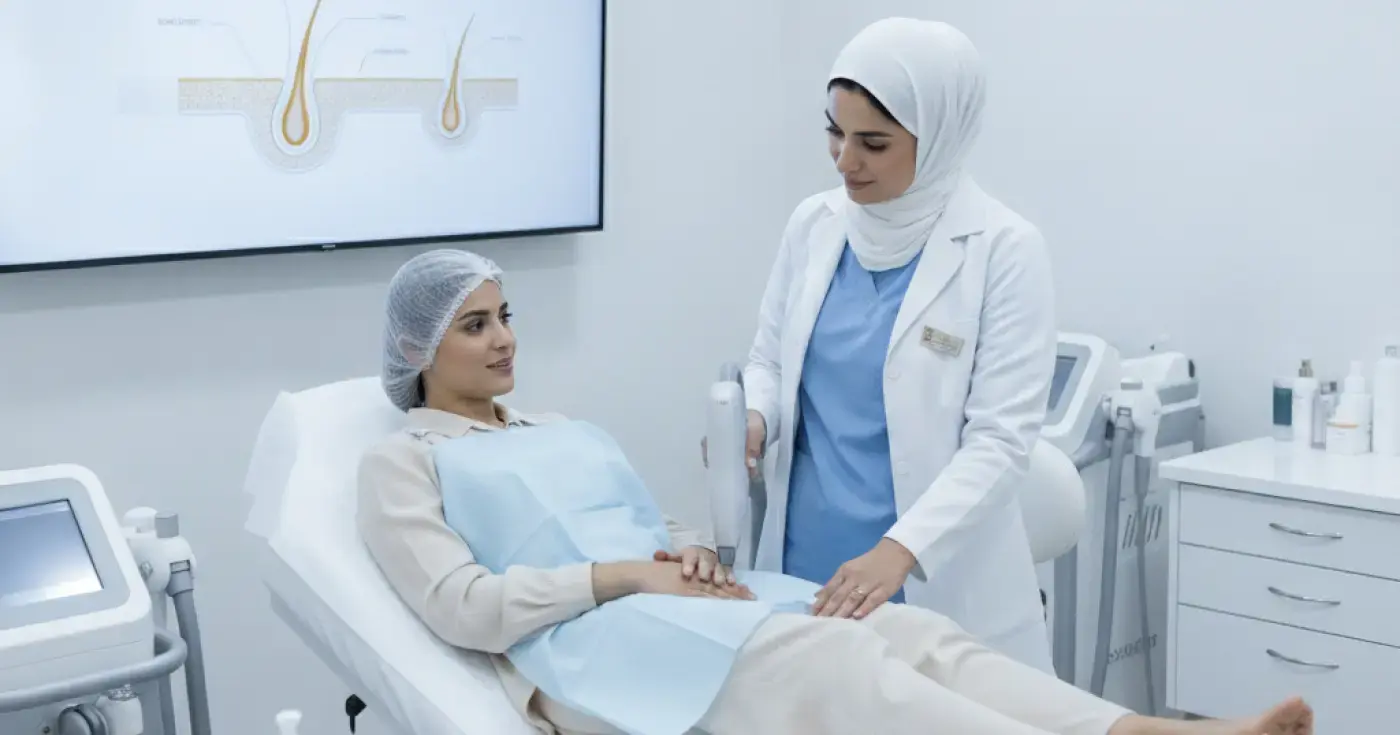
Learn the essential medical guidelines before and after full-body laser hair removal to prevent burns, hyperpigmentation, and maximize results safely.
Read article
Can you combine laser hair removal with peels, Botox, or retinoids? Discover safe intervals, clinical risks, and expert tips to protect your skin.
Read articleExplore the topic