
Lahalak Medical PlatformDifferentiate Care
Learn the truth about alopecia areata transmission. Discover its autoimmune causes, triggers, and how it differs from contagious fungal infections.
Advertisement
Alopecia areata is a common dermatological condition that frequently triggers anxiety and misconceptions among patients and their families. Characterized by sudden, patchy hair loss that typically presents as smooth, round, or oval bald spots on the scalp, beard, eyebrows, or body, it is often misunderstood. Because of its rapid onset, many people mistakenly assume it is caused by a contagious pathogen. In this comprehensive medical article, we will address the common question: Is alopecia contagious? We will also explore its true underlying causes, clinical presentations, and the latest evidence-based treatment options.
The definitive medical answer is: No, alopecia areata is absolutely not contagious. You cannot contract or transmit alopecia areata by shaking hands, physical contact, or sharing personal items such as combs, towels, pillows, or hats. Alopecia areata is an autoimmune disorder, meaning it originates internally from the patient's own immune system. It is not caused by external infectious agents like bacteria, viruses, or fungi. Therefore, there is no medical need to isolate patients or avoid physical contact. On the contrary, patients benefit significantly from emotional and social support to cope with the psychological impact of hair loss.
Alopecia areata occurs due to a dysfunction in the body's immune system. Normally, the immune system defends the body against foreign invaders like pathogens. In patients with alopecia, the immune system mistakenly targets active hair follicles as foreign threats. This autoimmune attack forces the hair follicles into a premature resting phase, causing the hair shaft to fall out and temporarily halting new hair production. Key contributing factors include:
Alopecia areata does not manifest the same way in every individual. Dermatologists classify the condition into several clinical types based on the extent and pattern of hair loss:
The misconception that alopecia is contagious often stems from its visual similarity to highly contagious fungal infections of the scalp, such as ringworm (Tinea Capitis). The table below outlines the critical clinical differences between these two conditions to help you distinguish them accurately:
| Clinical Feature | Alopecia Areata | Tinea Capitis (Scalp Ringworm) |
|---|---|---|
| Primary Cause | Autoimmune dysfunction (Non-contagious) | Fungal infection (Highly contagious) |
| Scalp Appearance | Perfecty smooth, normal skin color, no scales or inflammation | Scaly, red, inflamed, sometimes with pustules or discharge |
| Hair Condition | Short, broken hairs resembling "exclamation points" at patch borders | Hairs broken off at the surface, appearing as black dots |
| Itching and Pain | Rarely present; usually asymptomatic | Commonly associated with intense itching and tenderness |
| Primary Target Group | Can affect any age, most common in young adults | Primarily affects school-aged children |
| Primary Treatment | Immunomodulators, corticosteroids, and growth stimulants | Oral and topical antifungal medications |
Although the root cause is autoimmune, certain triggers can precipitate or worsen hair loss. Acute emotional distress and chronic anxiety are major triggers; stress hormones can disrupt immune balance and accelerate the autoimmune attack on hair follicles. Nutritional deficiencies, particularly low levels of Vitamin D, zinc, or ferritin (iron stores), can also weaken hair follicles and exacerbate shedding. Consequently, maintaining a healthy, balanced lifestyle is an essential component of a comprehensive management plan.
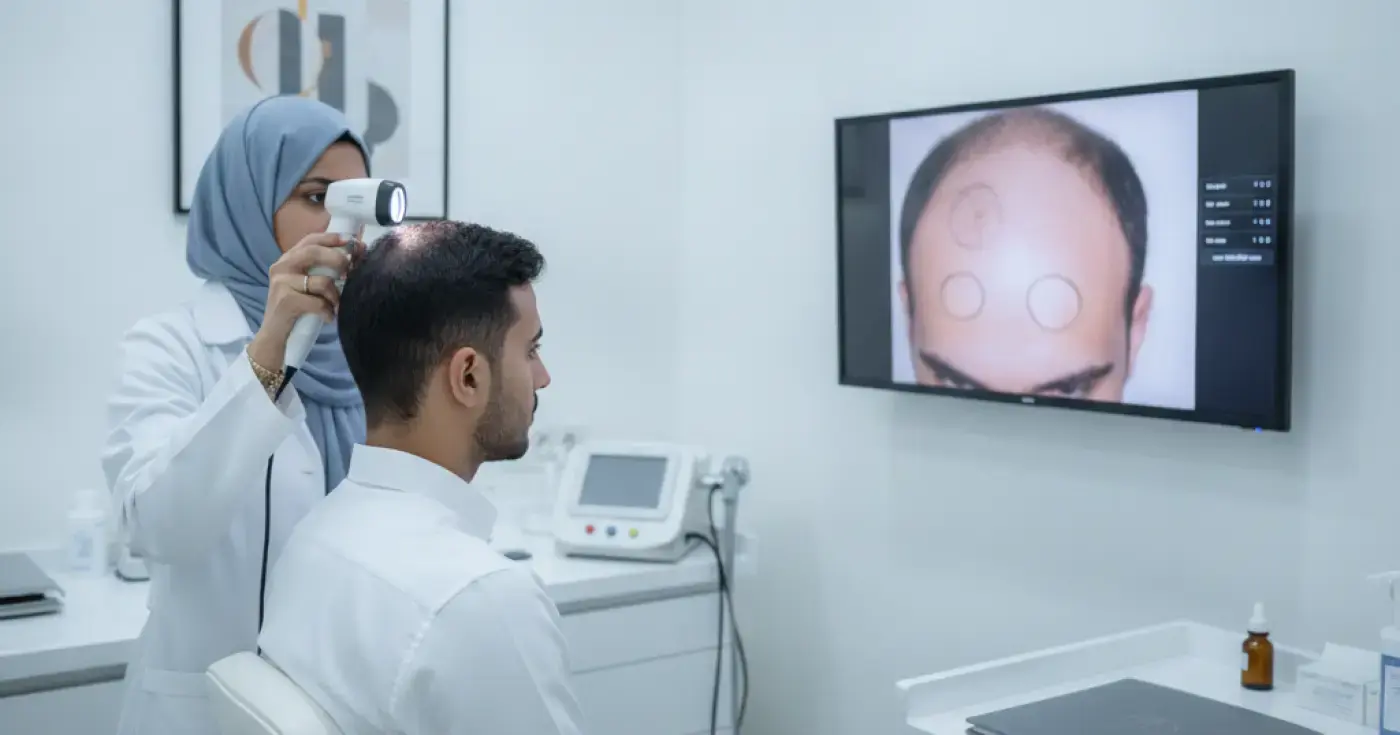
If you experience sudden hair loss, it is crucial to schedule a dermatologist consultation for an accurate diagnosis. The dermatologist will perform a physical examination of your scalp and hair loss patterns. Often, they will use a specialized tool called a dermoscope to examine the hair follicles closely and identify characteristic signs of alopecia, such as exclamation point hairs. In rare cases where the diagnosis is unclear, a small skin biopsy may be performed to rule out other causes of hair loss.
Treatments for alopecia areata aim to suppress the immune attack on hair follicles and stimulate hair regrowth. The choice of therapy depends on the patient's age, the extent of hair loss, and the duration of the disease. Standard medical treatments include:
Because alopecia is closely linked to psychological well-being, self-care and stress management are vital. We recommend establishing a gentle routine for hair and scalp care, avoiding harsh chemicals or high-heat styling tools that can damage surrounding hair. Practicing stress-reduction techniques such as yoga, meditation, and regular exercise can also support recovery. For individuals experiencing significant distress, cosmetic solutions like medical-grade hairpieces or scalp micropigmentation can help restore confidence and reduce anxiety during the treatment process.
While alopecia areata is not a life-threatening condition and does not affect internal organs, seeking early medical intervention can significantly improve treatment outcomes and prevent further progression. You should consult a dermatologist as soon as you notice sudden patchy hair loss, rapid shedding, or changes in your nails (such as tiny pits), which can sometimes accompany alopecia. Your doctor can use a hair loss severity scale to evaluate the progression of the condition and design a personalized, safe, and effective treatment plan.
Clear, direct answers
Advertisement
Continue exploring

A medical guide on pediatric alopecia areata: symptoms, causes, treatments in Saudi Arabia, and essential psychological support for children.
Read article
Learn about the causes of female alopecia, its types, advanced medical treatments, and practical ways to cope with the psychological effects of hair loss.
Read article
Learn how the immune system attacks hair follicles in alopecia areata, its causes, diagnostic methods, and the latest medical treatments.
Read article