
Lahalak Medical PlatformDifferentiate Care
Find out if a skin biopsy hurts, how long it takes to heal, and expert tips on wound care, recovery timeline, and when to contact your doctor.
Advertisement
A skin biopsy is a quick, routine, and highly effective medical procedure performed in dermatology clinics. It involves removing a small sample of skin cells or tissue from the body so it can be sent to a laboratory for histopathology analysis under a microscope. This precise examination helps dermatologists accurately diagnose a wide range of skin conditions, from inflammatory disorders like psoriasis and eczema to benign moles and skin cancers.
Despite its simplicity and crucial diagnostic role, many patients experience anxiety and stress before their biopsy appointment. Common concerns revolve around how painful the procedure is, how long it takes to heal, and how to care for the resulting wound. In this comprehensive, patient-friendly guide, we will address these questions in detail based on established clinical guidelines.
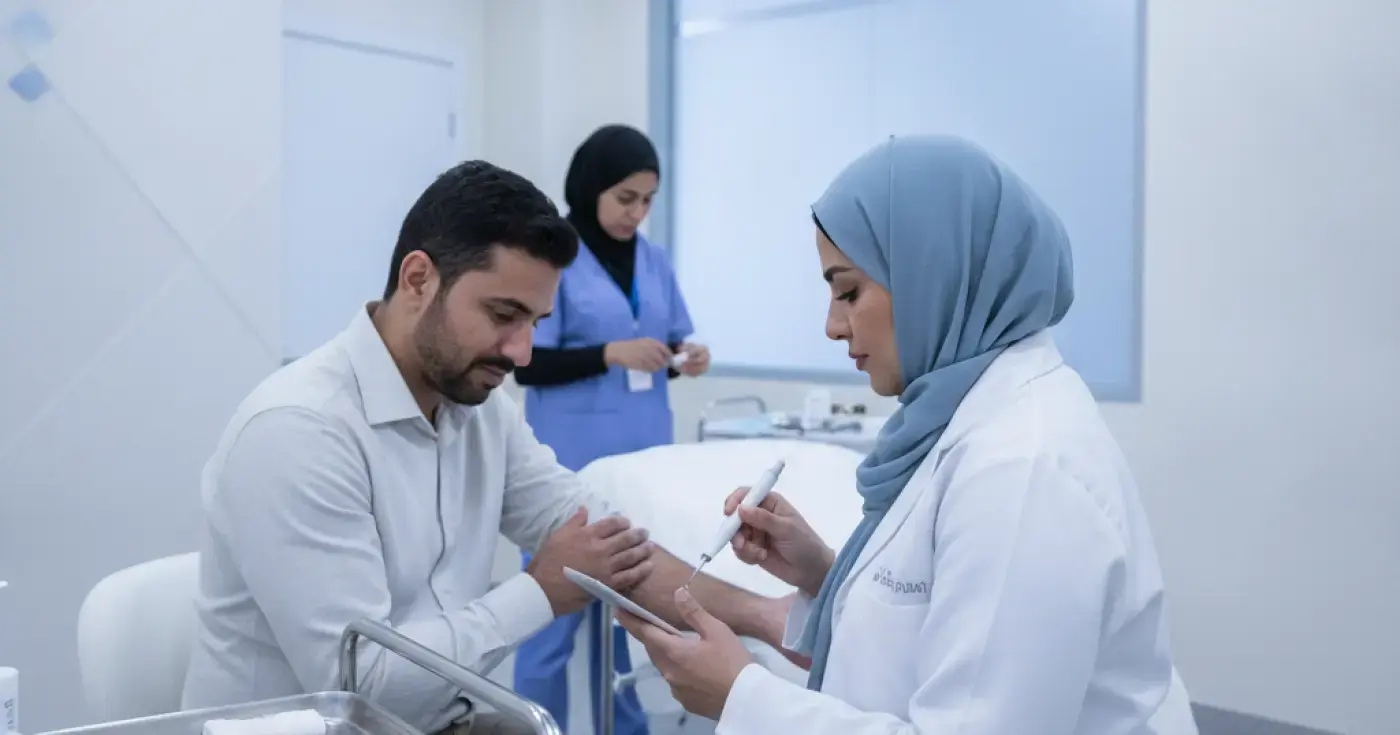
The short and reassuring answer is: No, a skin biopsy is not painful during the procedure itself. This is because a local anesthetic is always administered before any tissue is removed.
However, understanding what to expect during each stage of the procedure can help ease your anxiety:
The level of post-procedure discomfort and the healing timeline depend significantly on the type of biopsy performed, which is determined by the size, depth, and location of the skin lesion:
During a shave biopsy, the doctor uses a sharp, razor-like tool to shave off the superficial layers of the skin (the epidermis and upper dermis). This method is commonly used for raised moles or superficial lesions. It does not require stitches, leaves a wound similar to a superficial scrape, and causes virtually no post-procedure pain with a very rapid recovery.
A punch biopsy utilizes a small, circular tool resembling a tiny cookie cutter to remove a deeper core of skin, including the epidermis, dermis, and superficial subcutaneous fat. It is ideal for diagnosing deeper inflammatory skin conditions. Depending on the size of the punch tool (usually 2 to 6 mm), the wound may require one or two stitches to close, ensuring optimal cosmetic healing.
An excisional biopsy is performed when the doctor needs to remove an entire abnormal area of skin (such as a suspected skin tumor or an entire changing mole). The doctor uses a scalpel to excise the entire lesion along with a safety margin of healthy surrounding skin. This procedure always requires surgical stitches to close, and post-procedure soreness may be slightly more noticeable but remains highly manageable.
The following table summarizes the key differences between the main types of skin biopsies, including depth, stitches, expected pain, and healing times:
| Biopsy Type | Depth of Sample | Stitches Required | Post-Anesthetic Pain Level | Superficial Healing Time |
|---|---|---|---|---|
| Shave Biopsy | Superficial (Epidermis & upper dermis) | No | Minimal to none | 7 - 10 days |
| Punch Biopsy | Deep (Reaches subcutaneous fat) | Usually 1 - 2 stitches | Mild to moderate | 10 - 14 days |
| Excisional Biopsy | Full thickness with safety margins | Yes, always | Moderate (temporary) | 2 - 3 weeks |
A skin biopsy is a quick outpatient procedure performed in the doctor's office, typically taking between 15 to 30 minutes. Here is what happens step-by-step:
The total recovery time depends on the size and location of the wound, as well as your general health. In general, healing follows a predictable timeline:
Proper wound care is the most critical factor in ensuring rapid healing, minimizing scarring, and preventing bacterial infections. Follow these medical recommendations daily:
While skin biopsies are highly safe, minor complications can occasionally occur. Monitor the wound closely and contact your doctor immediately if you experience any of the following signs of infection or bleeding:
In conclusion, a skin biopsy is a straightforward, safe, and virtually painless diagnostic tool. With local anesthesia, you will feel no pain during the procedure, and post-procedure discomfort is minimal and temporary. By following proper wound care instructions, keeping the site clean and moist, and avoiding strenuous strain, you will ensure a smooth, rapid recovery and obtain the vital diagnostic answers needed for your ongoing dermatological health.
Clear, direct answers
Advertisement
Continue exploring

Learn when a mole or skin lesion requires a biopsy. Understand the ABCDE criteria, biopsy types, procedure steps, and when to see a dermatologist.
Read article
Learn about the different types of skin biopsies (shave, punch, excisional), their uses, preparation, recovery, and how to care for your wound.
Read article
A comprehensive medical guide on how a skin biopsy is performed, its types, preparation steps, wound care, and understanding your results.
Read articleExplore the topic