
Lahalak Medical PlatformDifferentiate Care
Discover how many sessions are needed to treat acne scars using laser, microneedling, and other advanced dermatological techniques.
Advertisement
Acne scars are a common dermatological concern that can significantly impact a person's quality of life and self-esteem. These scars develop as a result of an intense inflammatory response to active acne lesions, which damages the underlying collagen and elastin fibers in the dermis. During the healing process, the body may produce too little collagen, resulting in atrophic (depressed) scars, or too much, leading to hypertrophic (raised) scars.
With advancements in aesthetic dermatology, acne scar treatment has become highly effective. However, the most frequent question patients ask in clinics across Saudi Arabia is: "How many sessions will I need to see real improvement?". There is no single answer, as the treatment plan depends on a variety of clinical factors determined during a professional consultation.
Before determining the number of sessions, a dermatologist must accurately classify the type of scars present, as each type responds to different modalities:
The speed and quality of skin improvement vary based on several clinical and biological factors:
Various advanced technologies are used in clinical settings to treat acne scars. Below is a detailed breakdown of the most common treatments and their typical session requirements:
Using fractional laser technology (such as CO2 or Erbium) is considered the gold standard for moderate to deep atrophic scars. It works by creating microscopic thermal zones in the skin, stimulating deep collagen remodeling.
This technology combines microneedling with the delivery of RF thermal energy directly into the dermis, bypassing the outer layer of the skin. This makes it exceptionally safe for darker skin types.
A minor surgical procedure used primarily for rolling scars. The dermatologist inserts a specialized needle to release the fibrous bands binding the scar to the underlying tissue.
Medium to deep chemical peels are utilized to resurface superficial scars, improve skin texture, and even out skin tone.
The following table provides a clinical comparison to help patients understand the key differences between available modalities:
| Treatment Modality | Best Suited For | Average Sessions | Expected Downtime | Pain Level |
|---|---|---|---|---|
| Fractional CO2 Laser | Deep Boxcar & Rolling Scars | 3 - 5 sessions | 5 - 7 days | Moderate to High (requires topical numbing) |
| RF Microneedling | Moderate Scars & Large Pores | 4 - 6 sessions | 2 - 3 days | Mild to Moderate |
| Subcision | Tethered Rolling Scars | 1 - 3 sessions | 3 - 5 days (bruising may occur) | Mild (performed under local anesthesia) |
| Chemical Peels (TCA CROSS) | Deep Icepick Scars | 3 - 5 sessions | 5 - 7 days (localized crusting) | Tolerable (mild stinging) |
| Dermal Fillers | Depressed Atrophic Scars | 1 session (repeat annually) | None (immediate results) | Very Mild |
To ensure safety and maximize clinical outcomes, patients should adhere to a structured clinical protocol:
While these procedures are highly safe when performed by experienced professionals, some temporary side effects like redness, swelling, dryness, and peeling are normal parts of the healing process. However, complications can occur if post-treatment instructions are ignored or incorrect settings are used:
To support your skin's natural healing and get the best value from your sessions, consider the following advice:
The first step toward clear skin is scheduling a consultation with a board-certified dermatologist licensed by the Saudi Commission for Health Specialties (SCFHS). Avoid non-medical beauty salons or commercial centers that lack specialized medical supervision and approved devices. A qualified dermatologist is the only professional who can accurately diagnose your scar type, assess your medical history, and design a safe, customized treatment plan tailored to your skin's unique needs.
Clear, direct answers
Advertisement
Continue exploring
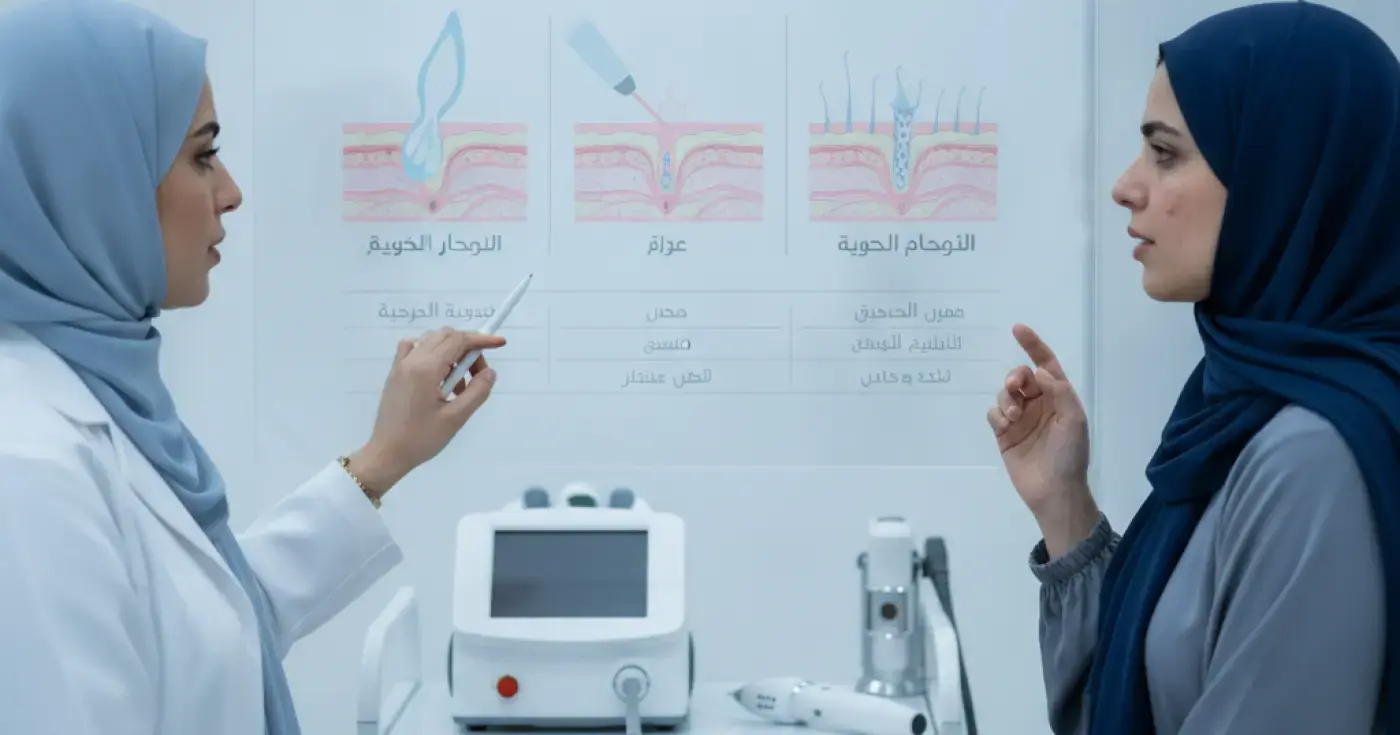
A clinical comparison of chemical peels, laser therapy, and microneedling for acne scars to help you choose the safest and most effective option.
Read article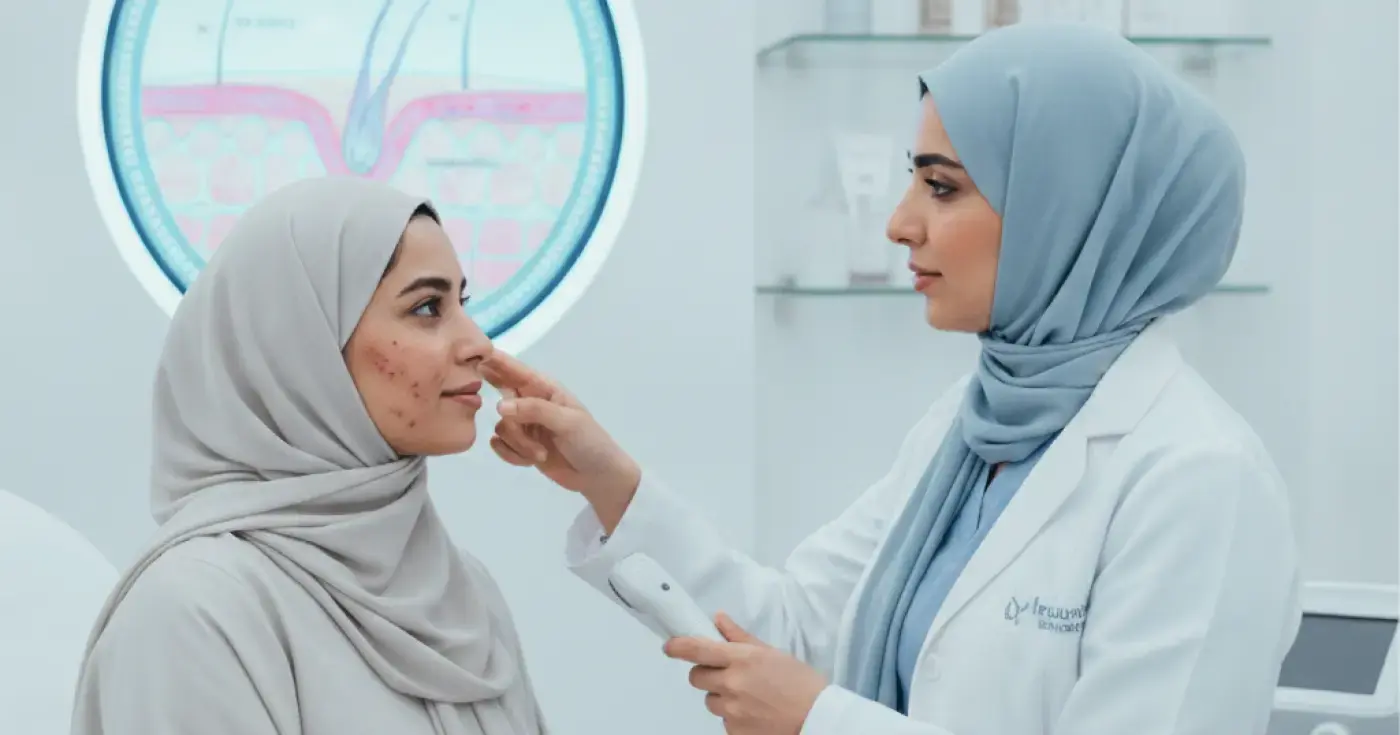
Explore the best clinical treatments for atrophic acne scars, including lasers, subcision, and fillers, with expert dermatological advice.
Read article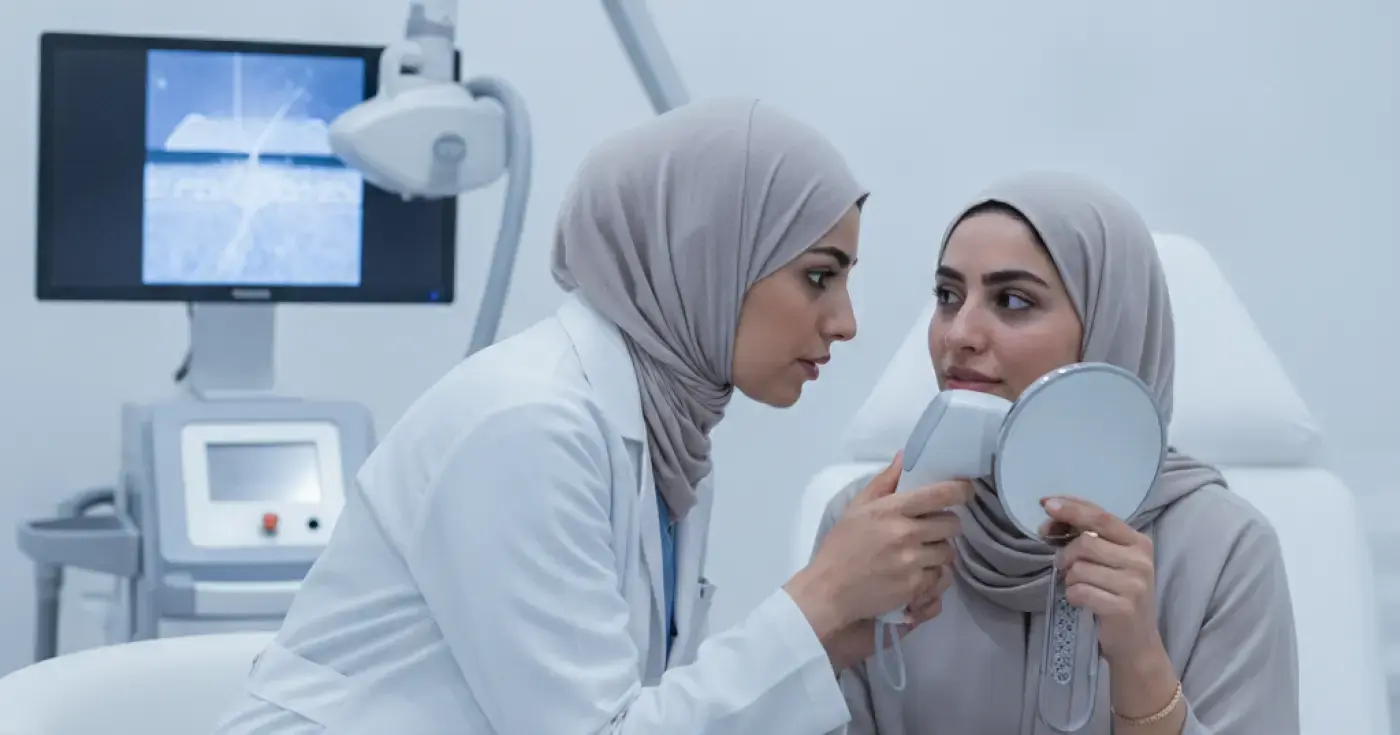
Learn the clinical truth about permanent acne scar removal, advanced treatments like lasers and subcision, and realistic outcomes for smoother skin.
Read article