
Lahalak Medical PlatformDifferentiate Care
A clinical comparison of chemical peels, laser therapy, and microneedling for acne scars to help you choose the safest and most effective option.
Advertisement
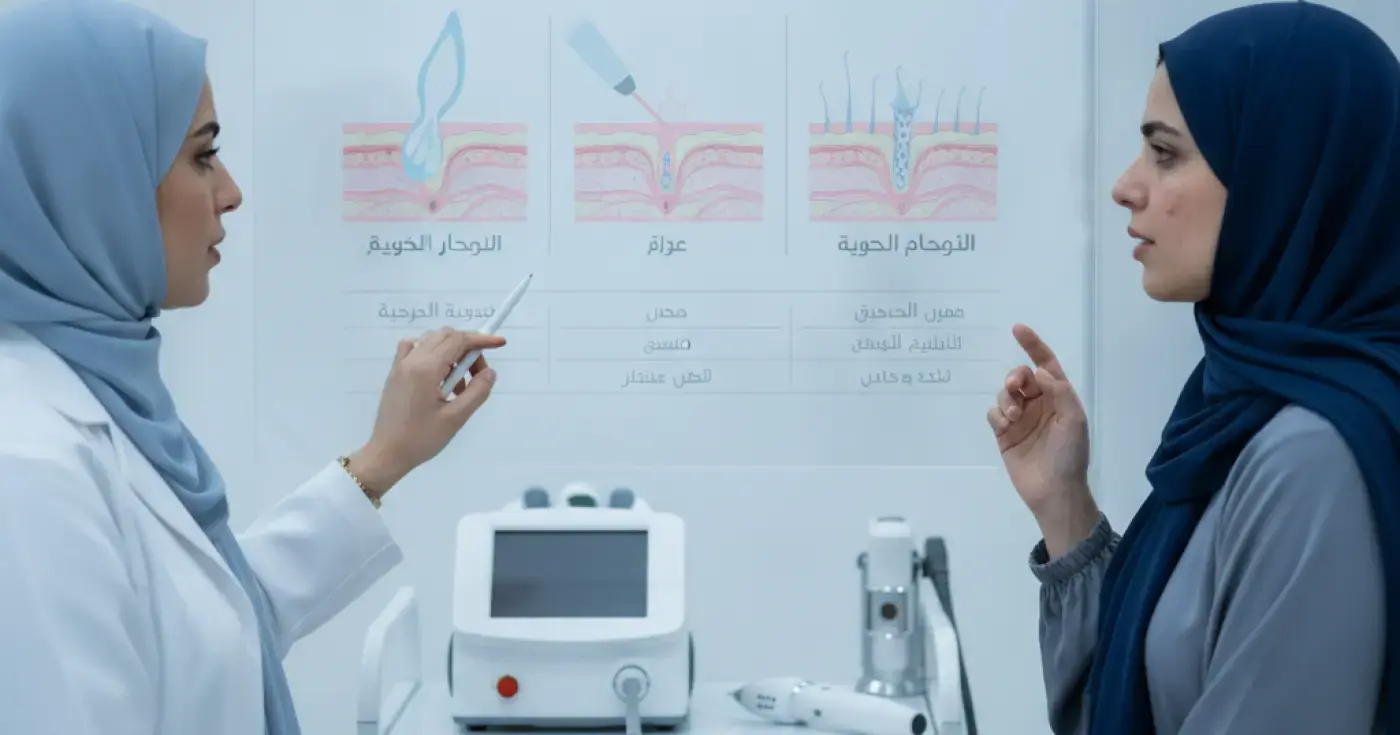
Acne scars are a common dermatological concern that can significantly impact self-esteem. These scars develop due to an abnormal healing response to acne inflammation, resulting in either tissue loss (atrophic scars) or excess tissue production (hypertrophic scars). Modern aesthetic medicine offers three primary modalities to address this: Chemical Peels, Laser Therapy, and Microneedling. Choosing the right procedure requires a clear understanding of how each technology works and its suitability for your skin type and scar depth.
Chemical peeling involves applying a controlled acid solution to the skin to remove damaged outer layers and stimulate the growth of new, smoother skin. Peels are categorized as superficial, medium, or deep. Medium-depth peels, such as Trichloroacetic Acid (TCA) or TCA CROSS, are highly effective for ice-pick and boxcar scars. This option is generally best suited for lighter skin tones, as darker skin types carry a higher risk of post-inflammatory hyperpigmentation (PIH), requiring careful pre-treatment preparation.
Laser technology is one of the most powerful tools available for scar revision, broadly divided into two categories:
Microneedling utilizes a device equipped with fine, sterile needles to create controlled micro-injuries in the skin. This triggers the body's natural wound-healing cascade, stimulating the production of new collagen and elastin to rebuild the scar tissue from within. Microneedling is highly versatile and safe for all skin types, including darker skin tones, with a very low risk of hyperpigmentation and minimal downtime.
The following table provides an objective comparison to help you understand the key differences:
| Feature | Chemical Peels | Laser Therapy | Microneedling |
|---|---|---|---|
| Suitable Scar Types | Superficial & shallow atrophic scars | Deep to moderate atrophic scars | Superficial to moderate scars |
| Skin Tone Suitability | Best for lighter skin tones | Requires caution & specific wavelengths for dark skin | Safe for all skin types and tones |
| Expected Downtime | 3 to 10 days (depending on depth) | 3 to 14 days (depending on laser type) | 24 to 48 hours |
| Average Sessions Needed | 3 - 6 sessions | 3 - 5 sessions | 4 - 6 sessions |
| Potential Side Effects | Redness, peeling, temporary pigment changes | Redness, swelling, temporary hyperpigmentation | Mild redness, temporary dryness |
There is no single "best" treatment for everyone. The optimal choice depends on a clinical evaluation of your scar types (boxcar, rolling, or ice-pick), skin type (Fitzpatrick scale), budget, and tolerance for downtime. Dermatologists frequently combine these modalities in a customized treatment plan to target different depths and characteristics of the scars for superior outcomes.
To maximize results and minimize risks, patients should follow these guidelines:
The first and most crucial step is always to schedule a dermatologist consultation to receive an accurate assessment and a safe, personalized treatment plan.
Clear, direct answers
Advertisement
Continue exploring

Explore the best clinical treatments for atrophic acne scars, including lasers, subcision, and fillers, with expert dermatological advice.
Read article
Learn the clinical truth about permanent acne scar removal, advanced treatments like lasers and subcision, and realistic outcomes for smoother skin.
Read article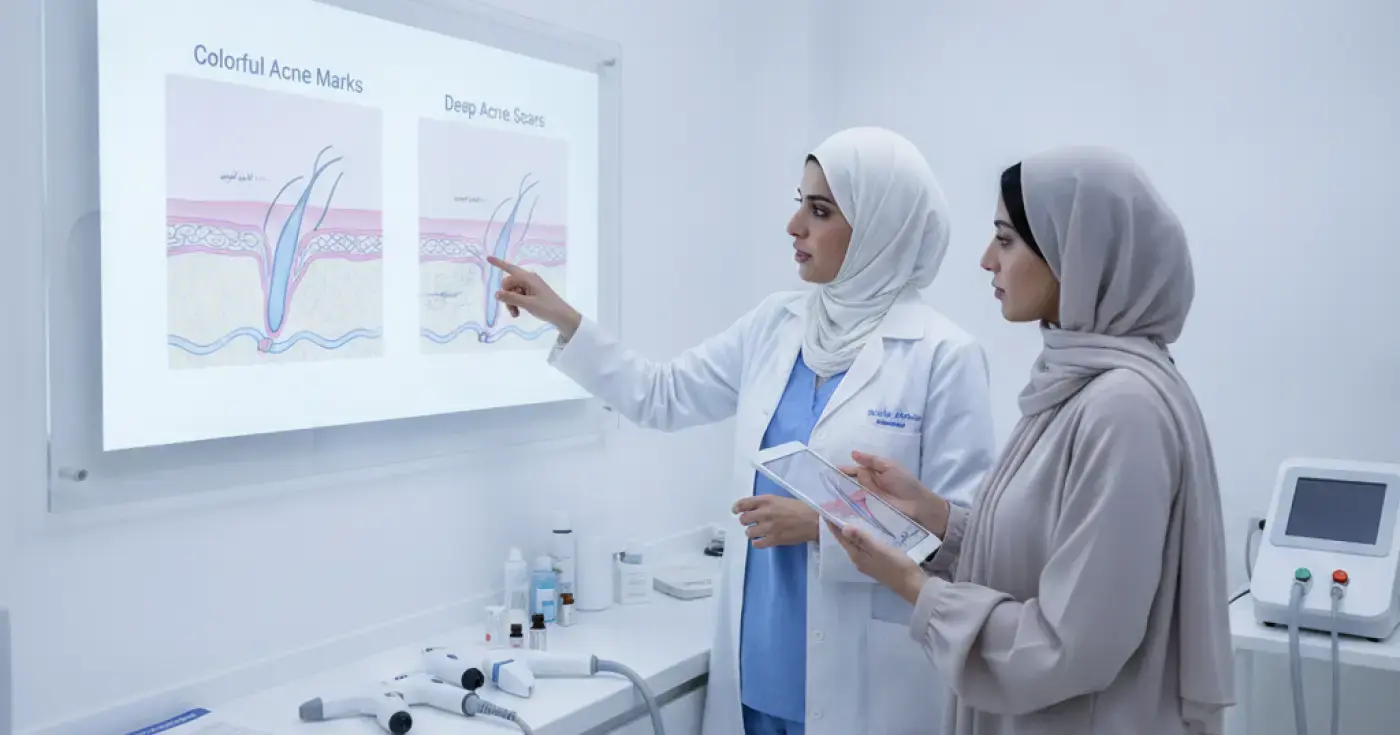
Learn the difference between temporary acne marks and permanent scars, and explore advanced clinical treatments like lasers, microneedling, and subcision.
Read article