
Lahalak Medical PlatformDifferentiate Care
A comprehensive medical guide on eyebrow and eyelash alopecia areata, covering autoimmune causes, clinical diagnosis, and advanced treatment options.
Advertisement
Alopecia areata of the eyebrows and eyelashes is a clinical variant of alopecia areata, a common autoimmune disorder that causes patchy hair loss. While alopecia is most frequently associated with the scalp, its occurrence on the eyebrows and eyelashes presents significant clinical and psychological challenges. These facial hairs play a vital aesthetic role and serve a functional purpose in protecting the eyes from debris. At LahaLak / لها ولك الطبية, we provide this comprehensive medical guide to help you understand the causes, diagnostic procedures, and advanced treatment options available for this condition.
Alopecia areata occurs due to an autoimmune dysfunction where T-lymphocytes mistakenly attack active hair follicles in the anagen (growth) phase. This immune response forces the follicles into an early resting phase, leading to hair shedding. Several factors contribute to this autoimmune response:
The clinical presentation of eyebrow and eyelash alopecia varies among patients and is characterized by the following features:
An accurate diagnosis requires a comprehensive evaluation by a qualified dermatologist. The diagnostic process typically involves:
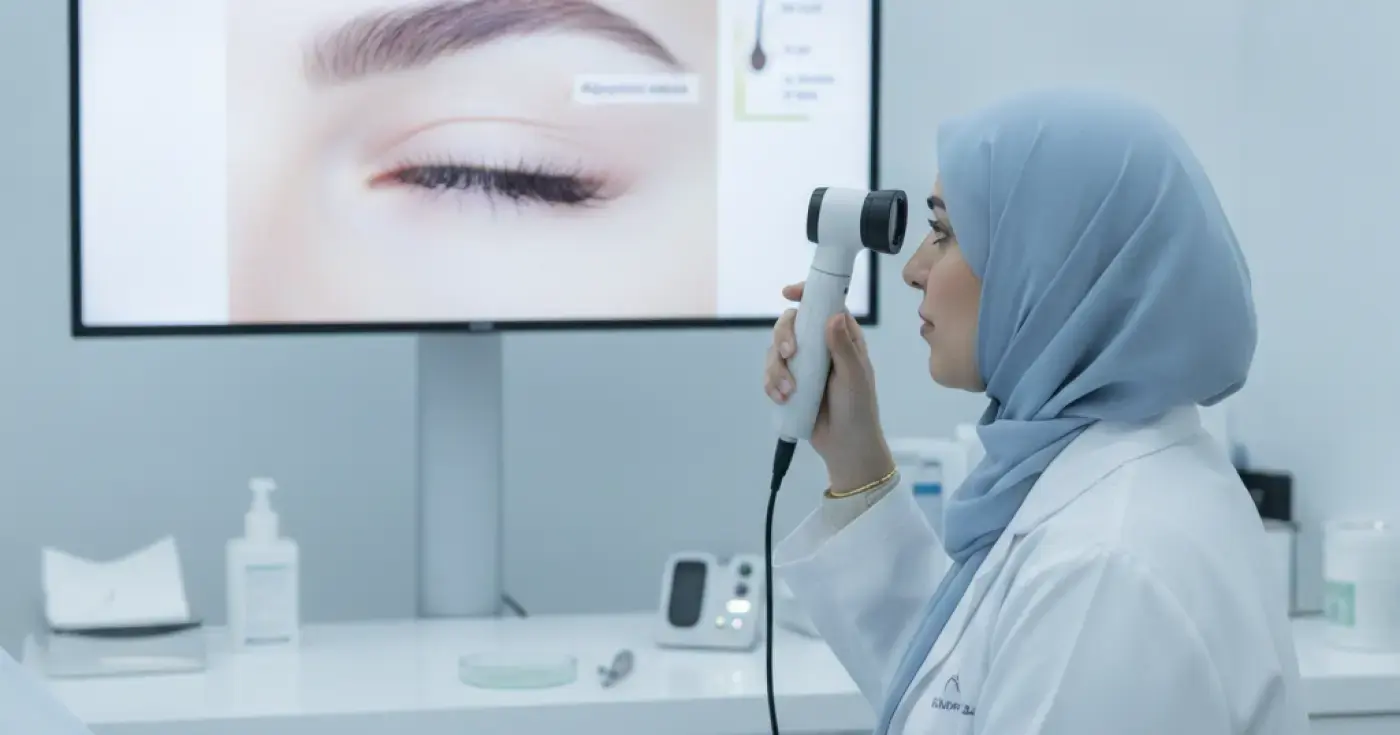
First, a detailed clinical examination using a dermatoscope (Trichoscopy) allows the physician to identify characteristic signs of alopecia areata, such as "exclamation mark hairs," yellow dots, and black dots, which indicate active disease. Second, the dermatologist may recommend blood tests to rule out other potential causes of hair loss, such as nutritional deficiencies or hormonal imbalances.
Treatment strategies are highly individualized, depending on the severity of the hair loss, the patient's age, and overall health. Available medical interventions include:
Topical corticosteroids are commonly prescribed as a first-line treatment for mild to moderate cases. For localized eyebrow hair loss, intralesional corticosteroid injections can be highly effective in suppressing the localized immune response and stimulating regrowth. These injections must be performed with extreme caution to avoid skin atrophy or ocular complications.
Topical application of ophthalmic solutions containing "Bimatoprost" has shown efficacy in promoting eyelash growth by extending the anagen phase of ciliary follicles. This treatment must be used under strict medical supervision to monitor for potential side effects, such as iris hyperpigmentation or localized skin darkening.
Janus kinase (JAK) inhibitors, such as "Baricitinib," represent a revolutionary advancement in treating severe, refractory cases of alopecia areata. Approved by the Saudi Food and Drug Authority (SFDA), these systemic medications target the inflammatory signaling pathways that attack hair follicles, enabling significant hair regrowth across the eyebrows, eyelashes, and scalp.
| Treatment Option | Mechanism of Action | Expected Efficacy | Key Potential Side Effects |
|---|---|---|---|
| Topical & Intralesional Corticosteroids | Reduces localized autoimmune inflammation around follicles | Good for localized, early-stage hair loss | Skin atrophy, telangiectasia (fine blood vessels) |
| Topical Bimatoprost Drops | Prolongs the growth phase of eyelash and eyebrow follicles | Excellent for eyelashes; results take several months | Hyperpigmentation of the eyelid skin, temporary eye irritation |
| Systemic JAK Inhibitors | Modulates systemic immune response to prevent follicle attack | Very high for severe, treatment-resistant cases | Slightly increased risk of viral infections; requires routine blood monitoring |
In addition to targeted medical treatments, adopting gentle care practices can support hair follicle recovery:
If you experience sudden or progressive loss of your eyebrows or eyelashes, early intervention is key to achieving the best therapeutic outcomes. We highly recommend scheduling a dermatology consultation to receive a precise diagnosis and a personalized, safe treatment plan tailored to your specific needs.
Clear, direct answers
Advertisement
Continue exploring
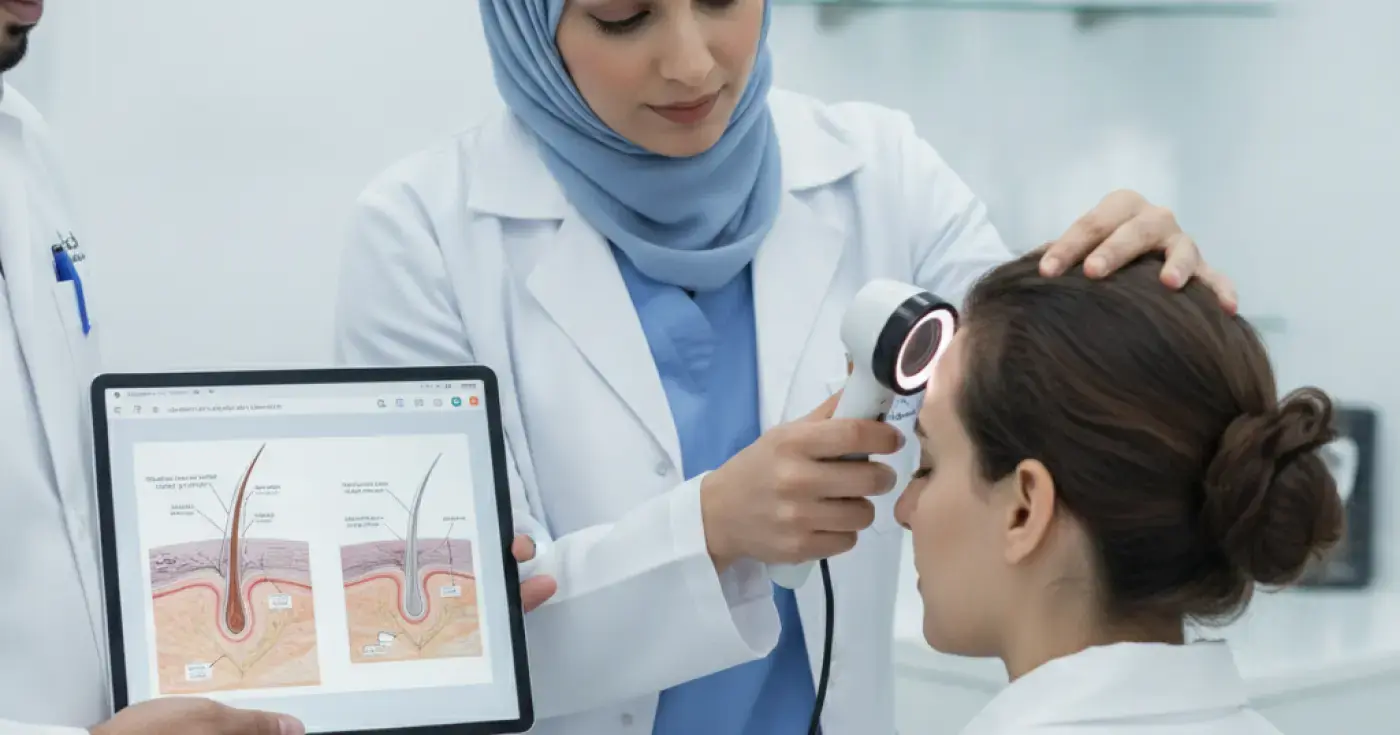
A comprehensive medical guide on scalp alopecia areata, its early signs, approved treatments in Saudi Arabia, and expert daily care tips.
Read article
Learn the truth about curing alopecia permanently, explore SFDA-approved treatments like JAK inhibitors in Saudi Arabia, and find coping tips.
Read article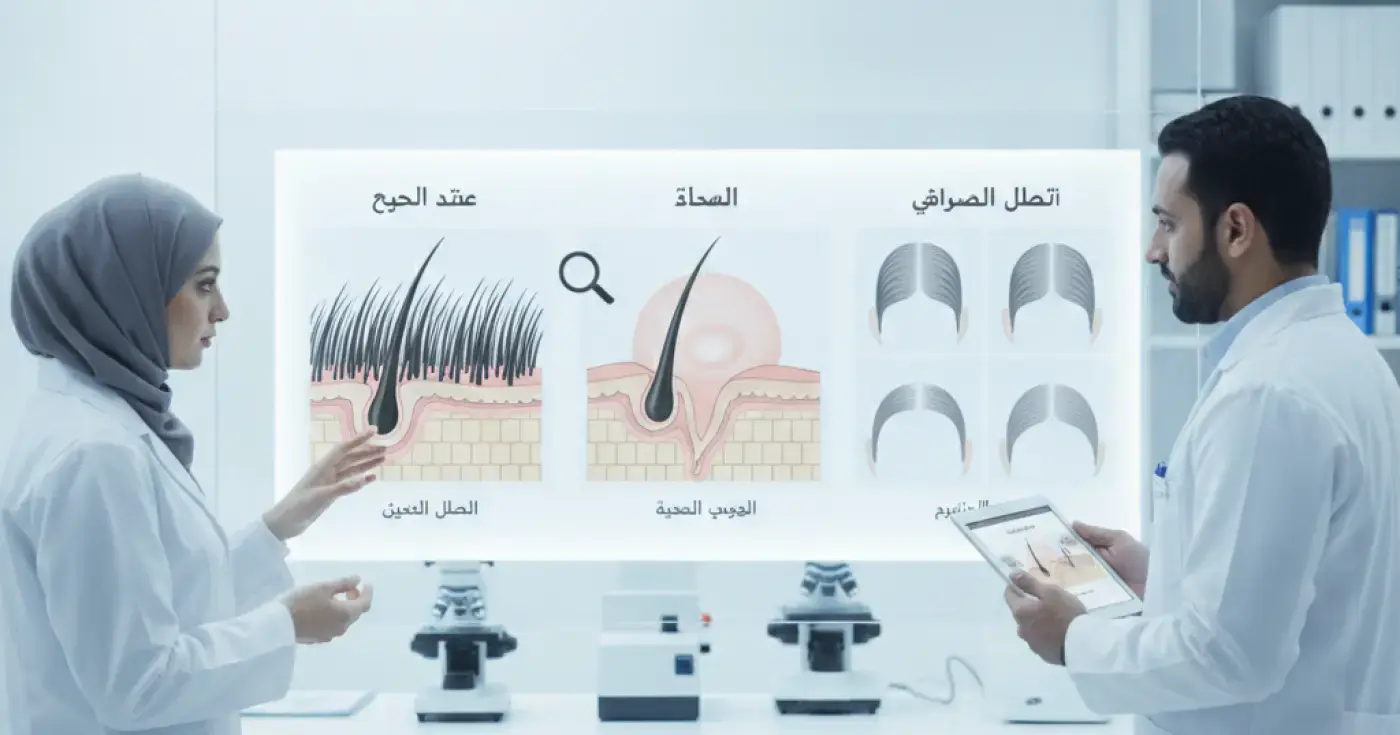
A comprehensive medical guide explaining the differences between alopecia, genetic baldness, and normal hair shedding. Learn symptoms and treatments.
Read articleExplore the topic