
Lahalak Medical PlatformDifferentiate Care
Learn the truth about curing alopecia permanently, explore SFDA-approved treatments like JAK inhibitors in Saudi Arabia, and find coping tips.
Advertisement
Alopecia areata is a common autoimmune disorder that causes hair to fall out in patches, often leaving round or oval bald spots on the scalp, beard, eyebrows, or body. Affecting millions of people worldwide, this condition raises many questions regarding its nature and whether it can be permanently cured.
Clinically, alopecia areata occurs when the body's immune system mistakenly attacks hair follicles, forcing them into a dormant phase where hair growth stops. However, the hair follicles themselves are not permanently damaged or destroyed, meaning the potential for hair regrowth remains active once the overactive immune response is controlled.
To answer this question scientifically: there is currently no medical cure that guarantees permanent eradication of alopecia areata with zero chance of recurrence. However, this does not mean there are no solutions. On the contrary, most individuals with alopecia experience long periods of complete hair regrowth and recovery, medically referred to as remission.
The disease is highly unpredictable. In mild cases, hair may regrow spontaneously without any medical intervention. In more extensive cases, advanced treatment plans are necessary to suppress the inflammatory response and stimulate the follicles. Modern therapies aim to halt the immune attack, accelerate regrowth, and minimize future flare-ups.
The severity of alopecia and its response to treatment depend heavily on its clinical type:
While the exact trigger that causes the immune system to target hair follicles is still under active research, clinical studies point to a combination of factors:
Advanced treatment options approved by the Saudi Food and Drug Authority (SFDA) are available in specialized clinics across the Kingdom. The first step is scheduling a dermatology consultation to evaluate the condition and design a personalized plan.
Janus kinase (JAK) inhibitors represent a major breakthrough in treating severe alopecia totalis and universalis. These oral medications (such as baricitinib and ritlecitinib) block specific cellular signaling pathways responsible for the autoimmune attack, allowing significant and safe hair regrowth under close medical supervision.
| Treatment Type | Administration | Target Group | Primary Mechanism |
|---|---|---|---|
| Intralesional Corticosteroids | Direct injections every 4-6 weeks | Localized patchy alopecia | Reduces localized inflammation around follicles |
| JAK Inhibitors | Daily oral tablets | Severe, totalis, or universalis cases | Blocks autoimmune signaling pathways |
| Topical Immunotherapy | Weekly topical application in-clinic | Extensive, treatment-resistant cases | Modulates local cutaneous immune response |
| Topical Minoxidil | Liquid or foam twice daily | Adjuvant for all types | Stimulates blood flow and accelerates growth |
During your clinical visit, the dermatologist will perform several diagnostic steps to ensure an accurate diagnosis and rule out other causes of hair loss:
Many misconceptions surround alopecia areata. It is important to clarify these with scientific facts:
Because emotional stress is closely linked to immune system activity, managing the psychological impact of alopecia is a vital part of the overall treatment plan:
It is highly recommended to seek medical advice as soon as you notice sudden hair loss or bald patches on your scalp or body. Early intervention helps control the spread of the disease, improves the response to modern treatments, and prevents unnecessary physical and emotional distress.
Clear, direct answers
Advertisement
Continue exploring
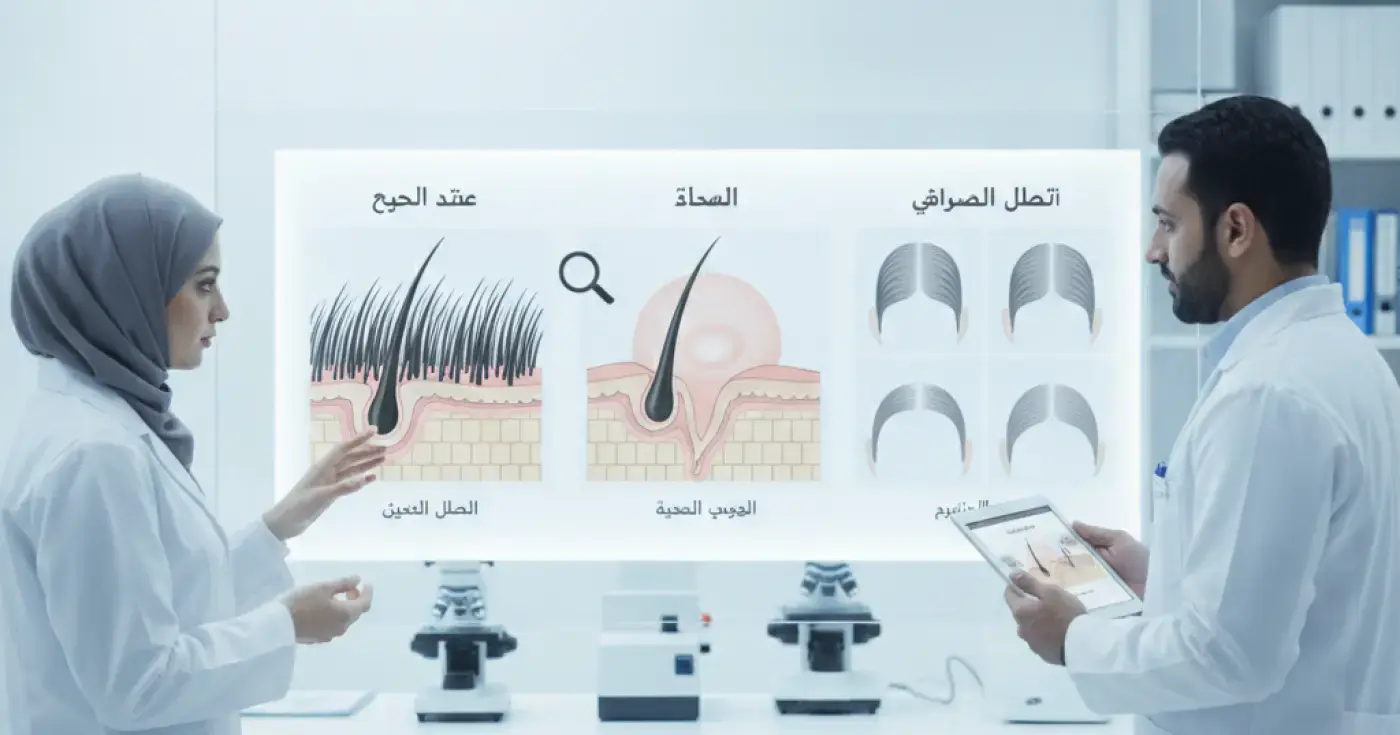
A comprehensive medical guide explaining the differences between alopecia, genetic baldness, and normal hair shedding. Learn symptoms and treatments.
Read article
Learn the truth about alopecia areata transmission. Discover its autoimmune causes, triggers, and how it differs from contagious fungal infections.
Read article
A medical guide on pediatric alopecia areata: symptoms, causes, treatments in Saudi Arabia, and essential psychological support for children.
Read articleExplore the topic