
Lahalak Medical PlatformDifferentiate Care
A comprehensive medical guide explaining the differences between alopecia, genetic baldness, and normal hair shedding. Learn symptoms and treatments.
Advertisement
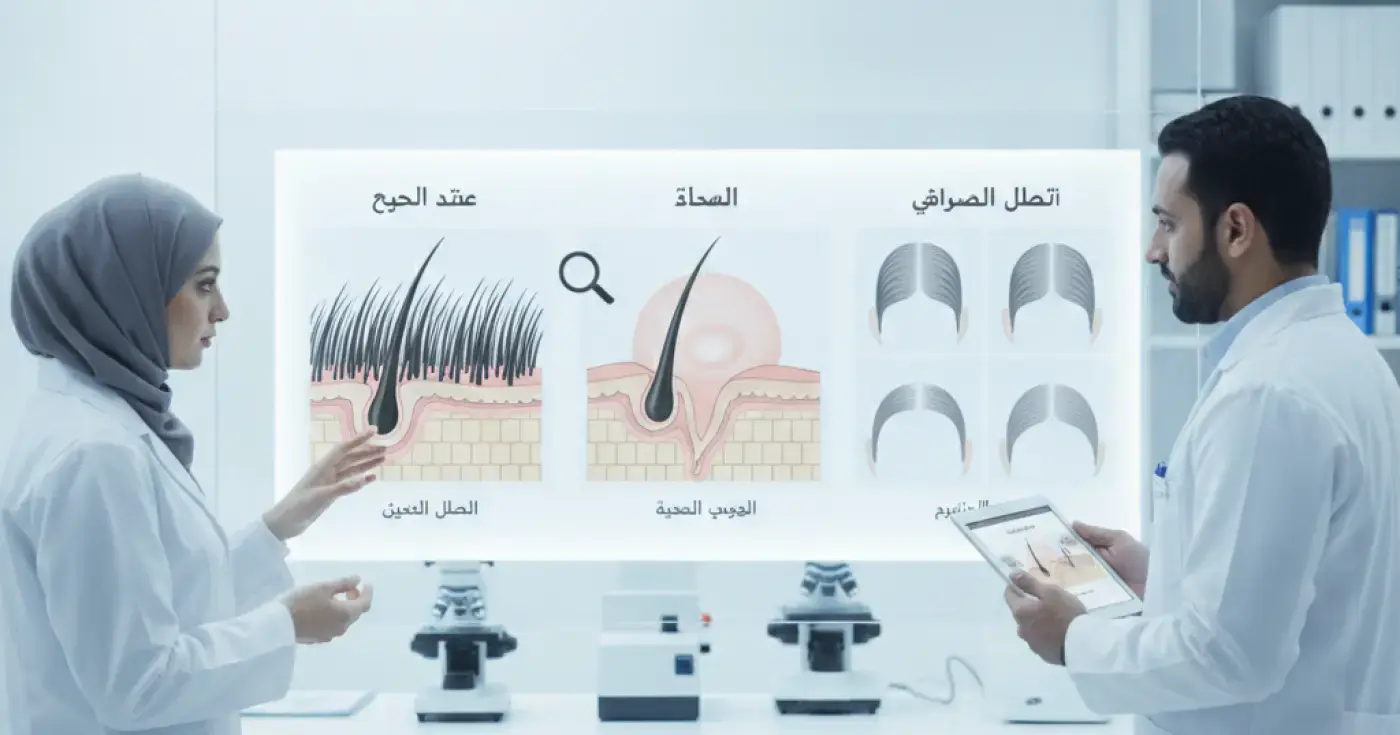
Hair is often considered a symbol of health and vitality, and changes in its density or rate of shedding can cause significant concern. However, many people confuse different scalp conditions, such as normal daily hair shedding, androgenetic alopecia (genetic baldness), and alopecia areata (an autoimmune condition). Understanding the distinct differences between these conditions is the first step toward obtaining an accurate diagnosis and appropriate treatment under the guidance of a professional Dermatologist Consultation.
Hair goes through a natural growth cycle consisting of three main phases: the growth phase (Anagen), the transitional phase (Catagen), and the resting/shedding phase (Telogen). At any given time, about 85% to 90% of the hair on the scalp is in the growth phase, while the remaining portion prepares to shed to make room for new hair growth.
Medically, losing between 50 to 100 hairs per day is completely normal and not a cause for concern. Individuals usually notice this shedding during showering, brushing, or on their pillows. This type of shedding does not lead to visible bald patches or alter the overall density of the hair abruptly, as it is constantly compensated for by the growth of new follicles.
Alopecia areata is a common autoimmune disorder that occurs when the body's immune system mistakenly attacks hair follicles, causing hair growth to stop and fall out. It is characterized by the sudden appearance of round or oval patches that are completely devoid of hair. The scalp in these patches feels smooth and has a normal color without visible signs of inflammation or scaling.
Alopecia can appear suddenly at any age, affecting men, women, and children alike. In some cases, it may progress to involve the entire scalp (Alopecia Totalis) or even the entire body (Alopecia Universalis). Although the exact cause of the immune attack is still under study, genetic factors and severe psychological stress are considered major triggers.
Androgenetic alopecia, commonly known as pattern baldness, is a hereditary hormonal condition that leads to progressive hair loss. This type of baldness is linked to the sensitivity of hair follicles to dihydrotestosterone (DHT), a derivative of testosterone. The effect of this hormone causes the follicles to gradually shrink and shortens the hair growth cycle, making new hair thinner and shorter until the follicle stops producing hair entirely.
The pattern of genetic baldness differs between men and women:
To facilitate understanding and distinction between these three conditions, the following table highlights their key differences:
| Feature | Normal Hair Shedding | Alopecia Areata | Androgenetic Alopecia |
|---|---|---|---|
| Main Cause | Natural hair cycle and daily regeneration | Autoimmune system dysfunction | Genetic factors and sensitivity to DHT |
| Shedding Pattern | Scattered hair loss without localized patches | Well-defined round or oval bald patches | Progressive and patterned thinning (crown, temples, or parting) |
| Onset Speed | Continuous and gradual, barely noticeable daily | Sudden and rapid (within a few weeks) | Very slow and progressive over years |
| Age Group | All ages post-puberty | Can start in childhood or young adulthood | Usually starts after puberty and increases with age |
| Reversibility | Continuous and natural (new hair grows automatically) | Highly possible; hair often regrows spontaneously | Not reversible spontaneously; requires ongoing treatment |
Clinically, dermatologists look for specific signs to differentiate between these conditions:
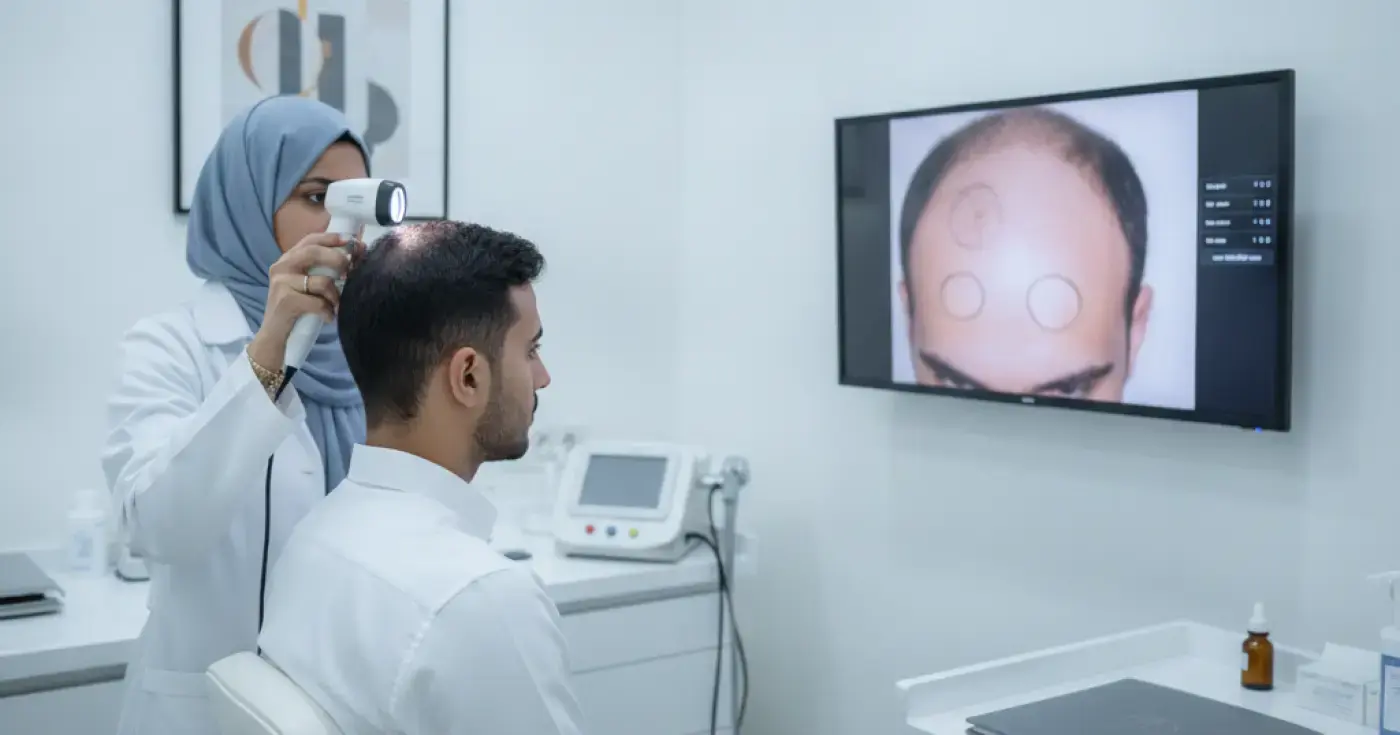
During a clinical visit, the specialist relies on several diagnostic tools to accurately identify the condition:
Treatment options vary fundamentally based on the correct diagnosis:
Normal hair shedding does not require medical treatment. However, if shedding increases due to stress or nutritional deficiencies (telogen effluvium), it is recommended to follow a Healthy Hair Care Guide and take appropriate nutritional supplements after consulting a doctor.
It is always advisable to consult a specialist if you notice any of the following signs:
Clear, direct answers
Advertisement
Continue exploring
Learn the truth about alopecia areata transmission. Discover its autoimmune causes, triggers, and how it differs from contagious fungal infections.
Read article
A medical guide on pediatric alopecia areata: symptoms, causes, treatments in Saudi Arabia, and essential psychological support for children.
Read article
Learn about the causes of female alopecia, its types, advanced medical treatments, and practical ways to cope with the psychological effects of hair loss.
Read article